


Hormone diagnostics
Male Hormone Profile Test
Cortisol, DHEA, progesterone, testosterone & oestradiol from saliva — the free, biologically active hormone fraction, as a snapshot of your hormone balance.
No prescription needed. Ships next working day.
| Sample type | Saliva, 2 samples |
|---|---|
| Method | ELISA |
| Turnaround | 7–21 days from sample arrival |
| Analysis | Partner laboratory in Germany |
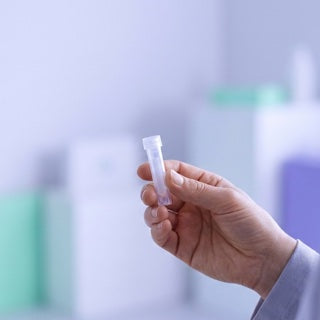 Five hormones plus ratio
Cortisol, DHEA, progesterone, testosterone and oestradiol
Five hormones plus ratio
Cortisol, DHEA, progesterone, testosterone and oestradiol
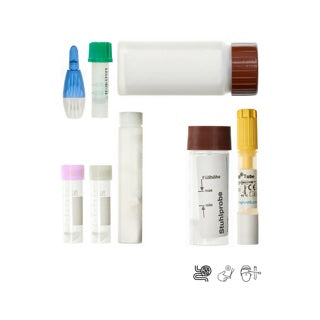 The free, active fraction
Saliva captures only the biologically active hormone fraction, not the bound one
The free, active fraction
Saliva captures only the biologically active hormone fraction, not the bound one
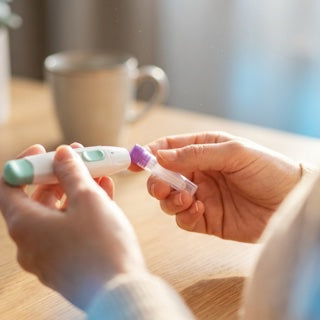 Sample collection at home
Two saliva samples in the morning, no doctor's visit needed
Sample collection at home
Two saliva samples in the morning, no doctor's visit needed
 Results consultation included
15 minutes of free discussion
Results consultation included
15 minutes of free discussion
Principle
Measure first, then decide
Without measured values, any treatment is guesswork. We turn the order around: the lab report first, then the decision.

-
01
Measure Five hormone values plus a ratio from two saliva samples, analysed at our partner laboratory in Germany.Hormone Mann · Saliva, 2 samples · 7–21 days from sample arrival
-
02
See where you stand Every value appears in the lab report with the laboratory's reference range. You can see which ones fall inside it and which do not.Lab report including consultation
-
03
Targeted, not generic Instead of a standard bundle you take what your values point to — agreed with a practitioner.Initial consultation, 10 minutes, free
-
04
Measure again after a few months Running the same analysis a second time shows how the values have changed.Earliest sensible interval: 3 months


Ory experts support you
Doctors and Heilpraktiker from the Ory team are there for you the whole way — with the lab report and with everything that follows.
What a value means, and whether a supplement is right for you, is something to discuss with a practitioner. This page makes no recommendation and is no substitute for medical assessment.
Details
What this analysis covers
What is measured
Five hormone values from saliva — the free, biologically active fraction, which in blood is almost entirely bound.
The biomarker reference explains what lies behind the numbers: how values interact, which cofactors are involved and which biochemical processes take place in the body — for all values and areas, not only this analysis.
To the biomarker reference
For whom
Hormone Mann is worth considering for weakness, lack of strength, restlessness, declining performance, hair loss, erectile problems or increased fat around the belly and hips — typical signs of a hormonal imbalance.
What a single value means in your situation is something to discuss with a practitioner. It does not replace medical investigation.
How it works
Four steps from order to lab report.
- 01 Kit arrives Ships the next working day, postage paid to your door.
- 02 Collect saliva Two saliva samples in the morning at home.
- 03 Send it back Both tubes together in the prepaid envelope.
- 04 Get your report 7–21 days after the sample arrives, consultation included.
Instructions
The key points first:
- In the morning, before breakfast and before brushing your teeth, let saliva run into both tubes.
- Do not spit — let the saliva flow passively.
- Close both tubes firmly and send them together.
Please read the instructions carefully. Correct preparation matters, so that your sample – stool, urine, saliva or blood – can be evaluated cleanly and meaningfully.
View full illustrated instructions
Sample report
This is what your result looks like: the full lab report with all five hormone values and the ratio — shown as an image, no download needed.
View sample report
Returning your sample
To make sure your sample arrives safely, please follow the rule for your country.
| Country | Postage | Shipping |
|---|---|---|
| Germany | Already paid | Return postage is prepaid, you do not need a stamp. |
| Austria | Stamp it yourself | To our address in Vienna, not to Germany. |
| Switzerland | Stamp it yourself | Separate return bag for Switzerland, sent to Germany. |
| Rest of Europe | Stamp it yourself | Sent to Germany. |
In short: for Germany everything is prepared. Austria: add a stamp, send to Vienna. Switzerland: add a stamp, special bag, send to Germany. Rest of Europe: add a stamp, send to Germany.
Family and partner testing
Testing together shows connections that a single analysis does not reveal. We need three things for it.
From three tests of the same analysis for the family you get 10 % off. Write to us and you will get your own discount code.
Send an email
Reimbursement by private insurance
For possible reimbursement by your private insurer, this is how we do it:
Many private insurers cover the cost in full or in part – some not at all. That depends entirely on your policy. We support you through the process as best we can.
Also relevant
Similar analyses
More in depth, or with a different focus.


Which analysis suits you is best discussed in the initial consultation. See all analyses
Supplements
Supplements for the areas this analysis covers
Which product suits you, and in what amount, is something you discuss with a practitioner after your lab report. This page recommends nothing.


Food supplements are no substitute for a balanced diet. The full range: Supplements
Orientation
What happens next
Five routes, independent of this analysis. The same on every product page.
ORY Berlin sells analyses and products. What a lab report means for you is something a non-medical practitioner or a doctor tells you, not this page.