

Longevity Profile
Our aim is a foundation on which the body can actually work. To us, longevity does not mean being alive for many years but experiencing more life within those years. Three areas of that are measurable: the regulation of the nervous system, energy production in the cell, and the ability to absorb nutrients and clear substances again.
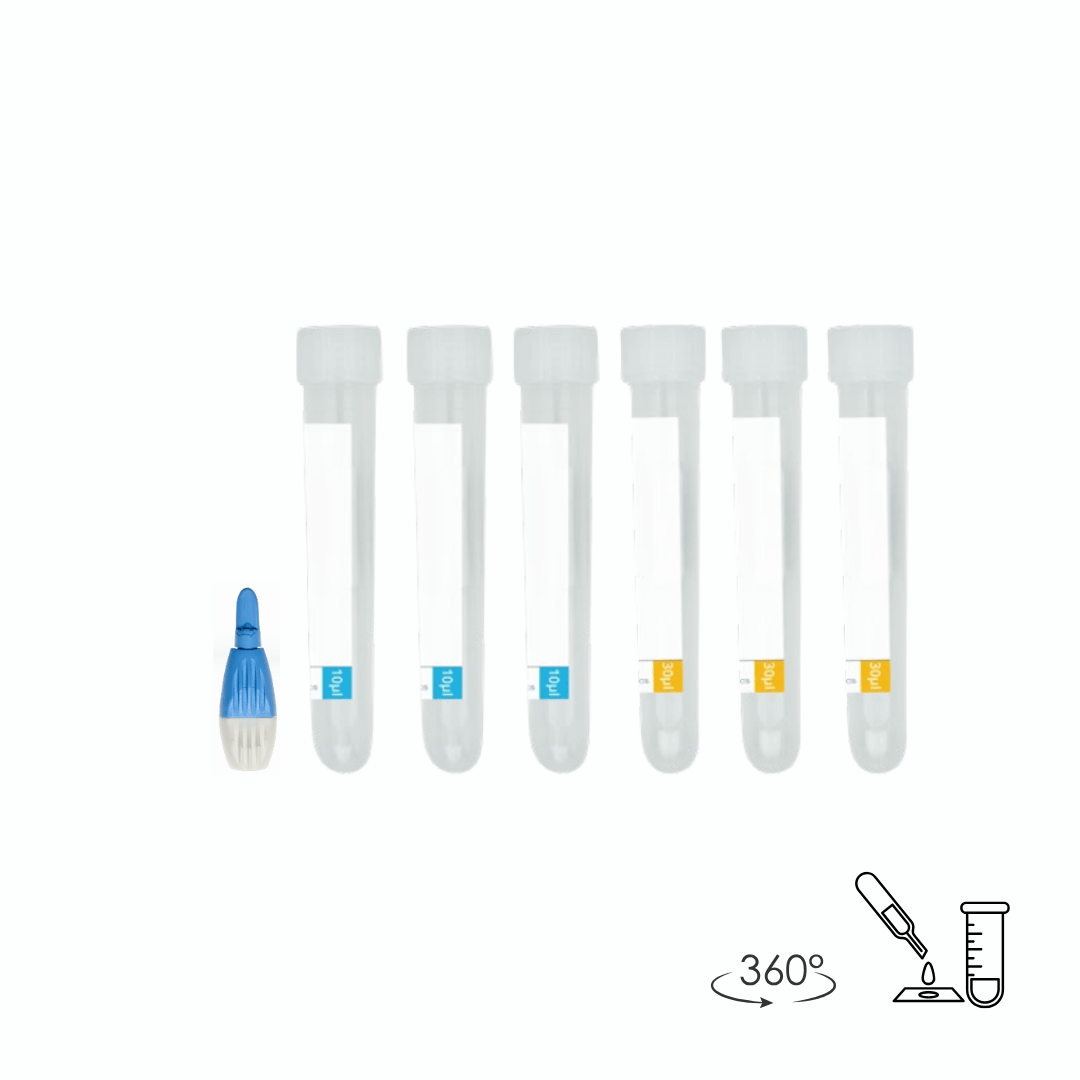
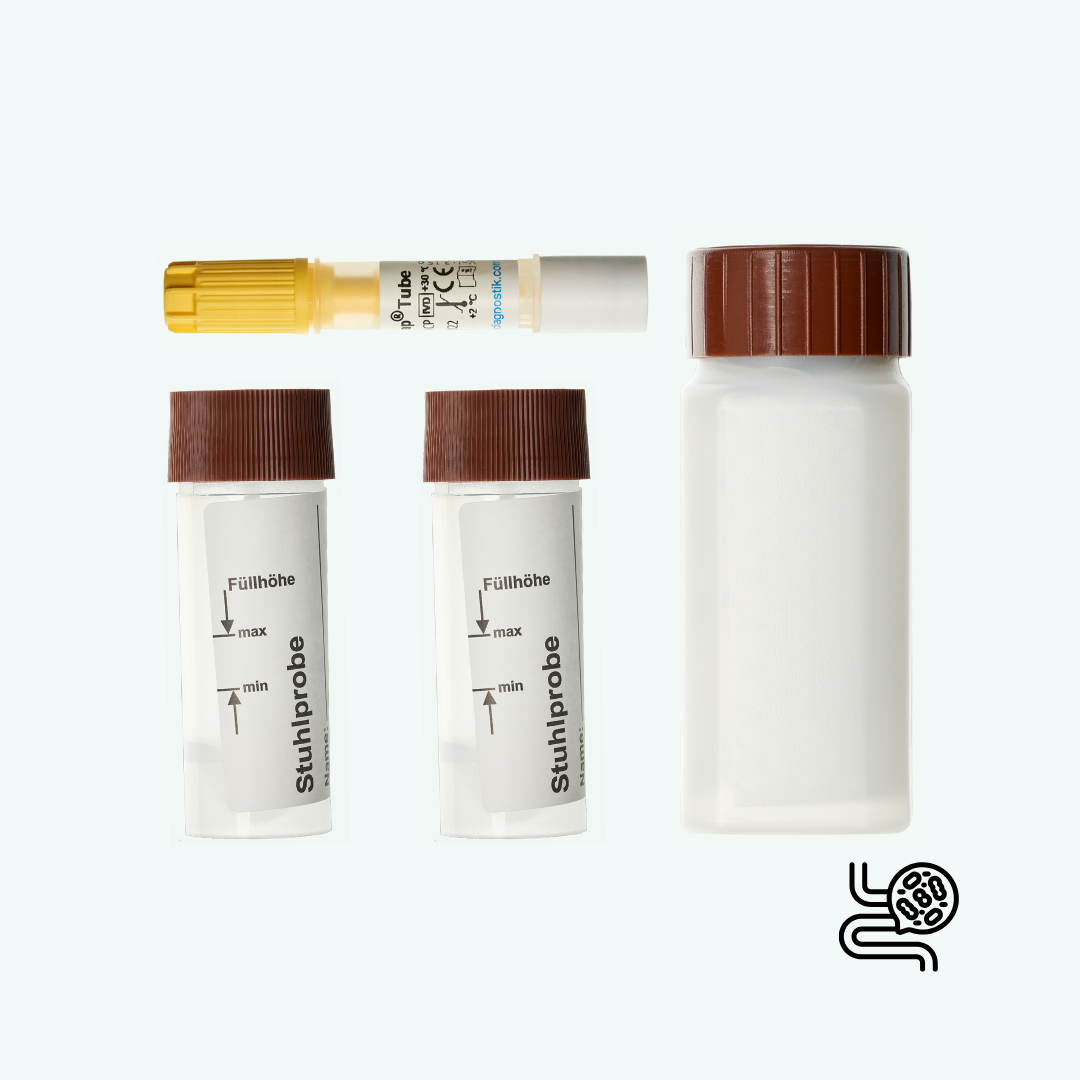
The three analyses below cover these three areas: capillary blood, urine and stool. What a value means is something you discuss with a practitioner.

Three analyses, three sample types
Capillary blood, urine and stool. €1,165 together, available individually — there is no bundle price and no quantity discount.
Three pillars that carry one another
Why these three analyses: each covers one of the three pillars. Click a pillar to see what is measured within it.
A nervous system that no longer switches between tension and recovery keeps inflammation and the hormone axis off balance. Recovery needs the parasympathetic side; without it, any measure remains without effect.
Without energy production in the cell, recovery stays theoretical. The need for cofactors rises with the load: without vitamins, minerals and amino acids the respiratory chain does not run, and without the respiratory chain there is no ATP.
What the body does not take up is of no use, and what it does not clear blocks the way. Both run through gut, liver and kidneys. If the barrier is permeable or digestive performance weak, even a good diet has no effect.
Five connections that make the difference
Each of these five points is measurable in itself, and each acts on the others. That is why they stand together rather than side by side as separate tests.
Low-grade inflammation runs for years without being noticed. In doing so it changes metabolism: the enzyme IDO becomes more active and diverts tryptophan from the serotonin pathway into the kynurenine pathway. Serotonin, and with it melatonin, become scarce even though enough tryptophan is supplied.
That is why a low serotonin value alone is no answer. Only the kynurenine-to-tryptophan ratio shows whether inflammation lies behind it — and then inflammation is the subject, not serotonin.
Sympathetic and parasympathetic work in alternation: tension and recovery. If the sympathetic side stays in front permanently, recovery does not take place — digestion, immune defence and tissue repair run mainly on the parasympathetic side.
This becomes measurable through the catecholamines and their ratio. The noradrenaline-to-adrenaline quotient shows which side the system is on; the calming messengers GABA and serotonin show whether a counterforce is present.
Tissue repair takes place during deep sleep, and a large part of growth hormone release happens there. Cortisol and melatonin run in opposite directions: cortisol should be high in the morning and fall in the evening, melatonin the other way round. If cortisol stays high in the evening, sleep shifts into the light stages.
A single cortisol value says nothing about this — what matters is the daily course. Four measuring points in saliva show whether the curve falls or stays flat. Melatonin in the evening completes the picture.
Food has to be broken down before it can be absorbed. If digestive enzymes or bile acids are missing, incompletely broken-down components reach deeper sections of the gut — where bacteria ferment them. That shifts the colonisation and strains the mucous membrane.
A healthy flora is not a question of quantity but of composition: butyrate producers supply the gut cells with energy, Akkermansia muciniphila the mucous layer. Zonulin and secretory IgA show how the barrier is doing.
Omega-6 and omega-3 fatty acids give rise to the messengers that start or end an inflammation. It is not the amount of a single fatty acid that counts but the ratio. DHA and EPA contribute to normal heart function from 250 mg a day; DHA additionally to the maintenance of normal brain function and vision.
The same principle applies to vitamins and minerals: they are cofactors of the respiratory chain. If one is missing, ATP production falls, regardless of how well the others are supplied. Hence a check across the breadth rather than individual values.
First the foundation, then performance
Six building blocks carry the foundation. Only once they are in place is optimisation worthwhile — before that it costs energy without improving anything.
The width of the bars reflects the effort the stages typically require — it is not a measurement. Anyone starting at stage 3 works against their own foundation.
Biomarkers are the tool, not the goal
A biomarker is a measurable indication of a process in the body. Read on its own it says little. In connection with others it shows where something is stuck — and from that follows which test makes sense next.
25 years of experience with chronic conditions
The ORY expert network has worked for around 25 years with people whose findings have gone unexplained across several reports. What we have taken from that: in chronic conditions there is rarely a single cause, and the order of measures often matters more than their selection.
That is why this collection is built as it is: measure first, then look at the three pillars one by one, then decide. ORY Berlin is the platform for the diagnostics — treatment lies with doctors and alternative practitioners.
Why we age: the hallmarks of ageing
López-Otín and colleagues described nine hallmarks of ageing in 2013 and extended the list to twelve in 2023. Not all of them are accessible in the laboratory. The table separates what is measurable from what is not.
Six factors are best documented for healthspan: movement, diet, sleep, stress regulation, social connection and not smoking. They act on several hallmarks at once.
Personal support over twelve months
Individual support online or on site, reachable around the clock. Scope and price are set in an initial conversation — for a programme lasting a year, a flat rate without knowing the situation would not be sound.
Supplements for the three pillars
Measure first, then decide. Which preparation is right for you and in what amount is something you discuss with a practitioner after the results.
Food supplements are not a substitute for a balanced, varied diet and a healthy way of life. The full range: Supplements
Longevity and prevention
The most common questions about longevity, prevention and how the analysis works — answered briefly.
All frequent questions
What does longevity mean, and how does it differ from a long life?
+
Longevity here means healthspan: not being alive for many years, but experiencing more life within those years. A long life refers only to the length of time.
The difference is practical: a higher life expectancy without healthspan means more years with limitations. That is why this begins with a foundation on which the body can work — and only then with years.
Which factors influence healthspan the most?
+
Movement, diet, sleep, stress regulation, social connection and not smoking. These six are the best documented and act on several mechanisms of ageing at once.
None of them can be replaced by an analysis. The analysis shows where you stand — changing it is up to you, with support where needed.
Why do we age?
+
Ageing is a cellular and molecular process. López-Otín and colleagues described nine hallmarks in 2013 and extended the list to twelve in 2023 — among them mitochondrial dysfunction, DNA damage, chronic inflammation and cellular senescence, meaning cells that persist in an active state although they can no longer divide.
Not all twelve are accessible in the laboratory. The table on this page separates what is measurable from what is not.
How is the diagnostic set up?
+
In three areas: nervous system and neurotransmitters, mitochondria and energy metabolism, digestion and detoxification. For each area there is one analysis from its own sample type — urine, capillary blood and stool.
The three can be ordered individually. If you do not know where to begin: Preventive 360 first, it covers the most.
Do I have to see a doctor for the test?
+
No. We send you the test kit, or you collect it in Berlin. You take the sample at home; the instructions are included.
If you are not sure which kit fits: the consultation takes ten minutes and is free, including before you buy.
Does the test replace a visit to the doctor?
+
No. If you have symptoms, acute or chronic, they belong in medical hands. The results can be helpful for further investigation but do not replace it.
ORY Berlin is a platform for laboratory diagnostics, not a practice.
How long does it take to get results?
+
7 to 21 days from the arrival of the sample at the laboratory, not from the order. How long exactly depends on the method: sequencing the gut flora takes longer than a determination from capillary blood.
You are notified as soon as the results are ready. They are available digitally in the Evi app and as a PDF.
Do I get help interpreting the results?
+
Yes. The three analyses in this collection include a results discussion — by telephone or on site in Berlin. You arrange the appointment by phone or email.
What a single value means in your situation is something you discuss with a practitioner. This page makes no recommendation.
Can I order a test for someone else?
+
Yes. What matters is that the request form carries the details of the person being tested: name, date of birth and telephone number.
If something has already been entered on our side, please correct it on the form. Each person also needs their own email address for the digital access.