


Diagnostic package · 3 analyses
Gut health & digestion check-up – microbiome, SIBO & gut-brain
Three analyses in one package: gut flora with gut barrier markers, SIBO breath test with hydrogen and methane, and serotonin, GABA, tryptophan and histamine in stool.
No prescription needed. Ships the next working day.
| Sample type | Stool + breath test |
|---|---|
| Method | Laboranalyse, Atemgastest |
| Turnaround | 7–21 days from sample arrival |
| Analysis | Partner laboratory in Germany |
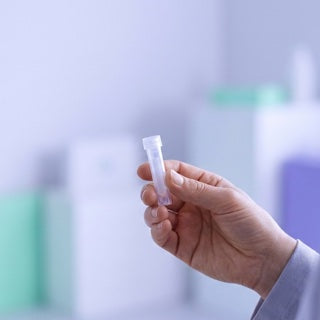 Three analyses, one package
Mikrobiom Maxi Plus with gut barrier, SIBO breath test and gut-brain axis complete
Three analyses, one package
Mikrobiom Maxi Plus with gut barrier, SIBO breath test and gut-brain axis complete
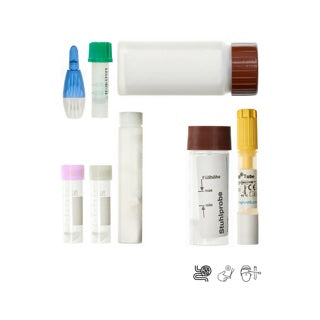 Gut-brain axis
Serotonin, GABA, tryptophan and histamine in stool
Gut-brain axis
Serotonin, GABA, tryptophan and histamine in stool
 Sample collection at home
Stool samples and breath test over about two days
Sample collection at home
Stool samples and breath test over about two days
 Results consultation included
Evaluation by the ORY expert team
Results consultation included
Evaluation by the ORY expert team
Principle
Measure first, then decide
Without measured values, any treatment is guesswork. We turn the order around: first the lab report, then the decision.

-
01
Measure Three combined analyses from stool and breath test, analysed at the partner laboratory in Germany.Bauch, Darm & Verdauungs-Check-up · stool + breath test · 7–21 days from sample arrival
-
02
See where you stand Every value appears in the lab report with the laboratory's reference range. You can see which values fall inside it and which do not.Lab report including a results consultation
-
03
Targeted instead of general Instead of a standard package you take what your values point to — agreed with the ORY expert team or with your doctor or naturopath.Initial consultation 10 minutes, free
-
04
Measure again after a few months The same analysis a second time shows how the values have changed.Earliest sensible interval: 3 months


Ory experts are there for you
All along the way, doctors and Heilpraktiker from the Ory team are there for you — with your lab report and everything after it.
What a value means and whether a supplement might be an option for you is something to discuss with the ORY expert team or with your doctor or naturopath. This page makes no recommendation and is no substitute for medical assessment.
Details
What this analysis covers
What is measured
Three analyses in one package – gut flora with gut barrier, small intestine breath test and gut-brain axis markers in stool.
The biomarker reference explains what lies behind the numbers: how values interact, which cofactors are involved and which biochemical processes take place in the body — for all values and areas, not only this analysis.
To the biomarker referenceThe values in detail
Hydrogen or methane raised in the SIBO breath test – what does it mean?
For the breath test you drink a lactulose solution. Lactulose is not absorbed by the body but fermented by bacteria; this produces hydrogen (H₂) and in some people methane (CH₄), which can be measured in the breath. A North American consensus considers a rise in hydrogen of at least 20 ppm within 90 minutes as an indication of small intestinal bacterial overgrowth (SIBO), and a methane value of 10 ppm or more as methane-positive (PubMed 28323273).
Raised methane is associated with constipation: in a meta-analysis, people with increased methane producers had constipation more often and more severely, and diarrhoea less often (PubMed 39147218). The lactulose breath test has limitations and can be falsely abnormal, for example with fast intestinal transit (PubMed 24095975).
Serotonin, GABA, tryptophan and histamine in stool – what do they show?
The gut-brain axis complete profile measures four substances in stool: serotonin, which in the gut influences bowel movement among other things, the inhibitory messenger GABA, the amino acid tryptophan as the starting material for serotonin, and histamine. Gut bacteria and their metabolites, including serotonin and amino acids, are being studied as factors in irritable bowel syndrome (PubMed 34631603).
Important context: measuring these substances in stool is not an established diagnostic procedure, and whether stool values say anything about messengers in the brain has not been shown. Histamine in stool is linked to histamine intolerance, a disputed condition (PubMed 38068827).
Calprotectin, zonulin, sIgA and alpha-1 antitrypsin – what do raised values mean?
Calprotectin comes from inflammatory cells and rises with inflammation of the intestinal lining. In a meta-analysis it distinguished inflammatory bowel disease well from irritable bowel syndrome; a low value makes such inflammation very unlikely (PubMed 37823411). A raised value should be assessed by a doctor. Alpha-1 antitrypsin in stool can indicate protein loss through the intestinal lining.
Secretory IgA is the most important antibody of the mucous membranes (PubMed 21975936). Zonulin is considered a gut barrier marker (PubMed 21248165); however, according to one study, a widely used zonulin assay detects related proteins instead of zonulin itself (PubMed 29459849). The value is therefore an indication, not proof of a "leaky gut".
Gut flora: diversity, dysbiosis index and butyrate producers – what does the report show?
The microbiome analysis describes the diversity of the gut flora, the enterotype, a dysbiosis index and individual groups such as bifidobacteria, butyrate producers such as Faecalibacterium prausnitzii and Akkermansia muciniphila. A systematic review found that people with irritable bowel syndrome more often had more Enterobacteriaceae and Bacteroides and less Faecalibacterium and Bifidobacterium than healthy people; whether this is cause or consequence is open (PubMed 30940523).
A microbiome report is a snapshot. Results from different test methods can differ considerably for the same sample (PubMed 41748906); the report therefore states the method and the laboratory's reference ranges.
Candida, Blastocystis or Dientamoeba detected – what does it mean?
Yeasts such as Candida are part of the gut flora in small amounts in many healthy people (PubMed 36135388). A distinct "Candida syndrome" with general complaints is not scientifically established.
The protists Blastocystis and Dientamoeba fragilis are also frequently found with modern methods. A recent review concludes that detection in people with an intact immune system usually does not mean disease, and that treatment showed no benefit in studies (PubMed 42838172). What a finding means for you belongs in the results consultation.
Indoles, bile acids and other metabolic values – how should they be interpreted?
The microbiome report also includes metabolites of gut bacteria, such as indoles from tryptophan, bile acids, TMA/TMAO, ammonia and bacterial breakdown products. Research studies such substances as a link between gut flora and complaints such as those in irritable bowel syndrome (PubMed 34631603).
For most of these values there are no generally accepted treatment thresholds yet. For some values the laboratory report also lists possible measures; this is the laboratory's presentation, not a recommendation from ORY. What is relevant for you is something to discuss with the ORY expert team or with your doctor or naturopath, for example from the ORY expert network.
Understanding gut health
What is SIBO – small intestinal bacterial overgrowth simply explained?
The small intestine normally contains far fewer bacteria than the large intestine. Small intestinal bacterial overgrowth (SIBO) means that there are too many bacteria there, causing digestive complaints (PubMed 32023228). Typical descriptions include bloating, a distended abdomen, diarrhoea and abdominal discomfort; a link with irritable bowel syndrome is also discussed (PubMed 24095975).
If mainly methane producers are found, experts today speak of intestinal methanogen overgrowth (IMO); constipation tends to be the main feature (PubMed 39147218).
What is the gut-brain axis – simply explained?
Gut and brain are connected via nerves, hormones, the immune system and metabolites of gut bacteria. The British Society of Gastroenterology therefore now classifies irritable bowel syndrome as a "disorder of gut-brain interaction" rather than merely a functional bowel disorder (PubMed 33903147). The German S3 guideline also describes the interplay between gut, nervous system and psyche (PubMed 34891206).
This also means: stress can worsen gut complaints, and persistent gut complaints can be a burden. The stool profile measures substances studied in this context; it does not offer a view "into the brain".
How meaningful are the SIBO breath test and stool values?
There is no perfect test for SIBO. The reference is the examination of small-bowel fluid obtained during an endoscopy – laborious and itself not standardised. Breath tests with lactulose or glucose are the simplest non-invasive alternative (PubMed 24095975) but have pitfalls that can lead to falsely abnormal or falsely normal results (PubMed 26902227). The lactulose breath test is therefore not a "gold standard".
Microbiome and metabolic values in stool are also snapshots that can differ between laboratories (PubMed 41748906). The package provides indications to be considered together with complaints and previous findings, but not a diagnosis.
Irritable bowel syndrome – how is it diagnosed medically?
According to the German S3 guideline, irritable bowel syndrome is diagnosed on the basis of typical, longer-lasting complaints after other causes have been reasonably excluded (PubMed 34891206). Depending on the situation this includes blood tests, stool tests such as calprotectin to exclude inflammatory bowel disease (PubMed 37823411), tests for coeliac disease or intolerances and, if needed, a colonoscopy.
A stool or breath test at home can complement this assessment but cannot replace it.
Complaints and medical assessment
SIBO and IBS symptoms: bloated belly, wind, constipation – what does research show?
Research links digestive complaints with the following findings, with varying strength of evidence:
- Wind, bloated belly and diarrhoea: described in small intestinal bacterial overgrowth (SIBO) – observed in studies, diagnosis is debated (PubMed 24095975, PubMed 26902227).
- Constipation and bloating: more common with increased methane producers – observed in a meta-analysis (PubMed 39147218).
- Irritable bowel syndrome with abdominal pain and changing bowel habits: altered gut flora in studies, cause or consequence open (PubMed 30940523).
- Abdominal pain linked to stress: irritable bowel syndrome as a disorder of gut-brain interaction – well established (PubMed 33903147).
- Persistent diarrhoea, abdominal pain, blood in the stool: in inflammatory bowel disease; calprotectin is an established marker – well established (PubMed 37823411).
- Abdominal pain, flushing, headache after histamine-rich meals: described in histamine intolerance – disputed (PubMed 17490952).
These are associations from studies, not causes in an individual. The package cannot explain complaints and does not provide a diagnosis. Persistent complaints belong in a medical assessment first.
When should I seek medical assessment first?
In case of blood in the stool or black stool, unintended weight loss, fever, nocturnal diarrhoea, severe or new abdominal pain, persistent vomiting, difficulty swallowing or anaemia, the first step is the doctor's practice, not a self-test. The same applies if your bowel habits change newly from around age 50, or if bowel cancer or inflammatory bowel disease runs in your family. The package does not replace bowel cancer screening.
Gut complaints and emotional strain are often linked. If your mood, drive or sleep have been affected for a longer time, talk to your doctor. In a crisis, the German TelefonSeelsorge is available free of charge around the clock: 0800 111 0 111.
Can SIBO or irritable bowel syndrome be treated?
This page does not give treatment advice. For the treatment of SIBO there is a guideline from the American College of Gastroenterology (PubMed 32023228); for irritable bowel syndrome, the German S3 guideline (PubMed 34891206). Which steps make sense depends on complaints, previous findings, medicines and diet.
What might be suitable for you belongs in a conversation with the ORY expert team or with your doctor or naturopath, for example from the ORY expert network. The results consultation is included in the price.
Who it is for, process and costs
For whom
The package is for anyone who wants their gut flora, gut barrier, possible small intestinal bacterial overgrowth (SIBO) and gut-brain axis markers examined in one go, instead of ordering the analyses separately. Whether the package suits you can be clarified in the free initial consultation with the ORY expert team or with your doctor or naturopath, for example from the ORY expert network.
What a single value means in your situation is something to discuss with the ORY expert team or with your doctor or naturopath, for example from the ORY expert network. It does not replace medical assessment.
What do I need to consider before the SIBO breath test and stool samples?
According to the instructions, stop antibiotics, probiotics and laxatives at least 4 weeks beforehand; prescribed medicines only after consulting your doctor. Avoid laxative foods such as prune juice for 24 hours beforehand. On the evening before, from 6 pm, eat only light food (for example white rice, white bread, chicken, fish, eggs) – no pulses, onions, garlic, fermented foods, fibre or alcohol. From 10 pm stay fasting, water only; no chewing gum, no mouthwash.
In the morning, collect the stool samples first – without contact with urine or toilet water – and store them in the fridge (2–8 °C), do not freeze. Then, at around 8 am, the fasting breath test begins: fasting sample, drink the lactulose solution within 5 minutes, then take a breath sample every 15–20 minutes for 90 minutes. Do not eat, smoke or exercise during the test. Ship chilled, Monday to Thursday only.
How it works
Four steps from order to lab report.
- 01 Kit arrives Ships the next working day, postage paid to your door.
- 02 Collect the samples Stool samples and breath test over about two days, keeping to the set order.
- 03 Send them in All samples together in the postage-paid envelope.
- 04 Get your lab report 7–21 days after the sample arrives, with a discussion if you want one.
Instructions
The essentials first:
- From the evening before, no pulses, fibre or fermented foods, and nothing to eat from 22:00 for the SIBO test.
- No antibiotics, probiotics or laxatives for 4 weeks beforehand.
- The SIBO breath test has to be done before eating and before the stool samples are taken — follow the order given in the instructions.
Please read the instructions carefully. Correct preparation matters: it is what allows your sample – stool, urine, saliva or blood – to be evaluated cleanly and meaningfully.
View full illustrated instructions
How long does it take to get the result?
The analysis usually takes 7–21 days from the samples' arrival at the laboratory. As soon as the reports are ready, you will be notified. The results consultation with the ORY expert team is included in the price.
How much does the gut check-up cost, and does health insurance pay?
The gut health & digestion check-up costs €1,240 including VAT, shipping and results consultation.
Statutory health insurance in Germany usually does not cover analyses you order yourself. With private insurance, reimbursement is possible; how this works is described under "Reimbursement by private insurance".
Reimbursement by private insurance
For possible reimbursement by your private insurer, this is how it works with us:
Many private insurers cover the cost in full or in part – some not at all. That depends entirely on your policy. We support you through the process as best we can.
Sending your sample back
So that your sample reaches the laboratory safely, please follow the rule for your country.
| Country | Postage | Shipping |
|---|---|---|
| Germany | Already paid | Return postage is prepared, you do not need a stamp. |
| Austria | Add your own postage | To our address in Vienna, not to Germany. |
| Switzerland | Add your own postage | Separate return bag for Switzerland, sent to Germany. |
| Rest of Europe | Add your own postage | Sent to Germany. |
In short: Germany, everything is ready. Austria, add postage and send to Vienna. Switzerland, add postage, special bag, send to Germany. Rest of Europe, add postage and send to Germany.
Family and partner diagnostics
Testing together shows connections that a single analysis does not reveal. We need three things for that.
From three tests of the same analysis for the family you get 10 % off. Write to us and you will receive your own discount code.
Send an email
Which gut test suits me?
The three analyses in the package are also available individually: Mikrobiom Maxi Plus + gut barrier + absorption (€465), the hydrogen & methane breath test (€115) and gut-brain axis complete (€116). More compact stool profiles are the gut profile microbiome & gut barrier (€315) and the basic gut profile (€285); Mikrobiom Maxi Plus (€285) measures the gut flora only.
Which scope makes sense for you can be clarified in the free initial consultation.
Also relevant
Similar analyses
More in depth, or with a different focus.


Which analysis suits you is best discussed in the initial consultation. See all analyses
Supplements
Supplements for the areas this analysis covers
Which product suits you, and in what amount, is something you discuss with the ORY expert team or with your doctor or naturopath after your lab report. This page recommends nothing.


Food supplements are no substitute for a balanced diet. The full range: Supplements
Orientation
What happens next
Five routes, independent of this analysis. The same on every product page.
ORY Berlin sells analyses and products. What a lab report means for you is something a non-medical practitioner or a doctor tells you, not this page.