


Breath gas test
Hydrogen & methane breath test – SIBO breath test (small intestine)
Breath test at home: hydrogen (H₂) and methane (CH₄) in breath in seven samples over 150 minutes – values on bacterial fermentation in the small intestine (topic: SIBO).
No prescription needed. Ships the next working day.
| Sample type | Atemluft, 7 Proben |
|---|---|
| Method | Gaschromatographie |
| Turnaround | 7–21 days from sample arrival |
| Analysis | Partner laboratory in Germany |
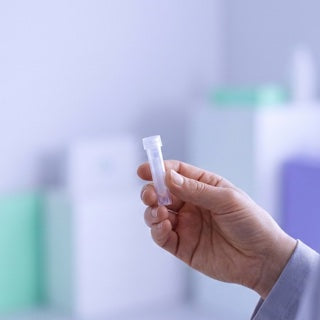 Seven samples over 150 minutes
Reference sample on an empty stomach, then the test solution and six more samples
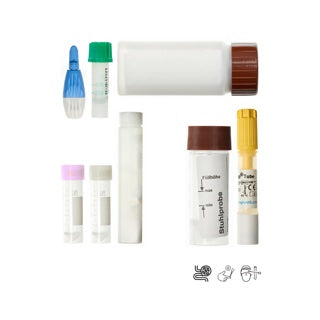 Hydrogen & methane
Both gases measured by gas chromatography in the partner laboratory
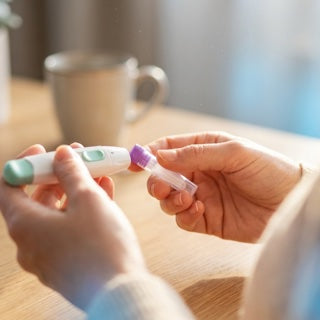 Sample collection at home
Breath samples with bag and tubes, about two and a half hours
 Results consultation included
Evaluation by the ORY expert team
Principle
Measure first, then decide
Without measured values, any treatment is guesswork. We turn the order around: the lab report first, then the decision.

-
01
Measure Hydrogen and methane in breath gas over 150 minutes, analysed in the partner laboratory in Germany.SIBO breath test · breath, 7 samples · 7–21 days from sample arrival
-
02
See where you stand Every value is in the lab report with the lab's reference range. You can see which values sit inside it and which do not.Lab report including a consultation
-
03
Targeted, not generic Instead of a standard package you take what your values point to — agreed with the ORY expert team or with your doctor or naturopath.Initial consultation, 10 minutes, free
-
04
Measure again after a few months Running the same analysis a second time shows how the values have changed.Earliest sensible gap: 3 months


ORY experts stay with you
Doctors and Heilpraktiker from the ORY team are there for you the whole way — with your lab report and with whatever follows.
What a value means and whether a supplement might be an option for you is something to discuss with the ORY expert team or with your doctor or naturopath. This page makes no recommendation and is no substitute for medical assessment.
Details
What is in this analysis
What is measured
Hydrogen (H₂) and methane (CH₄) in breath in seven samples over 150 minutes – values on bacterial fermentation in the small intestine.
The biomarker reference explains what lies behind the numbers: how values interact, which cofactors are involved and which biochemical processes take place in the body — for all values and areas, not only this analysis.
To the biomarker referenceThe values in detail
Hydrogen (H₂) raised in the SIBO breath test – what does it mean?
The small intestine normally contains far fewer bacteria than the large intestine. If more bacteria are present there, they can ferment the test solution early, producing hydrogen that is exhaled. An early, marked rise in hydrogen can therefore be an indication of increased bacterial fermentation in the small intestine (PubMed 28323273).
In the North American consensus, a rise of at least 20 ppm within 90 minutes in a glucose or lactulose breath test is considered conspicuous (PubMed 28323273). The report states the reference range given by the laboratory for each sample. A conspicuous value is an indication, not a diagnosis: the European guideline describes several confounding factors that make interpretation difficult for this question (PubMed 34431620).
Methane (CH₄) raised – what does a positive methane breath test mean?
In the gut, methane is produced not by bacteria but by methanogenic archaea, which consume hydrogen. The term IMO (intestinal methanogen overgrowth) is used for an increased amount of these microorganisms. In the North American consensus, a methane value of 10 ppm or more is considered methane-positive (PubMed 28323273).
A meta-analysis found that people with raised methane had constipation more often and more severely, and diarrhoea less often, than comparison groups (PubMed 39147218). Because methane is formed from hydrogen, hydrogen may stay low in some people while methane rises; this is why the test measures both gases.
Why seven samples over 150 minutes?
The first sample is taken on an empty stomach before the test solution; it is the baseline value. Six more samples follow after 30, 50, 70, 90, 120 and 150 minutes. The report shows the hydrogen and methane values for all seven samples as a table and a curve.
What matters is the course over time: when a rise begins is discussed in the literature as an indication of whether fermentation takes place in the small intestine or already in the large intestine. Exactly this distinction is disputed among specialists (see below).
Understanding SIBO
What is SIBO – small intestinal bacterial overgrowth explained simply?
SIBO stands for “small intestinal bacterial overgrowth”. The guideline of the American gastroenterologists describes SIBO as an excessive number of bacteria in the small intestine that causes gastrointestinal symptoms (PubMed 32023228).
The reference method is the examination of small-intestinal fluid taken during an upper endoscopy. Breath tests with glucose or lactulose are non-invasive but an indirect method that, according to a review, still needs further standardisation and validation (PubMed 31584459).
What are the causes and risk factors for SIBO?
A review names, among other things, acid blockers (proton pump inhibitors), opioids, operations such as gastric bypass or colectomy, and impaired intestinal motility as predisposing factors (PubMed 31584459). A meta-analysis found conspicuous results more often in people with irritable bowel syndrome than in comparison groups, but rated the quality of the data as low (PubMed 31913194).
How meaningful is a SIBO breath test – lactulose or glucose?
How meaningful the result is depends strongly on the test sugar and the assessment rules. In a meta-analysis, lactulose breath tests were around 3.6 times more often conspicuous in people with irritable bowel syndrome and around 7.6 times more often in healthy people than glucose tests (PubMed 31913194). The role of lactulose for this question is therefore debated (PubMed 29535443).
For this page this means: a conspicuous breath test is a measurement that must be interpreted together with symptoms, previous illnesses and medication. The diagnosis of SIBO is made by a doctor, not by the test.
Testing for SIBO – breath test, stool test or blood test?
Bacteria in the small intestine can only be determined directly from a sample taken from the small intestine during an endoscopy. Breath tests are the non-invasive but indirect alternative (PubMed 31584459). A stool test mainly reflects the flora of the large intestine and is therefore no substitute for a breath test for this question; a blood test does not directly capture the bacteria in the small intestine either.
Complaints and medical assessment
SIBO symptoms – which complaints are described?
Research associates the following complaints with small intestinal bacterial overgrowth, with varying strength of evidence:
- Bloating, distension and gas: frequently described, but according to a review they do not predict a conspicuous result (PubMed 31584459).
- Diarrhoea: frequently described; in a meta-analysis, conspicuous results were more common in diarrhoea-predominant than in constipation-predominant irritable bowel syndrome (PubMed 31913194).
- Constipation: more frequent and more pronounced with raised methane (IMO) in a meta-analysis (PubMed 39147218).
- Abdominal pain, nausea and flatulence: frequently reported in people with raised methane (PubMed 39147218).
- Irritable bowel syndrome: an association is observed in studies, but the data quality is low (PubMed 31913194).
These are associations from studies, not causes in an individual person. The test cannot explain symptoms and does not provide a diagnosis. Persistent symptoms should first be assessed by a doctor.
When should I see a doctor first?
If you have blood in your stool or black stool, unintended weight loss, fatty stools, fever, diarrhoea at night, severe or new abdominal pain, persistent vomiting or difficulty swallowing, the first step is a doctor’s practice, not a self-test. The same applies if your bowel habits change for the first time from around the age of 50, or if inflammatory bowel disease, coeliac disease or bowel cancer runs in your family.
Anyone with symptoms after stomach or bowel surgery, with diabetes or with known bowel disease should discuss the test with their treating doctor beforehand. A breath test does not replace bowel cancer screening.
Can SIBO be treated?
This page does not give treatment advice. Whether a result means anything at all and which steps make sense depends on your whole situation: symptoms, previous findings, medication and diet. Treatment of SIBO is a medical decision; the guideline of the American gastroenterologists summarises the options (PubMed 32023228).
What makes sense for you belongs in a conversation with the ORY expert team or with your doctor or naturopath, for example from the ORY expert network. The results consultation is included in the price.
Who it is for, process and costs
For whom
The breath test is for anyone who would like to have hydrogen and methane in their breath measured over 150 minutes after a test solution. Whether the measurement suits you can be clarified in the free initial consultation with the ORY expert team or with your doctor or naturopath, for example from the ORY expert network.
What a single value means in your situation is something to discuss with the ORY expert team or with your doctor or naturopath, for example from the ORY expert network. This does not replace a medical assessment.
SIBO breath test preparation – what do I need to consider?
4 weeks before: no antibiotics. 7 days before: no laxatives and no antacids such as aluminium or magnesium hydroxide. Only pause prescribed medication after talking to your doctor.
In the 48 hours before: only easily digestible food without fibre, for example rice or chicken breast; no sugar, no sweets, no pro- or prebiotics and no alcohol.
12 hours before: fast, meaning no food or drink, no chewing gum, no toothpaste and no mouthwash. From 1 hour before and during the test: no smoking, no physical exertion, no sleeping. After drinking the test solution, no water for 1 hour; after that, still water is allowed again.
How does the SIBO breath test work at home?
The test takes about two and a half hours. First you take the reference sample on an empty stomach: breathe in, hold your breath briefly and breathe out through the mouthpiece into the bag, then fill tube 1. Directly afterwards you drink the test solution and note the time on the test record. Six more samples follow after 30, 50, 70, 90, 120 and 150 minutes.
At the end, all seven tubes go into the shipping bag together with the completed request form and test record; no postage is needed. No refrigeration is required.
How it works
Four steps from order to lab report.
- 01 Kit arrives Ships the next working day, postage paid to your door.
- 02 Reference sample & test solution A fasting reference sample, then drink the test solution.
- 03 Measure breath gas Blow seven samples into tubes over 150 minutes.
- 04 Get your lab report 7–21 days after the sample arrives, consultation included.
Instructions
The key points first:
- Start on an empty stomach: reference sample (tube 1) before drinking the test solution.
- After drinking the test solution, blow into the tubes at set intervals up to 150 minutes.
- Send all tubes back together, labelled.
Please read the instructions carefully. Correct preparation matters: it is what allows your sample — stool, urine, saliva or blood — to be evaluated cleanly and meaningfully.
View full illustrated instructions
What does the report contain?
The report shows hydrogen and methane for all seven samples as a table and a curve, each with the reference range stated by the laboratory. A sample report can be seen in the instructions. What the values mean for you belongs in the results consultation, which is included in the price.
How long does it take to get the results?
The analysis usually takes 7–21 days from the time the sample arrives at the laboratory. You will be notified as soon as your report is ready. The results consultation with the ORY expert team is included in the price.
How much does the SIBO test cost, and does health insurance pay?
The hydrogen & methane breath test costs €115 including VAT, shipping, return shipping within Germany and the results consultation.
Statutory health insurance in Germany does not usually cover breath tests that you order yourself. With private insurance, reimbursement may be possible; the process is described under “Reimbursement by private insurance”.
Reimbursement by private health insurance
This is how it works with us if your private insurance may reimburse you:
Many private insurers cover the cost in full or in part – some not at all. That depends solely on your contract. We support you through the process as well as we can.
Sending your sample back
So your sample reaches the laboratory safely, please follow the rule for your country.
| Country | Postage | Shipping |
|---|---|---|
| Germany | Already paid | Return postage is prepared, you do not need to add a stamp. |
| Austria | Add your own postage | To our address in Vienna, not to Germany. |
| Switzerland | Add your own postage | Separate return bag for Switzerland, sent to Germany. |
| Rest of Europe | Add your own postage | Sent to Germany. |
In short: Germany is all set. Austria, add postage and send to Vienna. Switzerland, add postage, special bag, send to Germany. Rest of Europe, add postage and send to Germany.
Family and partner diagnostics
Testing together shows connections that a single analysis does not make visible. We need three things for that.
From three tests of the same analysis for the family you get 10 % off. Write to us and you will receive your own discount code.
Send an email
Which test is right for me?
The hydrogen & methane breath test (€115) looks at gases produced early after a test solution. The lactose breath test (€65) and the fructose absorption analysis (€65) measure the response to milk sugar and fruit sugar respectively. The gut profile microbiome & gut barrier (€315) looks at gut flora, gut barrier and digestion in stool; the gut health & digestion check-up package (€1,240) combines several analyses.
Which test makes sense for you can be clarified in the free initial consultation.
Also relevant
Similar analyses
More in depth, or a different focus.

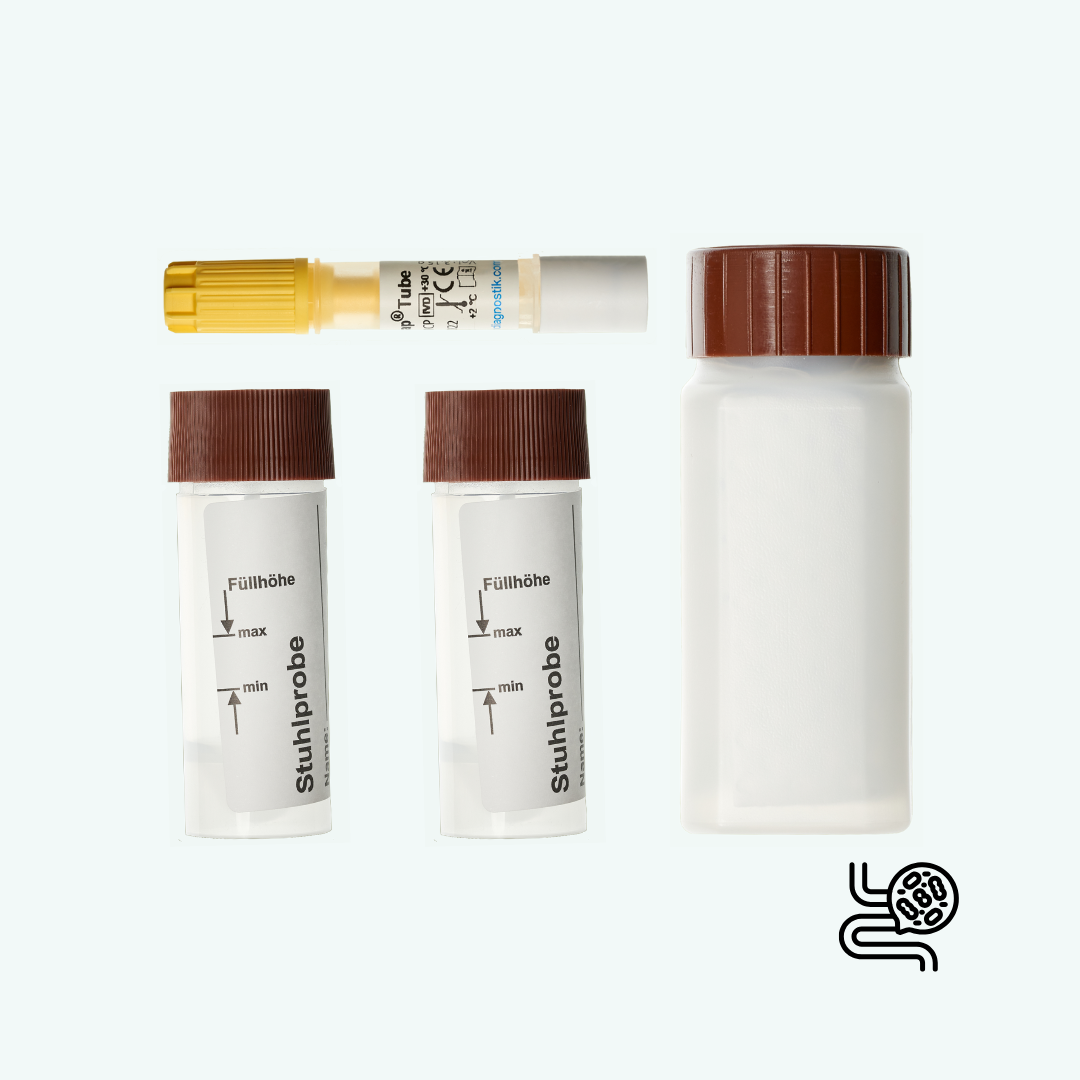
Which analysis suits you is best discussed in the initial consultation. See all analyses
Supplements
Supplements for the areas this analysis covers
Which product suits you, and in what amount, is something you discuss with the ORY expert team or with your doctor or naturopath after your lab report. This page recommends nothing.


Food supplements are no substitute for a balanced diet. The full range: Supplements
Orientation
What happens next
Five routes, independent of this analysis. The same on every product page.
ORY Berlin sells analyses and products. What a lab report means for you is something a non-medical practitioner or a doctor tells you, not this page.