


Stool test · worm DNA by PCR
Worm profile – stool test for worm DNA and microsporidia (PCR)
Stool test for home use: multiplex PCR for DNA of worms (roundworm, pinworm, hookworms, whipworm, threadworm, tapeworms) and microsporidia. A positive result is an indication that is assessed by a doctor.
Dispatched the next working day.
| Sample type | Stuhlprobe |
|---|---|
| Method | Multiplex real-time PCR |
| Turnaround | 7–21 days from sample arrival |
| Analysis | Partner laboratory in Germany |
 Worms and microsporidia
DNA of several worm species and of microsporidia from one sample
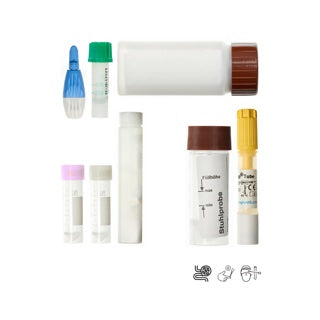 Multiplex real-time PCR
Several target sequences in one run, result positive or negative
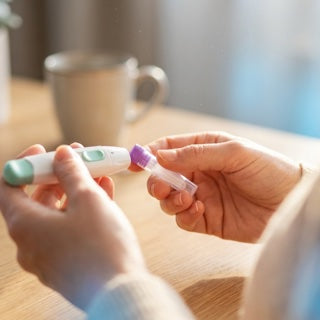 Sample collection at home
One stool sample with the OmicSnap Meta tube, no cooling
 Results consultation included
Evaluation by the ORY expert team
The approach
Measure, interpret, assess
A stool test provides indications, not a diagnosis. What matters is what happens after the report: positive results are assessed by a doctor, who decides on any treatment.

-
01
Measure DNA of several worm species and of microsporidia from one stool sample, analysed in a partner laboratory in Germany.Worm profile · stool sample · 7–21 days from sample arrival
-
02
See what was found Each item appears in the report as positive or negative. A negative result does not reliably rule out an infection.Report including consultation
-
03
Get it assessed A positive result is an indication that is confirmed and interpreted by a doctor, who also decides on any treatment.Consultation with the ORY expert team or your doctor
-
04
Pinworms separately For pinworms, the adhesive tape test at the anus is the usual examination, not stool.Paediatrician or GP


Ory experts support you
Doctors and naturopaths from the ORY team are there for you throughout — with the lab report and with everything that follows.
What a value means and whether a supplement might be an option for you is something to discuss with the ORY expert team or with your doctor or naturopath. This page makes no recommendation and is no substitute for medical assessment.
Details
What this analysis includes
What is measured
The laboratory examines one stool sample by PCR for the genetic material of several worm species and of microsporidia. Each item appears in the report as "positive" or "negative" – there is no quantity.
The biomarker reference explains what lies behind the numbers: how values interact, which cofactors are involved and which biochemical processes take place in the body — for all values and areas, not only this analysis.
To the biomarker referenceThe values in detail
Roundworm (Ascaris) positive in stool – what does that mean?
The roundworm (Ascaris lumbricoides) belongs to the so-called soil-transmitted helminths. Its eggs reach the mouth via contaminated soil, vegetables or hands; the larvae migrate through the liver and lungs before the adult worms live in the small intestine. Worldwide, more than a quarter of the population is at risk of such worms, mainly in tropical regions with basic sanitation (PubMed 28882382, review in the Lancet).
Positive means: the laboratory found roundworm genetic material in the sample. The review describes that infected people can present with very different conditions and that doctors should consider these worms in people living in or returning from endemic regions (well established). Many infected people have no complaints.
Limits: the report does not show how many worms are present. Whether and how to treat is decided by the doctor.
Pinworms – why is a stool test of limited value here?
Pinworms (Enterobius vermicularis) are the most common human worms in Europe. According to a paediatric review, around 30% of children worldwide are affected, most often at the age of 5 to 14; about 30 to 40% of those affected have no complaints. The most common sign is itching around the anus at night (PubMed 38288810).
The females lay their eggs on the skin around the anus, not in the gut. That is why worms and eggs usually do not end up in the stool. The review names the adhesive tape test ("sellotape test") as the best examination: a single test detects about half of cases, three tests on three mornings about 90%. Stool examination is explicitly not recommended for pinworms (well established).
What this means for you: a positive result for pinworm DNA is an indication; a negative result does not rule out pinworms. For anal itching – especially in children – the tape test at the paediatrician or GP is the usual route.
Hookworm, whipworm or threadworm positive – what does that mean?
These three roundworms occur mainly in tropical and subtropical regions. Hookworms (Ancylostoma duodenale, Necator americanus) and the threadworm (Strongyloides stercoralis) enter the body as larvae through the skin, for example when walking barefoot; the whipworm (Trichuris trichiura) via eggs from soil or food (PubMed 28882382).
The threadworm has a special feature: its larvae can develop further in the gut and re-infect the body (autoinfection). Many infected people have no or non-specific gastrointestinal, respiratory or skin complaints. With weakened immunity – for example under cortisone or other immunosuppressive drugs – this can lead to a severe, often life-threatening course (well established, PubMed 38272922).
Positive means: genetic material of the respective worm was found. This result belongs in a doctor's hands, for threadworm especially when immunosuppressive treatment is planned or ongoing.
Tapeworm or dwarf tapeworm positive – what does that mean?
The test covers tapeworms of the genus Taenia (beef and pork tapeworm) and, according to the sample report, the dwarf tapeworm (Hymenolepis nana). Taenia tapeworms are acquired via raw or undercooked beef or pork and live in the small intestine; single segments are passed with the stool. With the pork tapeworm (Taenia solium), the larvae can also invade tissue (cysticercosis), with courses ranging from symptom-free to severe (PubMed 26824681). The dwarf tapeworm is transmitted from person to person and is considered a neglected worm infection found worldwide (PubMed 25743998).
Positive means: tapeworm genetic material was found. The doctor clarifies which species it is and whether further examinations are needed.
Not covered: the fox tapeworm and dog tapeworm (Echinococcus) are not among the measured species. In humans they do not live in the gut but form cysts in organs; a stool test is not suitable for them.
Microsporidia positive in stool – what does that mean?
Microsporidia are not worms but spore-forming single-celled organisms that live in cells of the gut lining (including Enterocytozoon bieneusi, Encephalitozoon intestinalis). They were first described mainly in people with severely weakened immunity (PubMed 9675442).
A study of 21 travellers with normal immunity and persistent diarrhoea after trips to the tropics found microsporidia in the stool; the diarrhoea resolved in almost all, even though the microsporidia sometimes remained detectable in the stool. The authors see only a transient link between detection and complaints (observed in studies, small study, PubMed 16103591).
What this means for you: a positive result alone says little about its significance. It is assessed by a doctor, especially with weakened immunity.
What do "positive" and "negative" mean in the report – and how reliable is the result?
PCR specifically amplifies short sections of genetic material and assigns them to a species via a target sequence. The result is qualitative: positive (found) or negative (not found). There is no quantity or "severity".
Negative means: no genetic material of the measured species was found in this one sample. However, worms do not release their genetic material evenly but intermittently into the stool. A negative result therefore does not reliably rule out an infection – and certainly not for pinworms (see above).
Positive means: genetic material was found. This is an indication that is confirmed and interpreted by a doctor. Whether there is an infection that needs treatment is determined by the doctor, not by the report alone.
Understanding worms in humans
Worms in humans simply explained – which ones exist and how are they caught?
Worms living in the human gut can roughly be divided into two groups: roundworms (pinworm, roundworm, whipworm, hookworms, threadworm) and tapeworms. The routes of infection differ:
- Hand to mouth: pinworm eggs are passed on via fingers, laundry or objects, often within families and nursery groups (PubMed 38288810).
- Soil and food: roundworm and whipworm eggs mature in soil and are ingested with contaminated vegetables, water or via the hands (PubMed 28882382).
- Through the skin: hookworm and threadworm larvae penetrate on contact with contaminated soil (PubMed 28882382).
- Meat: beef and pork tapeworm via raw or undercooked meat.
Apart from the pinworm, the measured worms are rare in Germany and occur mainly after stays in tropical or subtropical countries.
Worm eggs in stool – can you see them, and how are worms detected?
Worm eggs cannot be seen with the naked eye; at most, whole worms or tapeworm segments are visible. There are several ways to examine:
- Microscopy of a stool sample for eggs and larvae – the classic method in practices and laboratories (PubMed 28882382).
- PCR for the genetic material of worms, as in this test. Several species are checked in one run.
- Adhesive tape test at the anus for pinworms, ideally on three mornings (PubMed 38288810).
- Blood test: a rise in certain white blood cells (eosinophils) can indicate worms in returning travellers; British guidelines describe how doctors then investigate further (PubMed 39537036).
If you have seen a worm or a worm segment in your stool, take it – for example in a closed container – to the doctor's practice. It can be identified there directly.
Are worms in humans notifiable?
None of the worms measured in this profile, and no microsporidia, are on the national German list of notifiable pathogens under § 7 IfSG of the Infection Protection Act (checked October 2026). Notifiable there are, for example, the fox and dog tapeworm (Echinococcus) and Trichinella – neither is measured by this stool test.
Regardless of the pathogen: in Germany, children under six with infectious diarrhoea may temporarily not attend community facilities such as nurseries (§ 34 IfSG), and people working with food are subject to special rules if they have infectious diarrhoea (§ 42 IfSG). What applies in an individual case is clarified by the doctor.
Complaints and medical assessment
Worm symptoms – which complaints are known with worms?
Many people with worms have no complaints. Where complaints do occur, research describes different patterns depending on the worm:
- Itching around the anus, especially at night: the most common sign with pinworms; 30 to 40% of those affected have no complaints (PubMed 38288810, well established).
- Abdominal pain, diarrhoea, bloating: non-specific gut complaints are described with soil-transmitted worms and threadworm (PubMed 28882382, PubMed 38272922, well established but not specific).
- Anaemia and malnutrition: with heavy hookworm or whipworm infection, especially in children in endemic regions (PubMed 28882382, well established).
- Cough, skin rash: respiratory and skin complaints are described with threadworm (PubMed 38272922, observed in studies).
- Persistent diarrhoea after travel: observed with microsporidia, usually transient (PubMed 16103591, small study).
- Raised eosinophils in the blood: a laboratory sign in returning travellers, not a noticeable complaint (PubMed 39537036, guideline).
Important: these associations come from studies of groups of people. They do not show what causes complaints in an individual. The test does not explain complaints and does not make a diagnosis. Please have persistent or new complaints assessed by a doctor first.
When should I see a doctor first – instead of testing?
With these signs, a medical examination is the first step, not a home test – and waiting is not a good idea:
- Blood in the stool or black, tarry stool
- Fever, especially together with diarrhoea or after travel
- Severe or increasing abdominal pain, vomiting
- Diarrhoea after travel to tropical or subtropical countries, especially if it lasts more than a few days
- Unintended weight loss, severe tiredness or paleness
- Signs of dehydration, especially in young children, older people and during pregnancy
- Weakened immunity, for example due to cortisone, chemotherapy or other immunosuppressive drugs
- A visible worm or worm segment in the stool – ideally take it with you
- Children with anal itching: paediatrician or GP, where the tape test is usual
In Germany, stool examinations ordered by a doctor because of complaints are usually covered by statutory health insurance.
Positive result – what happens next?
A positive result is an indication that is assessed by a doctor. Take the report to your GP or paediatrician, and if you have returned from travel, to a tropical medicine clinic. There it is decided whether the result should be confirmed, whether further examinations are needed and whether and how to treat.
With pinworms, the doctor also decides whether other household members are examined or treated as well; the review describes that re-infection within households is common (PubMed 38288810).
The free results consultation with the ORY expert team or with your doctor or naturopath, for example from the ORY expert network helps you understand the report and prepare for the medical appointment. It does not replace medical assessment.
Can worms be treated at home – deworming, home remedies, parasite cleanses?
This page does not recommend any products – neither deworming medicines from the pharmacy nor home remedies or herbal "parasite cleanses". Which treatment is appropriate depends on the worm species, age, pregnancy and other conditions. This is decided by the doctor after the result.
For prevention, the pinworm review mentions general hygiene: frequent handwashing, especially after using the toilet and before meals, short fingernails and no scratching in the anal area (PubMed 38288810). This is not a treatment.
A follow-up test after treatment only makes sense if the doctor considers it necessary.
Who it is for, process and costs
For whom
The test is intended for adults who want a stool sample examined by PCR for worm DNA and microsporidia, for example after longer stays in tropical or subtropical countries. It is not intended as the first step with warning signs such as blood in stool, fever, severe abdominal pain or diarrhoea after travel to the tropics – here a medical examination is the first step. For itching around the anus at night, especially in children, the adhesive tape test at the paediatrician or GP is the usual examination. Whether the test suits you can be clarified in the free initial consultation with the ORY expert team or with your doctor or naturopath, for example from the ORY expert network.
What a single value means in your situation is something to discuss with the ORY expert team or with your doctor or naturopath, for example from the ORY expert network. It does not replace medical assessment.
What do I need to consider before the stool worm test?
Collecting the sample takes a few minutes. Important points:
- No contact with toilet water: collect the stool with the water-soluble stool catcher. Cleaning agents and disinfectants can distort the PCR result.
- Only open the yellow cap: insert the sampling stick into the stool in at least four places, close the tube and swirl it, do not shake. Do not open the white cap.
- Label the tube and complete the request form, including the collection date.
- Send quickly: the sample must reach the laboratory within 72 hours. Do not send on Fridays, at weekends or before public holidays. Cooling is not needed.
If you take medication or have recently been treated for worms, mention this in the results consultation.
How it works
Four steps from order to lab report.
- 01 Kit arrives Dispatched the next working day, postage-free to your home.
- 02 Collect the sample One stool sample with the OmicSnap Meta tube, a few minutes.
- 03 Send in Postage-free to the laboratory, Monday to Thursday, arrival within 72 hours.
- 04 Receive your report 7–21 days after the sample arrives, with consultation. Positive results are assessed by a doctor.
Instructions
The essentials first:
- Collect the stool with the water-soluble stool catcher, without contact with toilet water or cleaning agents.
- Only open the yellow cap, insert the stick into the stool in at least four places, close and swirl, do not shake; do not open the white cap.
- Label, complete the request form and send so that the sample reaches the laboratory within 72 hours – not on Fridays, at weekends or before public holidays.
Please read the instructions in full before you start. Mistakes during sample collection can distort the result or mean that the laboratory cannot analyse the sample.
View full illustrated instructions
Sample report
This is what the report looks like: each measured worm species and the microsporidia with the result "positive" or "negative". The sample report shows example values, not a statement about your result.
View sample report
How long does it take to get the result?
The kit is dispatched the next working day. The report is usually available 7–21 days after the sample arrives at the laboratory, not from the date of order. As soon as it is ready, we will inform you and you can book the free results consultation.
If you have acute complaints, do not wait for the result – see a doctor.
How much does the worm test cost, and does health insurance pay?
The worm profile costs €125.00 including VAT, shipping, return shipping and results consultation.
Statutory health insurance in Germany usually does not cover this self-test. If a doctor orders a stool examination or tape test because of complaints, insurance usually covers it. Private health insurance reimburses laboratory analyses fully, partly or not at all, depending on the contract – the section below describes the process.
Reimbursement by private insurance
This is how it works with us if your private insurance may reimburse you:
Many private insurers cover the cost in full or in part – some not at all. That depends entirely on your policy. We support you through the process as best we can.
Sending your sample back
So that your sample reaches the laboratory safely, please follow the rule for your country.
| Country | Postage | Shipping |
|---|---|---|
| Germany | Already paid | Return postage is arranged, you do not need to add a stamp. |
| Austria | Add your own postage | To our address in Vienna, not to Germany. |
| Switzerland | Add your own postage | Separate return bag for Switzerland, sent to Germany. |
| Rest of Europe | Add your own postage | Sent to Germany. |
In short: Germany, nothing to do. Austria, add postage and send to Vienna. Switzerland, add postage, special bag, send to Germany. Rest of Europe, add postage and send to Germany.
Testing for families and partners
Testing together shows connections a single analysis cannot make visible. We need three things for it.
From three tests of the same analysis for the family, you get 10 % off. Write to us and we will send your personal discount code.
Send an email
Which test suits me?
Different examinations suit different questions:
- Worm profile (this page, €125.00): stool PCR for DNA of several worm species and microsporidia.
- Parasite PCR profile (€150.50): stool PCR for DNA of six intestinal single-celled organisms (protozoa) instead of worms, including Blastocystis and Dientamoeba.
- Basic gut profile (€285.00): broader stool profile on microbiome, leaky gut markers and histamine, without worm testing.
- Pinworms: here the tape test at the paediatrician or GP is the usual examination, not a stool test.
With complaints, a medical examination is the first step. Which analysis makes sense beyond that is something to discuss in the free initial consultation with the ORY expert team or with your doctor or naturopath, for example from the ORY expert network.
Also relevant
Similar analyses
More in depth, or with a different focus.


Which analysis suits you is best discussed in the initial consultation. See all analyses
Supplements
Supplements in the ORY range
These products are not related to the values of this test and are not a treatment for worms or parasites. Whether a product is suitable for you is something to discuss with the ORY expert team or with your doctor or naturopath. This page does not recommend anything.


Food supplements are no substitute for a balanced diet. The full range: Supplements
Orientation
What happens next
Five routes, independent of this analysis. The same on every product page.
ORY Berlin sells analyses and products. What a lab report means for you comes from a practitioner or a doctor, not from this page.