


Broad-spectrum analysis
Prevent 360 – at-home blood test: amino acids, fatty acids & nutrients
At-home blood test: micronutrients, amino acids, fatty acids with omega-3 index, cortisol and DHEAS, vascular, gut and bile acid markers – 75 parameters from one sample of dried capillary blood.
No prescription needed. Ships the next working day.
| Sample type | Kapillarblut, 120 µl |
|---|---|
| Method | Mass spectrometry (LC-MS, GC-MS, ICP-MS) |
| Turnaround | 7–21 days from sample arrival |
| Analysis | Partner laboratory in Germany |
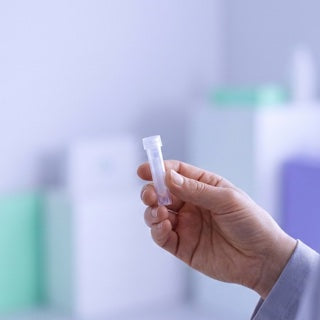 75 parameters, one sample
Micronutrients, amino acids, fatty acids, hormones and bile acids
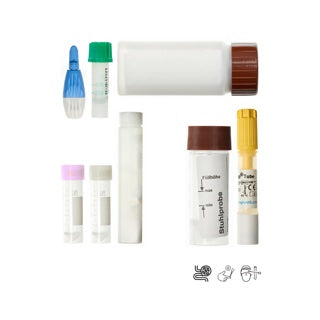 Laboratory analysis
Mass spectrometry, reference range for every value
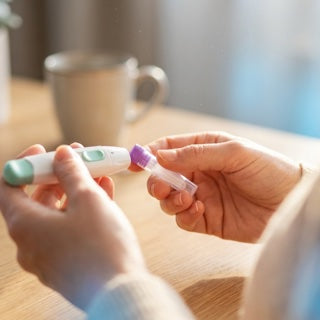 Sample collection at home
About 120 µl of capillary blood on Mitra sticks, in the morning while fasting
 Results consultation included
Evaluation by the ORY expert team
Principle
Measure first, then decide
Without measured values, any supplement is guesswork. We turn the order around: first the lab report, then the decision — and after a few months, the same measurement again.

-
01
Measure 75 parameters according to the laboratory from one capillary blood sample, analysed in a partner laboratory in Germany.Prevent 360 · Mitra sticks · 7–21 days from sample arrival
-
02
See where you stand Every value appears in the lab report with the laboratory's reference range. You see which ones fall inside it and which do not.Lab report as PDF
-
03
Targeted, not generic Instead of a standard package you take what your values point to — agreed with the ORY expert team or with your doctor or naturopath.Initial consultation, 10 minutes, free
-
04
Measure again after a few months The same analysis a second time shows how the values have changed.Earliest sensible interval: 3 months


ORY experts are with you
Doctors and non-medical practitioners from the ORY team are there for you throughout — with the lab report and with whatever comes next.
What a value means and whether a supplement might be an option for you is something to discuss with the ORY expert team or with your doctor or naturopath. This page makes no recommendation and is no substitute for medical assessment.
Details
What this analysis covers
What is measured
75 parameters according to the laboratory from one sample of dried capillary blood, grouped into six areas. Every value appears in the report with the laboratory's reference range.
The biomarker reference explains what lies behind the numbers: how values interact, which cofactors are involved and which biochemical processes take place in the body — for all values and areas, not only this analysis.
To the biomarker referenceThe values in detail
Vitamin D, magnesium, zinc, selenium or iron too low – what does it mean?
Prevent 360 determines five micronutrients in whole blood: vitamin D (25-OH), magnesium, zinc, selenium and iron. Marked vitamin D deficiency can lead to bone pain, muscle weakness and softening of the bones (PubMed 17634462). Magnesium is involved in muscle, nerve and heart function; a deficiency can show up in muscles, nerves and heart rhythm (PubMed 39355467). A pronounced zinc deficiency shows, among other things, in skin, hair, wound healing and immunity (PubMed 3896271). For selenium there is a U-shaped relationship: too little and too much can both be unfavourable (PubMed 22381456).
Important for interpretation: iron in whole blood comes mostly from the red blood pigment and is not the same as the iron stores. Ferritin is the established marker for iron deficiency (PubMed 25946282), and Prevent 360 does not measure it.
Omega-3 index too low – what do the fatty acids show?
The fatty acid status shows the proportion of various fatty acids in the blood, including the omega-3 fatty acids EPA and DHA, the omega-6 fatty acids linoleic acid and arachidonic acid as well as saturated and monounsaturated fatty acids. From these the laboratory calculates the omega-3 index, the ratio of arachidonic acid to EPA and an "eicosanoid balance".
The omega-3 index was proposed as a risk marker for cardiovascular disease: in studies, values of 8% or more were associated with the lowest and values of 4% or less with the highest risk of cardiac death (PubMed 15208005). It was originally measured in red blood cells; values from dried blood cannot simply be equated with this. A low value does not cause complaints; it indicates intake over a longer period.
Amino acids in the blood too low or high – what does the amino acid profile show?
The amino acid profile comprises 20 values: essential amino acids such as leucine, isoleucine, valine, phenylalanine and tryptophan, plus tyrosine, glutamine, glycine, taurine, arginine, citrulline and GABA, among others. Amino acids are building blocks of proteins and starting materials for messenger substances; their blood levels depend strongly on diet, muscle metabolism and the time of the last meal (PubMed 29755574).
One example from research: elevated branched-chain amino acids (leucine, isoleucine, valine) have been found more often in overweight and associated with insulin resistance and type 2 diabetes (PubMed 25287287). For most individual amino acids there is no established meaning of low or high values in dried blood. GABA is an inhibitory messenger in the brain; how well the blood value reflects conditions in the brain has not been clarified.
Elevated kynurenine – what do tryptophan, kynurenine and IDO activity show?
Most tryptophan is broken down via the kynurenine pathway; a smaller part serves as the starting material for serotonin and melatonin (PubMed 37352864). The enzyme IDO, which controls the first step, is activated during inflammation by messengers of the immune system. Elevated kynurenine and increased IDO activity are therefore regarded as a sign that this pathway is activated, for example by inflammation or stress (PubMed 31884118).
The value is non-specific: it does not tell where inflammation is taking place or whether it causes complaints. Research also studies tryptophan metabolism in connection with mood, drive and sleep (PubMed 37352864); that is not enough for a statement about an individual.
Cortisol and DHEAS – what does a single blood measurement tell you?
Cortisol is the main stress hormone of the adrenal cortex; DHEAS (DHEA sulfate) is a precursor of sex hormones from the same gland (more about DHEA). Cortisol follows a daily rhythm: high in the morning, low in the evening. In a meta-analysis, a flat daily curve was associated with less favourable health outcomes (PubMed 28578301), but the curve can only be seen with measurements at several times of day, for example a cortisol day profile.
Prevent 360 records a single morning value. Adrenal disorders such as insufficiency or Cushing's syndrome are investigated by doctors with specific tests according to the guidelines, not with a single value (PubMed 26760044, PubMed 18334580).
Elevated ADMA and SDMA – what does it mean?
ADMA (asymmetric dimethylarginine) inhibits the formation of nitric oxide, an important messenger for the width of blood vessels. In a meta-analysis of 22 long-term studies, an ADMA value in the top third was associated with an approximately 40% higher risk of cardiovascular disease than a value in the bottom third; SDMA (symmetric dimethylarginine) was studied similarly (PubMed 26021436). SDMA is excreted mainly via the kidneys and rises when kidney function is reduced.
Both values are risk markers from population studies. They do not cause complaints and do not replace checking blood pressure, blood lipids or kidney values.
Bile acids and bacterial metabolites in the blood – what do they show?
Bile acids are produced in the liver and help digest fat; gut bacteria convert part of them into secondary bile acids. Elevated bile acids in the blood are a sign of impaired bile flow (cholestasis). In pregnancy, intrahepatic cholestasis of pregnancy with itching and elevated bile acids is the most common pregnancy-related liver disease (PubMed 40707479).
The bacterial metabolites are formed when gut bacteria convert components of food. Indoxyl sulfate and p-cresyl sulfate accumulate in chronic kidney disease (PubMed 39795549). Indolepropionic acid depends heavily on fibre intake and is being studied as a marker of metabolic diseases (PubMed 36364957); in nutrition research, hippuric acid is regarded as an indication of fruit and vegetable intake (PubMed 36904138). For assessing the gut flora itself, these values are an indirect snapshot.
Histamine, lactate, spermidine, choline and betaine – what is behind these values?
Histamine is a messenger that is also taken in with food and broken down mainly by the enzyme DAO; in histamine intolerance there is an imbalance between histamine and its breakdown (PubMed 17490952). Lactate is formed in the energy metabolism of cells; the blood value rises, for example, after muscle work and does not simply reflect lactic acid production in the tissue (PubMed 34477100).
Spermidine and spermine are so-called polyamines. In animal models spermidine stimulates the cell's own clean-up function (autophagy); in humans the evidence so far comes mainly from observational studies on diet (PubMed 29371440). Choline and betaine are involved in methyl group and homocysteine metabolism (PubMed 20446114); carnitine transports fatty acids into the mitochondria.
Understanding Prevent 360
What is Prevent 360 – explained simply?
Prevent 360 is a laboratory profile from the partner laboratory biovis Diagnostik in Limburg, Germany. From a small amount of dried capillary blood, the laboratory determines 75 parameters from six areas according to the sample report: micronutrients, amino acids, metabolic and stress markers, bacterial metabolites, fatty acids and bile acids. Most values are measured by mass spectrometry (LC-MS, GC-MS, ICP-MS).
The name describes the broad overview, not an effect: a blood test cannot prevent disease. Many of the values measured are well studied in research but are not part of routine diagnostics in general practice.
How does the dried blood test with Mitra sticks work?
Instead of a tube of venous blood, small sampling tips (Mitra sticks) absorb a fixed amount of blood from the fingertip. According to the instructions, once dried the sample remains stable for up to seven days and can be sent by post. The method is called volumetric absorptive microsampling (VAMS) and was developed to avoid the uneven blood volume of classic dried blood spot cards (PubMed 36917733).
A review stresses that every measurement from such samples has to be clinically validated in its own right (PubMed 36917733). Values from dried blood are therefore not directly comparable with values from serum or plasma at your doctor's; the report states the reference ranges the laboratory uses for this sample material.
Full blood count at the doctor's or Prevent 360 – what is the difference?
A full blood count counts the blood cells: red and white blood cells, platelets and haemoglobin. A check-up at the GP usually adds blood sugar, blood lipids, liver, kidney and thyroid values. Prevent 360 does not measure these values.
Prevent 360 complements such standard values with values that are rarely determined in routine care: amino acids, fatty acids, bile acids, metabolites and micronutrients. If you want blood lipids, an inflammation marker, TSH and liver and kidney values from capillary blood, you will find them in the OM Vital blood test.
What do the normal range and optimal range in the report mean?
The report states the laboratory's normal range for every value. For some values the laboratory also gives target ranges, for example for vitamin D or the omega-3 index. Such ranges come from the laboratory or from individual studies, not from medical guidelines. For vitamin D, for example, the Endocrine Society was unable in 2024 to set a target value that demonstrably prevents disease (PubMed 38828931).
A value outside a target or normal range is therefore not a sign of disease but a reason for a conversation. The laboratory report may also contain general notes from the laboratory addressed to professionals; they are not a recommendation for you and are put into context in the results consultation.
Complaints and medical assessment
Fatigue, muscle cramps, hair loss – which complaints are the measured values associated with?
Research associates deviations of individual values with the following complaints, with varying strength of evidence:
- Bone pain and muscle weakness in marked vitamin D deficiency: well documented (PubMed 17634462).
- Muscle cramps, tremor and heart rhythm disturbances in magnesium deficiency: well documented, especially with clear deficiency (PubMed 39355467).
- Hair loss, skin rash, poor wound healing and susceptibility to infection in pronounced zinc deficiency: well documented (PubMed 3896271).
- Fatigue, exhaustion and concentration problems: iron, magnesium and zinc are involved in energy metabolism; deficiency is associated with fatigue (PubMed 31963141). For iron deficiency, ferritin is the meaningful value (PubMed 25946282).
- Headache, flushing, itching, diarrhoea or palpitations after histamine-rich meals in histamine intolerance: described but non-specific (PubMed 17490952).
- Itching in pregnancy in intrahepatic cholestasis of pregnancy with elevated bile acids: well documented (PubMed 40707479).
- Mood, drive and sleep: tryptophan-kynurenine metabolism is being studied in this context; the evidence comes mainly from research (PubMed 37352864).
- Fatty acids, ADMA, SDMA and bile acid ratios usually do not cause complaints; they are being studied as risk markers (PubMed 15208005, PubMed 26021436).
These are associations from studies and textbook knowledge, not causes in an individual. A blood test cannot explain complaints and does not provide a diagnosis. Persistent complaints should first be checked by a doctor.
When should I see a doctor first?
With chest pain, shortness of breath, signs of paralysis or speech disturbances, call the emergency number 112 immediately. With yellowing of the skin or eyes, dark urine, severe itching in pregnancy, palpitations or skipped heartbeats, fever, night sweats, unintended weight loss, newly occurring severe exhaustion, numbness or muscle weakness, the first step is a doctor's practice, not a self-test.
If you have felt low for a long time or are thinking about harming yourself: get help immediately, for example from the TelefonSeelsorge in Germany on 0800 111 0 111 (free of charge, around the clock) or via the emergency number 112.
Can micronutrients, amino acids or fatty acids be improved?
This page does not give recommendations for supplements, diet or therapy. Whether a value means anything at all and which steps make sense depends on your overall situation: complaints, previous illnesses, medication and diet. More is not automatically better: for selenium, for example, additional intake can be unfavourable when supply is already good (PubMed 22381456).
What makes sense for you belongs in a conversation with the ORY expert team or with your doctor or naturopath, for example from the ORY expert network. The results consultation is included in the price.
Who it is for, process and costs
For whom
Prevent 360 is for adults who want a broad overview of micronutrients, amino acids, fatty acids and selected metabolic markers from one capillary blood sample. Whether the measurement suits you can be clarified in the free initial consultation with the ORY expert team or with your doctor or naturopath, for example from the ORY expert network.
What a single value means in your situation is something to discuss with the ORY expert team or with your doctor or naturopath, for example from the ORY expert network. It does not replace medical assessment.
What do I need to consider before Prevent 360?
Do not take vitamins, minerals or other dietary supplements for 48 hours before sampling, and do not drink alcohol for 24 hours beforehand. Sampling takes place in the morning while fasting, right after waking up: do not eat for at least 8 hours; according to the instructions, water is allowed up to 1 hour before sampling. Take prescribed medication as usual; if unsure, talk to your doctor beforehand.
Warm your hand, prick the side of the fingertip of your middle or ring finger and fill all six Mitra sticks completely without squeezing. Let the sticks dry lying flat for 8 to a maximum of 24 hours in a dark place at room temperature, not in sun or heat. Pack them with the desiccant and the completed request form and send the sample from Monday to Thursday, not before public holidays.
How it works
Four steps from order to lab report.
- 01 Kit arrives Dispatch on the next working day, delivery in one to three days.
- 02 Collect the sample In the morning before eating, capillary blood from the fingertip, fill six Mitra sticks. About ten minutes.
- 03 Dry and send Let the sticks dry for 8 to 24 hours, then post them in the enclosed envelope Monday to Thursday.
- 04 Receive your lab report 7–21 days from sample arrival. We notify you by email.
Instructions
Sample collection takes about ten minutes. The main points first:
- Blood collection in the morning before eating, water up to 1 hour beforehand.
- Capillary blood from the fingertip with the enclosed lancet, fill all six Mitra sticks completely.
- Let the sticks dry for 8 to 24 hours, then post them Monday to Thursday in the enclosed envelope.
Please read the instructions carefully. Correct preparation matters, so that your sample – stool, urine, saliva or blood – can be evaluated cleanly and meaningfully.
View full illustrated instructions
How long until I get the result?
Analysis usually takes 7–21 days from the arrival of the sample at the laboratory. As soon as your report is ready, we let you know. The report states each value with its unit, measurement method and the laboratory's reference range. A results consultation with the ORY expert team is included in the price.
What does Prevent 360 cost, and does health insurance pay?
Prevent 360 costs €325 including VAT, shipping, return postage and results consultation.
Statutory health insurance in Germany generally does not cover blood tests you order yourself. With private insurance, reimbursement may be possible; how it works is described under "Reimbursement by private insurance".
Reimbursement by private insurance
If you want to claim from your private insurance, this is how it works with us:
Many private insurers cover the cost in full or in part – some not at all. That depends entirely on your policy. We will support you through the process as best we can.
Sending your sample back
So that your sample reaches the laboratory safely, please follow the rule for your country.
| Country | Postage | Shipping |
|---|---|---|
| Germany | Already paid | The return is prepared, you do not need to add postage. |
| Austria | Add postage yourself | To our address in Vienna, not to Germany. |
| Switzerland | Add postage yourself | Separate return pouch for Switzerland, sent to Germany. |
| Rest of Europe | Add postage yourself | Sent to Germany. |
In short: Germany, everything is ready. Austria, add postage and send to Vienna. Switzerland, add postage, special pouch, send to Germany. Rest of Europe, add postage and send to Germany.
Family and couple diagnostics
Testing together shows connections that a single analysis does not make visible. For that we need three things.
From three tests of the same analysis for the family you get 10 % off. Write to us and you will receive your personal discount code.
Send an email
Which at-home blood test suits me?
Prevent 360 (€325) is the broadest overview of micronutrients, amino acids, fatty acids and metabolic markers. Blood lipids, hs-CRP, TSH, liver and kidney values are measured by the OM Vital blood test (€205). Only vitamins are measured by the Vitamin Check Basic (€98.50), only fatty acids with the omega-3 index by the omega-3 test (€90), minerals in whole blood by the whole blood mineral analysis (€75) and only vitamin D by the vitamin D test (€39.90). The daily curve of cortisol is shown by the cortisol day profile (€155).
Which scope makes sense for you can be clarified in the free initial consultation.
Taking the sample
How to take the sample
The steps are also written out under “How it works” and in the instructions. Everything the film shows is there in writing too.
Also relevant
Similar analyses
Smaller in scope or broader, with a different sample type.


The best place to work out which analysis suits you is the initial consultation. See all analyses
Supplements
Supplements for the areas this analysis covers
Which product suits you, and in what amount, you discuss with the ORY expert team or with your doctor or naturopath once the lab report is in. This page recommends nothing.


Food supplements are no substitute for a balanced diet. The full range: Supplements
Orientation
What happens next
Five routes, independent of this analysis. The same on every product page.
ORY Berlin sells analyses and products. What a lab report means for you comes from a non-medical practitioner (Heilpraktiker) or a doctor, not from this page.