


Metabolic diagnostics
Organic acids in urine – metabolism & mitochondria test
22 organic acids from second morning urine: sugar breakdown and ketone bodies, fatty acid breakdown, citric acid cycle, vitamin B12 and B6 markers, breakdown products of messengers, and D-arabinitol and citramalate.
No prescription needed. Ships the next working day.
| Sample type | Morgenurin |
|---|---|
| Method | Partner laboratory analysis |
| Turnaround | 7–21 days from sample arrival |
| Analysis | Partner laboratory in Germany |
 22 organic acids
Intermediates from six metabolic areas
 LC-MS analysis
Each value relative to creatinine
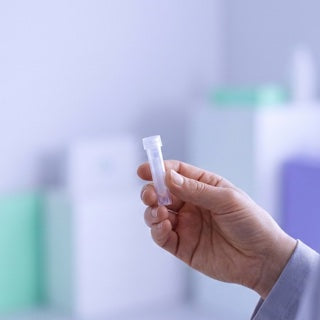
 Sample collection at home
Second morning urine, in a few minutes
 Results consultation included
Evaluation by the ORY expert team
Principle
Measure first, then decide
Without measured values, any treatment is guesswork. We turn the order around: first the lab report, then the decision.

-
01
Measure 22 organic acids from morning urine, analysed at the partner laboratory in Germany.Organic acids · Morning urine · 7–21 days from sample arrival
-
02
See where you stand Every value appears in the lab report with the laboratory's reference range. You can see which values fall inside it and which do not.Lab report including a consultation
-
03
Targeted, not generic Instead of a standard package you take what your values point to — agreed with the ORY expert team or with your doctor or naturopath.Initial consultation, 10 minutes, free
-
04
Measure again after a few months The same analysis a second time shows how the values have changed.Earliest sensible interval: 3 months


Ory experts are there for you
All along the way, doctors and Heilpraktiker from the Ory team are there for you — with your lab report and everything after it.
What a value means and whether a supplement might be an option for you is something to discuss with the ORY expert team or with your doctor or naturopath. This page makes no recommendation and is no substitute for medical assessment.
Details
What this analysis covers
What is measured
22 organic acids as metabolic intermediates, each relative to creatinine – from one urine sample.
The biomarker reference explains what lies behind the numbers: how values interact, which cofactors are involved and which biochemical processes take place in the body — for all values and areas, not only this analysis.
To the biomarker referenceThe values in detail
Elevated lactate and pyruvate in urine – what does it mean?
Pyruvate is the end product of sugar breakdown (glycolysis). With enough oxygen it is processed further in the mitochondria; if oxygen is lacking or this step stalls, more lactate is formed. This happens normally during intense exercise, but also with oxygen deficiency, with some medicines such as metformin and in disease (PubMed 25494270). More on the lactate and pyruvate pages.
If an inherited mitochondrial disease is suspected, lactate, pyruvate and urinary organic acids are part of the basic specialist work-up (PubMed 25503498). A slightly elevated value in morning urine, by contrast, is non-specific: it can depend on exercise, diet or the sample itself and is not proof of "impaired mitochondrial function".
Elevated β-hydroxybutyrate – what does it mean?
β-hydroxybutyrate (3-hydroxybutyrate) is a ketone body. The liver makes ketone bodies from fat when few carbohydrates are available, for example during fasting, a low-carbohydrate or ketogenic diet or after prolonged exertion; heart, muscles and brain then use them as fuel (PubMed 28178565). More on the 3-hydroxybutyrate page.
An elevated value in urine is therefore often diet-related. Very high ketone bodies together with great thirst, frequent urination, nausea or abdominal pain can indicate a dangerous metabolic state in diabetes and need immediate medical attention.
Elevated citric acid cycle markers (citrate, aconitate, isocitrate, α-ketoglutarate, succinate, malate) – what does it mean?
The citric acid cycle is the central hub of energy metabolism in the mitochondria. The report shows six of its intermediates: citrate, cis-aconitate, isocitrate, α-ketoglutarate, succinate and malate, plus hydroxymethylglutarate, an intermediate in the breakdown of the amino acid leucine and in the formation of ketone bodies.
Abnormal patterns of these acids are described in inherited disorders of energy metabolism (PubMed 25503498, PubMed 27775730). In otherwise healthy people, little is known about what a single elevated value means; diet, kidney function and urine dilution all play a part. The values are therefore considered as a pattern and together with lactate, pyruvate and the vitamin markers.
Elevated adipate, suberate and ethylmalonate – what do the fatty acid markers show?
Adipic acid, suberic acid and ethylmalonic acid are formed in the breakdown of fatty acids. If the normal pathway in the mitochondria (beta-oxidation) does not run completely, the body switches to side pathways and these acids are excreted in larger amounts. In rare inherited disorders of fatty acid breakdown they are an important laboratory clue.
More often, elevated values have harmless reasons: fasting and ketosis, a low-carbohydrate diet or medium-chain fats (MCT oil, coconut fat) raise them too; with MCT preparations this is described as a pitfall in diagnostics (PubMed 7389114). Note such preparations on the request form.
Elevated methylmalonic acid and xanthurenic acid – a sign of vitamin B12 and B6?
Methylmalonic acid is broken down in the mitochondria by an enzyme that requires vitamin B12. If effective B12 is lacking, it rises; elevated methylmalonic acid is an established marker of vitamin B12 deficiency at cellular level (PubMed 28660890). Elevated values also occur with reduced kidney function. More on the methylmalonic acid page.
Xanthurenic acid is formed in tryptophan metabolism. Several steps of this pathway need vitamin B6, which is why it is studied as a functional indication of B6 status. A review recommends assessing B6 status with several markers, because inflammation and kidney function can distort individual values (PubMed 25974692). More on the vitamin B12 and vitamin B6 pages.
Vitamin B12 deficiency can show up as tiredness, anaemia, tingling or numbness in the hands and feet, unsteady gait and memory problems, among other things (PubMed 23301732). Such complaints should be checked by a doctor promptly.
Vanillylmandelic acid, homovanillic acid, 5-HIAA and kynurenic acid – what do the neurotransmitter breakdown products show?
Vanillylmandelic acid is a breakdown product of adrenaline and noradrenaline, homovanillic acid (labelled "homovanillylmandelic acid" in the report) of dopamine, 5-hydroxyindoleacetic acid (5-HIAA) of serotonin. Kynurenic acid forms on the kynurenine pathway, through which most tryptophan is broken down (PubMed 33804088).
These values come mainly from the body outside the brain. Whether they say anything about messengers in the brain, about mood or drive, has not been shown. They also depend on diet and smoking (PubMed 7300237). In medicine, some of these acids are measured specifically to investigate rare hormone-producing conditions; this test is not intended for that.
Elevated D-arabinitol and citramalate – a sign of Candida in the gut?
D-arabinitol is a metabolite of most disease-causing Candida yeasts. It has been studied mainly as a marker of severe infections that enter the bloodstream in immunocompromised people; even there the evidence is still limited (PubMed 10647119). However, D-arabinitol also comes from food, and antibiotics can increase its excretion because they suppress gut bacteria that would otherwise use it (PubMed 2404865). An elevated value therefore does not prove Candida overgrowth in the gut.
Citramalate is discussed as a metabolite of yeasts and bacteria but also occurs in fruit; its significance has hardly been studied. More on yeasts in the gut on the Candida page.
Understanding organic acids
What are organic acids in urine – explained simply?
Organic acids are small molecules formed as intermediates when the body breaks down sugar, fats and protein building blocks to gain energy. Some of them are excreted via the kidneys in urine. If a metabolic step stalls, for example because an enzyme or a vitamin cofactor is missing, the acids before that step accumulate and appear in larger amounts in urine.
The test measures 22 such acids from five areas: fatty acid metabolism, sugar breakdown and ketone bodies, the citric acid cycle, vitamin metabolism (B12, B6), breakdown of messengers, plus two so-called dysbiosis markers. All values are expressed relative to creatinine so that differently diluted samples are comparable.
What is the organic acids test used for in medicine?
In conventional medicine, urinary organic acid analysis is an established method in specialised metabolic centres, mainly in children to investigate inherited metabolic disorders and when mitochondrial disease is suspected (PubMed 25503498). There it is used together with blood values, genetic testing and clinical examination.
Functional medicine uses the same test more broadly, for example for exhaustion. There is no guideline for this use, and the interpretation of individual slightly elevated values in otherwise healthy people has been little studied. This test does not replace an assessment at a metabolic centre.
What is mitochondrial dysfunction?
Mitochondria are the "power plants" of cells: this is where nutrients and oxygen are turned into the energy carrier ATP. True mitochondrial diseases are genetic; they are considered the most common group of inherited metabolic disorders and present in very different ways (PubMed 27775730).
This is different from the idea of an acquired, "secondary" mitochondrial dysfunction. Ageing research regards declining mitochondrial function as one of twelve hallmarks of ageing (PubMed 36599349). For people without an inherited disease, however, there is no recognised diagnosis of "mitochondrial dysfunction" with fixed laboratory limits, and urinary organic acids cannot prove it.
What influences the values in urine?
Organic acids are sensitive to diet and daily life. Fasting or a low-carbohydrate diet raises ketone bodies and fatty acid markers (PubMed 28178565), MCT oil the dicarboxylic acids (PubMed 7389114), intense exercise lactate (PubMed 25494270), antibiotics D-arabinitol (PubMed 2404865). High-dose vitamins change the vitamin markers, and reduced kidney function affects many values.
That is why the instructions set fixed preparation rules, and medication and supplements belong on the request form. A single measurement is a snapshot.
Complaints and medical assessment
Which complaints are abnormal organic acids associated with?
Research associates abnormal organic acids with the following complaints and conditions, with varying strength of evidence:
- Muscle weakness, exercise intolerance and rapid exhaustion in inherited mitochondrial diseases: well described, with very varied presentations (PubMed 27775730, PubMed 25503498).
- Vitamin B12 deficiency with tiredness, anaemia, tingling in hands and feet and memory problems: elevated methylmalonic acid well documented (PubMed 23301732, PubMed 28660890).
- Chronic exhaustion and ME/CFS: metabolites in blood and urine have been studied, but results were inconsistent; no specific urinary marker has been found (PubMed 32404171, PubMed 37408028).
- Mood, drive and sleep: often linked to the neurotransmitter breakdown products; that urine values reflect these links has not been shown.
- Digestive complaints and "Candida": that D-arabinitol or citramalate in urine indicates gut overgrowth has not been shown (PubMed 10647119, PubMed 2404865).
These are associations from studies, not causes in an individual. A urine test cannot explain complaints and does not provide a diagnosis. Persistent complaints should first be checked by a doctor.
When should I see a doctor first?
If exhaustion is new, increases quickly or comes with fever, night sweats, unintended weight loss, shortness of breath, chest pain or persistent low mood, the first step is a doctor's practice, not a self-test. The same applies to muscle weakness, muscle pain with dark urine after exertion, numbness or unsteady gait. In children, developmental delay, seizures or repeated vomiting with drowsiness belong immediately with a paediatrician; inherited metabolic disorders are investigated at specialised centres.
With great thirst, frequent urination, nausea and abdominal pain, especially with diabetes, seek medical help immediately. If you are thinking about harming yourself, get help immediately – in Germany, for example, from TelefonSeelsorge on 0800 111 0 111 (free, 24/7) or emergency number 112.
Can cell metabolism or mitochondria be improved?
This page does not give treatment recommendations. Whether a result means anything at all and which steps make sense depends on your overall situation: complaints, previous findings, medication, diet and kidney function. That supplements chosen on the basis of an organic acids profile improve complaints has not been shown.
What makes sense for you belongs in a conversation with the ORY expert team or with your doctor or naturopath, for example from the ORY expert network. The results consultation is included in the price.
Who it is for, process and costs
For whom
The test is for anyone who wants organic acids measured in urine – intermediates from sugar breakdown, fatty acid breakdown, the citric acid cycle, vitamin metabolism and the breakdown of messengers. Whether the test suits you can be clarified in the free initial consultation with the ORY expert team or with your doctor or naturopath, for example from the ORY expert network.
What a single value means in your situation is something to discuss with the ORY expert team or with your doctor or naturopath, for example from the ORY expert network. It does not replace medical assessment.
What do I need to consider before the organic acids test?
According to the instructions: no high-dose vitamin supplements (B12, B6, multivitamin) and no alcohol for 24 hours beforehand. Keep to your normal diet, no diet or fast directly before the test. On the day of collection use the second morning urine, at least two to four hours after the first visit to the toilet, and stay fasting until the sample is taken. Fill the midstream urine into the tube.
If you suspect a urinary tract infection, postpone the test. Only pause prescribed medication after talking to your doctor and note it on the request form. Store the sample cool and dark and send it the same day if possible, only from Monday to Thursday.
How it works
Four steps from order to lab report.
- 01 Kit arrives Ships the next working day, postage paid to your door.
- 02 Collect urine Morning urine at home.
- 03 Send it in Post it in the postage-paid envelope.
- 04 Get your lab report 7–21 days after the sample arrives, consultation included.
Instructions
The essentials first:
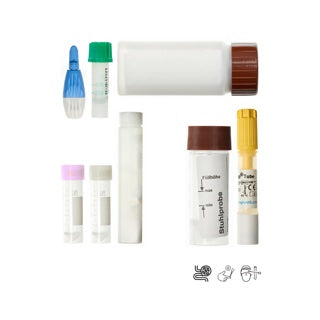
- Collect morning urine using the container provided.
- Close the sample tube firmly and label it.
- Send it in the postage-paid envelope, as soon as possible after collection.
Please read the instructions carefully. Correct preparation matters: it is what allows your sample – stool, urine, saliva or blood – to be evaluated cleanly and meaningfully.
View full illustrated instructions
Sample report
This is what your result looks like: the full lab report with all 22 organic acids — shown as an image, no download needed.
View sample report
How long until I get the result?
Analysis usually takes 7–21 days from the arrival of the sample at the laboratory. As soon as your report is ready, we let you know. The report states each acid with its unit and the laboratory's reference range. A results consultation with the ORY expert team is included in the price.
What does the organic acids test cost, and does health insurance pay?
The organic acids test costs €205 including VAT, shipping, return postage and results consultation.
Statutory health insurance in Germany generally does not cover tests you order yourself. With private insurance, reimbursement may be possible; how it works is described under "Reimbursement by private insurance".
Reimbursement by private insurance
This is how it works with us if your private insurance may reimburse you:
Many private insurers cover the cost in full or in part — some do not cover it at all. That depends entirely on your contract. We will support you through the process as best we can.
Sending your sample back
So that your sample reaches the laboratory safely, please follow the rule for your country.
| Country | Postage | Shipping |
|---|---|---|
| Germany | Already paid | Return postage is prepared, you do not need a stamp. |
| Austria | Add your own postage | To our address in Vienna, not to Germany. |
| Switzerland | Add your own postage | Separate return bag for Switzerland, sent to Germany. |
| Rest of Europe | Add your own postage | Sent to Germany. |
In short: Germany, everything is ready. Austria, add postage and send to Vienna. Switzerland, add postage, special bag, send to Germany. Rest of Europe, add postage and send to Germany.
Family and partner diagnostics
Testing together shows connections that a single analysis does not reveal. We need three things for that.
From three tests of the same analysis for the family you get 10 % off. Write to us and you will receive your own discount code.
Send an email
Which metabolism test suits me?
The organic acids test (€205) gives a broad overview of 22 intermediates. The cell stress profile (€165) measures markers of oxidative and nitrosative stress, the nitrostress test (€100) only the nitrosative part. If you want a closer look at tryptophan metabolism with the kynurenine pathway, serotonin and catecholamines, see Tryptophan Metabolism Plus (€375). For vitamin values in blood there is the Vitamin Check Basic (€98.50).
Which scope makes sense for you can be clarified in the free initial consultation.
Also relevant
Similar analyses
More in depth, or with a different focus.


Which analysis fits you is best discussed in the initial consultation. See all analyses
Supplements
Supplements for the areas this analysis covers
Which product is right for you, and in what amount, is something you discuss with the ORY expert team or with your doctor or naturopath after your lab report. This page recommends nothing.


Food supplements are no substitute for a balanced diet. The full range: Supplements
Orientation
What happens next
Five routes, independent of this analysis. The same on every product page.
ORY Berlin sells analyses and products. What a lab report means for you is something a Heilpraktikerin or a doctor tells you, not this page.