


Skin diagnostics
Skin basic profile (acne) – gut, histamine & micronutrients test
Three analyses in one kit: gut flora from stool, histamine, zonulin and DAO in stool, and zinc, selenium, copper, iron and electrolytes from capillary blood – all samples at home.
No prescription needed. Ships the next working day.
| Sample type | Stool + capillary blood |
|---|---|
| Method | OmicSnap, ELISA, ICP-MS |
| Turnaround | 7–21 days from sample arrival, incl. results consultation |
| Analysis | Partner laboratory in Germany |
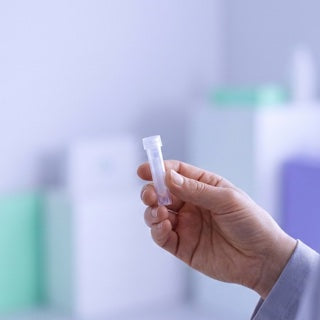 Three analyses, one kit
Gut flora, histamine & gut barrier, minerals
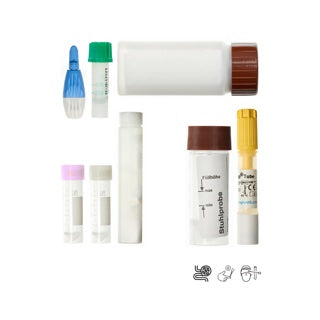 Gut-skin axis
Gut flora, zonulin, histamine, zinc and selenium in one report
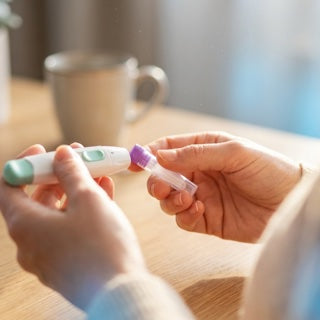 Sample collection at home
Two stool samples and capillary blood from the fingertip
 Results consultation included
Evaluation by the ORY expert team
The approach
Measure first, then decide
Without measured values, any treatment is guesswork. We turn the order around: first the lab report, then the decision.

-
01
Measure Three areas from one combined sample, analysed at the partner laboratory in Germany.Skin Basic Profile · stool + capillary blood · 7–21 days from sample arrival
-
02
See where you stand Every value appears in the lab report with the laboratory's reference range. You can see which values fall inside it and which do not.Lab report including a results consultation
-
03
Targeted instead of general Instead of a standard package you take what your values point to — agreed with the ORY expert team or with your doctor or naturopath.Initial consultation 10 minutes, free
-
04
Measure again after a few months The same analysis a second time shows how the values have changed.Earliest sensible interval: 3 months


Ory experts are there for you
All along the way, doctors and Heilpraktiker from the Ory team are there for you — with your lab report and everything after it.
What a value means and whether a supplement might be an option for you is something to discuss with the ORY expert team or with your doctor or naturopath. This page makes no recommendation and is no substitute for medical assessment.
Details
What this analysis includes
What is measured
Three analysis areas from stool and capillary blood. Each value appears in the report with the laboratory's reference range.
The biomarker reference explains what lies behind the numbers: how values interact, which cofactors are involved and which biochemical processes take place in the body — for all values and areas, not only this analysis.
To the biomarker referenceThe values in detail
Zinc too low – what does it mean?
Zinc is a trace element needed for wound healing, immune defence and skin renewal. Marked zinc deficiency can show on the skin, hair and nails (PubMed 31144371). In a systematic review, people with acne had on average lower blood zinc levels than people without acne (PubMed 32860489).
A low value does not mean that zinc deficiency is the cause of skin problems. The blood level varies, for example, with inflammation and shortly after taking supplements; that is why supplements should be paused before blood collection.
Selenium, copper and iron – what do they show?
Selenium is part of enzymes that protect cells against oxidative stress. In a meta-analysis, selenium levels in people with acne, psoriasis and atopic dermatitis were on average lower than in healthy people; for other skin conditions there was no difference (PubMed 32497930).
Copper and iron are among the minerals whose deficiency can show on the skin, hair and nails (PubMed 31144371). The report shows whether each value lies within the laboratory's reference range. For iron, menstruation shortly before collection affects the result.
Sodium, potassium, calcium and magnesium – why are they measured too?
The electrolytes sodium, potassium, calcium and magnesium are part of the mineral analysis from capillary blood. The body keeps their blood levels within narrow limits. On their own they say little about the skin; they complete the picture of mineral supply.
If an electrolyte value lies clearly outside the reference range, this should be seen by a doctor promptly, regardless of the skin question.
Histamine and DAO in stool – what do high or low values mean?
Histamine is formed in the gut partly by bacteria and occurs in matured foods. It is broken down mainly by the enzyme diamine oxidase (DAO) in the intestinal lining (PubMed 33921522). The report shows how much histamine is present in stool and how active DAO is.
A high histamine value or low DAO activity is linked to histamine intolerance, in which skin flushing, itching and hives are also described (PubMed 17490952). However, the condition is disputed and there is no established laboratory test for it (PubMed 38068827).
Zonulin raised in stool and blood – what does it mean?
Zonulin is a protein that can loosen the connections between cells of the intestinal lining; it is therefore measured as a marker of gut permeability ("leaky gut") (PubMed 21248165). The profile measures zonulin in both stool and blood. In a study of 75 people with acne, blood zonulin levels were higher than in the comparison group (PubMed 40013532) – a single finding that needs confirmation.
Important context: according to one study, a widely used zonulin assay does not detect zonulin itself but related proteins (PubMed 29459849). The value is therefore an indication, not proof of a leaky gut wall.
Gut flora: diversity, butyrate producers and Akkermansia – what does the report show?
The microbiome analysis describes the composition of the gut flora: diversity, enterotype, butyrate producers such as Faecalibacterium and Roseburia, Akkermansia muciniphila, yeasts such as Candida and methanogens. In a study of 43 people with acne, gut flora diversity was lower than in healthy people, and certain bacterial groups considered beneficial were less common (PubMed 29756631).
Whether these differences are cause or consequence is open. A microbiome report is a snapshot, and results from different test methods can differ considerably (PubMed 41748906).
Understanding the gut-skin axis
What is the gut-skin axis – simply explained?
Research uses the term "gut-skin axis" for the link between gut and skin: gut bacteria and their metabolites influence the immune system, and disturbances at one barrier can change signalling pathways at the other (PubMed 40050613). This is studied mainly in atopic dermatitis, psoriasis and acne.
For acne, reviews assume that besides skin bacteria, hormones and metabolism, the gut flora may also be involved; clinical studies on this are still few (PubMed 35889022).
Causes of acne – how does acne develop?
Acne is an inflammatory disease of the sebaceous follicles. Increased sebum production, clogging of the pores, the skin bacterium Cutibacterium acnes and inflammation are involved; hormones, especially androgens, are an important driver (PubMed 41473651). Genetic predisposition and metabolism also play a role (PubMed 35889022).
On diet, a systematic review shows a small but measurable association between foods with a high glycaemic load and acne; for dairy the results are inconsistent (PubMed 35373155). Certain medicines and supplements, such as high-dose vitamin B6/B12, whey protein or anabolic steroids, can also trigger or worsen acne (PubMed 32941710).
Can a stool and blood test show the cause of acne?
No. The profile measures values linked to the gut-skin axis: gut flora, histamine, zonulin and minerals. Studies show average differences in some of these values in people with acne (PubMed 29756631, PubMed 32860489). But this does not reveal why an individual person has acne.
The diagnosis and treatment of acne are described in a European guideline and belong in a dermatology practice (PubMed 41847993). The profile can complement this treatment but not replace it.
Complaints and medical assessment
Skin problems, acne and the gut – which complaints and symptoms does research associate with this?
These links between skin, gut and nutrients have been described, with varying strength of evidence:
- Acne and gut flora: lower gut flora diversity in people with acne – observed in studies, cause unclear (PubMed 29756631).
- Acne and diet: small association with a high glycaemic load – observed in studies (PubMed 35373155).
- Acne in hormonal disorders such as polycystic ovary syndrome (PCOS), often together with cycle disorders and increased hair growth – well established (PubMed 41473651).
- Rosacea: small intestinal bacterial overgrowth (SIBO) more common than in healthy people in one study – observed in studies (PubMed 18456568).
- Atopic dermatitis and psoriasis: links via the gut-skin axis – being researched (PubMed 40050613).
- Skin changes, brittle nails, hair loss with deficiency of zinc, iron, copper or selenium – well described in true deficiency (PubMed 31144371).
- Flushing, itching, hives after histamine-rich meals – described in histamine intolerance; the condition is disputed (PubMed 17490952).
These are associations from studies, not causes in an individual. The test cannot explain skin problems and does not provide a diagnosis. Persistent complaints belong in a medical assessment first, and for the skin in a dermatological one.
When should I seek medical assessment first?
See a dermatologist or doctor directly if acne suddenly becomes very severe, with painful, open nodules and fever, weight loss or joint pain – this can be a rare, severe form (PubMed 21029206). The same applies to acne that leaves scars, acne with irregular periods, increased body hair or a deeper voice, and acne that appears after starting a new medicine or supplement (PubMed 32941710).
Acne can be a heavy emotional burden (PubMed 41134527). If your skin weighs heavily on you or you find yourself withdrawing, talk to your doctor. In a crisis, the German TelefonSeelsorge is available free of charge around the clock: 0800 111 0 111. Blood in the stool, unintended weight loss, fever or nocturnal diarrhoea also call for the doctor's practice first, not a self-test.
Can acne be treated via the gut?
This page does not give treatment advice. Whether changes in the gut flora affect the skin is being researched; there are so far only a few studies with probiotics in acne (PubMed 35889022). There is a European guideline for the treatment of acne (PubMed 41847993).
Whether a finding means anything at all and which steps make sense depends on your whole situation – skin findings, previous results, medicines and diet. That belongs in a conversation with the ORY expert team or with your doctor or naturopath, for example from the ORY expert network. The results consultation is included in the price.
Who it is for, process and costs
Who for
The skin basic profile is for anyone who wants their gut flora, histamine, gut barrier markers and minerals examined in one kit, for example in connection with skin topics such as acne. It does not replace dermatological assessment and treatment. Whether the profile suits you can be clarified in the free initial consultation with the ORY expert team or with your doctor or naturopath, for example from the ORY expert network.
What a single value means in your situation is something to discuss with the ORY expert team or with your doctor or naturopath, for example from the ORY expert network. It does not replace medical assessment.
What do I need to consider before the test?
No antibiotics for at least 4 weeks and no probiotics for 2 weeks beforehand, so that the sample shows your usual gut flora. Pause supplements, especially minerals such as zinc, selenium and magnesium, for 48 hours before blood collection; take prescribed medicines as usual. If possible, do not collect blood during menstruation but 3–5 days afterwards, because blood loss affects iron values.
The stool sample must not come into contact with toilet water; a collection aid is included. Gently swirl the yellow OmicSnap tube, do not shake it; shake the dosing rod firmly, on the other hand. For capillary blood, warm your hand and discard the first drop. Send all samples together on the same day, Monday to Thursday only.
How it works
Four steps from order to lab report.
- 01 Kit arrives Shipped the next working day, three collection sets in one kit.
- 02 Take the stool samples Two collections, for microbiome (OmicSnap) and histamine/leaky gut (dosing stick).
- 03 Take the capillary blood 400 µl from the fingertip for the micronutrients.
- 04 Send in & result Send all samples in together (Mon–Thu), result after 7–21 days including a results consultation.
Instructions
Sample collection has three parts. The most important points first:
- No antibiotics in the last 4 weeks and no probiotics in the last 2 weeks before collection.
- Three collections: two stool samples (microbiome, histamine/leaky gut) and one capillary blood sample (micronutrients).
- Send only Monday to Thursday, all samples together in the same envelope.
Please read the instructions carefully. Correct preparation matters, so that your sample – stool, urine, saliva or blood – can be evaluated cleanly and meaningfully.
View full illustrated instructions
How long does it take to get the result?
The analysis usually takes 7–21 days from the samples' arrival at the laboratory. As soon as the report is ready, you will be notified. The results consultation with the ORY expert team is included in the price.
How much does the acne test cost, and does health insurance pay?
The skin basic profile costs €518 including VAT, shipping, return shipping and results consultation.
Statutory health insurance in Germany usually does not cover analyses you order yourself. With private insurance, reimbursement is possible; how this works is described under "Reimbursement by private insurance".
Reimbursement by private insurance
This is how a possible reimbursement by your private insurance works with us:
Many private insurers cover the cost in full or in part – some, however, not at all. That depends entirely on your policy. We will support you through the process as best we can.
Sending your sample back
So that your sample reaches the laboratory safely, please follow this rule for your country.
| Country | Postage | Shipping |
|---|---|---|
| Germany | Already paid | Return postage is prepared, you do not need a stamp. |
| Austria | Add your own postage | To our address in Vienna, not to Germany. |
| Switzerland | Add your own postage | Separate return bag for Switzerland, sent to Germany. |
| Rest of Europe | Add your own postage | Sent to Germany. |
In short: Germany, everything is ready. Austria, add postage and send to Vienna. Switzerland, add postage, special bag, send to Germany. Rest of Europe, add postage and send to Germany.
Family and partner diagnostics
Testing together shows connections that a single analysis does not reveal. We need three things for that.
From three tests of the same analysis for the family you get 10 % off. Write to us and you will get your individual discount code.
Send an email
Which test suits me?
The skin basic profile (€518) combines gut flora, histamine, zonulin, DAO and minerals. Individual areas are also available separately: the gut profile microbiome & gut barrier (€315), the basic gut profile (€285), Mikrobiom Maxi Plus (€285), the histamine and DAO analysis (€93) and the basic vitamin check (€98.50).
Which scope makes sense for you can be clarified in the free initial consultation.
Also relevant
Similar analyses
More in-depth or with a different focus.


Which analysis suits you is best discussed in the initial consultation. View all analyses
Supplements
Supplements for the areas in this analysis
Which supplement is right for you, and at what dose, is something you discuss with the ORY expert team or with your doctor or naturopath after the lab report. This page recommends nothing.


Food supplements are not a substitute for a balanced diet. The full range: Supplements
Orientation
What happens next
Five routes, independent of this analysis. The same on every product page.
ORY Berlin sells analyses and products. What a lab report means for you is something a non-medical practitioner or a doctor tells you, not this page.