


Gut diagnostics
Histamine & DAO analysis – histamine intolerance: stool + dried blood
Two values on histamine metabolism: histamine in stool (ELISA) and diamine oxidase activity in dried blood (dried spot) – both samples at home, in one shipping bag.
No prescription needed. Ships the next working day.
| Sample type | Stool + dried blood |
|---|---|
| Method | ELISA, Dryspot |
| Turnaround | 7–21 days from sample arrival |
| Analysis | Partner laboratory in Germany |
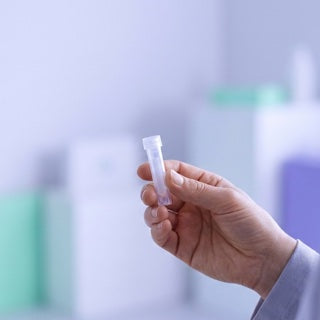 Two methods combined
Histamine in stool and DAO enzyme in dried blood from one kit
Two methods combined
Histamine in stool and DAO enzyme in dried blood from one kit
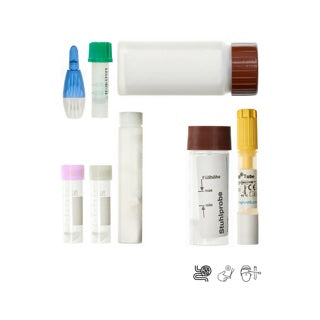 Amount and breakdown
Histamine in the gut and activity of the breakdown enzyme side by side
Amount and breakdown
Histamine in the gut and activity of the breakdown enzyme side by side
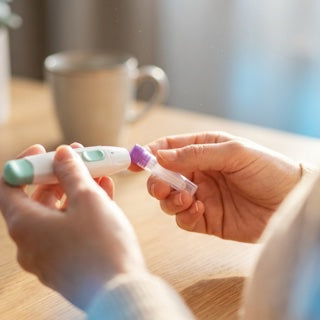 Sample collection at home
Stool sample and a blood drop from the fingertip
Sample collection at home
Stool sample and a blood drop from the fingertip
 Results consultation included
Evaluation by the ORY expert team
Results consultation included
Evaluation by the ORY expert team
The approach
Measure first, then decide
Without measured values, any treatment is guesswork. We turn that around: the lab report comes first, the decision second.

-
01
Measure Histamine and the DAO enzyme from stool and dried blood, analysed at a partner laboratory in Germany.Histamine and DAO enzyme analysis · Stool + dried blood · 7–21 days from sample arrival
-
02
See where you stand Every value appears in the lab report with the laboratory's reference range. You can see which values fall inside it and which do not.Lab report including a consultation
-
03
Targeted, not blanket Instead of a standard package you take what your values call for — agreed with the ORY expert team or with your doctor or naturopath.Initial consultation, 10 minutes, free
-
04
Measure again after a few months The same analysis a second time shows how the values have changed.Earliest sensible interval: 3 months


Ory experts are with you
Doctors and naturopaths from the ORY team are there for you throughout — for the lab report and everything after it.
What a value means and whether a supplement might be an option for you is something to discuss with the ORY expert team or with your doctor or naturopath. This page makes no recommendation and is no substitute for medical assessment.
Details
What this analysis covers
What is measured
Histamine in stool and diamine oxidase activity in dried blood – two values on histamine metabolism.
The biomarker reference explains what lies behind the numbers: how values interact, which cofactors are involved and which biochemical processes take place in the body — for all values and areas, not only this analysis.
To the biomarker referenceThe values in detail
DAO value too low – what does it mean?
Diamine oxidase (DAO) is the main enzyme that breaks down histamine from food (PubMed 17490952). Here, its activity is measured in blood from a dried blood drop (dried blood spot), reported in HDU/ml.
In one study, people with suspected histamine intolerance had on average lower DAO activity in blood than healthy comparison subjects (PubMed 23579881). However, it has not been shown that the blood value reflects DAO activity in the gut (PubMed 33921522), and the German guideline considers measuring DAO in blood not conclusive for a diagnosis (PubMed 34651098). A low value is therefore an indication, not proof of histamine intolerance.
DAO value normal or high – what does it say?
A value within the reference range suggests that the enzyme is sufficiently active in blood. It does not reliably rule out histamine intolerance, because blood and gut activity cannot be equated (PubMed 33921522). In a cohort study, people with low, intermediate and higher DAO values differed in symptoms and course; the authors call for further studies (PubMed 35406126).
Histamine in stool raised – what does it mean?
Histamine comes from foods such as aged cheese, wine or fermented vegetables and is also produced in the gut by bacteria (PubMed 33921522). A raised value in stool shows that there is a lot of histamine in the gut. The value alone does not show where it comes from; measurement in stool has been little studied scientifically. The report states the laboratory's reference range in ng/ml.
Why measure histamine and DAO together?
Histamine intolerance is described as an imbalance between the amount of histamine and the ability to break it down (PubMed 17490952). The analysis therefore shows two sides side by side: the amount of histamine in the gut (stool) and the activity of the breakdown enzyme (blood). Even together, the two values do not replace a medical assessment; they are building blocks to be viewed together with your symptoms.
Understanding histamine intolerance
What is histamine intolerance – explained simply?
Histamine intolerance refers to more histamine accumulating than the body can break down; complaints resembling an allergic reaction can occur without the immune system being involved (PubMed 17490952). Reduced DAO activity in the gut is considered the main cause (PubMed 33921522).
The condition is controversial because symptoms in the same person differ after similar triggers (PubMed 34209583).
What lowers DAO activity – which causes are discussed?
A review names diseases of the intestinal lining and certain medications as possible reasons for lower DAO activity in the gut (PubMed 33921522). Alcohol and medications that release histamine or block DAO can favour symptoms (PubMed 17490952). Genetic factors are also discussed (PubMed 38674909).
Do not stop prescribed medication on your own before the test; talk to your doctor.
Testing DAO – blood test or stool test, and how meaningful is it?
DAO is usually measured in blood, here from dried blood. How meaningful this is, is assessed differently: individual studies consider the measurement a useful tool (PubMed 23579881), while the guideline of the German-speaking allergy societies considers it not conclusive (PubMed 34651098). A review describes the assessment of histamine intolerance as time-consuming and multidisciplinary (PubMed 34209583).
This analysis therefore measures values that can feed into an assessment. A diagnosis is made by a doctor.
Complaints and medical assessment
Histamine intolerance symptoms – which complaints are described?
Research describes very different complaints in histamine intolerance, often after histamine-rich meals or alcohol; the evidence varies in strength:
- Bloating, fullness, abdominal pain and diarrhoea: bloating was the most common symptom in an evaluation of people with low DAO and suspected histamine intolerance; observed in studies (PubMed 30836736).
- Skin complaints such as redness, itching and hives: more frequent with low DAO in a cohort study, often together with headache (PubMed 35406126).
- Headache: described in reviews (PubMed 17490952).
- Runny or blocked nose, asthma-like symptoms: described in reviews and studies (PubMed 23579881).
- Palpitations, heart rhythm disturbances and low blood pressure: described in reviews (PubMed 17490952).
The complaints are non-specific and can have many other causes, such as allergies. The German guideline points out that they often cannot be reproduced in provocation tests (PubMed 34651098).
These are associations from studies, not causes in an individual person. The test cannot explain symptoms and does not provide a diagnosis. Persistent symptoms should first be assessed by a doctor.
When should I see a doctor first?
If you have difficulty breathing, swelling of the face, lips or tongue, circulatory problems or fainting after eating, call the emergency number 112 immediately. If you have blood in your stool or black stool, unintended weight loss, fever, diarrhoea at night, severe or new abdominal pain, persistent vomiting or difficulty swallowing, the first step is a doctor’s practice, not a self-test. The same applies to new palpitations or a racing heart.
Complaints after certain foods may be a food allergy; this belongs in an allergy assessment. A stool test does not replace bowel cancer screening.
Can the DAO value be increased or histamine intolerance be treated?
This page does not give treatment advice. Whether a result means anything at all and which steps make sense depends on your whole situation: symptoms, previous findings, medication and diet. The German guideline warns against restricting the diet unnecessarily strictly for years and recommends a professionally supported, personal approach (PubMed 34651098).
What makes sense for you belongs in a conversation with the ORY expert team or with your doctor or naturopath, for example from the ORY expert network. The results consultation is included in the price.
Who it is for, process and costs
For whom
The test is for anyone who would like to have histamine in stool and DAO activity in blood measured side by side. Whether the measurement suits you can be clarified in the free initial consultation with the ORY expert team or with your doctor or naturopath, for example from the ORY expert network.
What a single value means in your situation is something to discuss with the ORY expert team or with your doctor or naturopath, for example from the ORY expert network. This does not replace a medical assessment.
What do I need to consider before the histamine and DAO analysis?
Before the stool sample, avoid an unusually histamine-rich meal such as red wine, aged cheese or fermented foods. Do not collect during menstruation, with acute gastrointestinal complaints or a bleeding haemorrhoid. Certain medications can affect DAO or histamine; talk to your doctor before changing anything.
The stool must not come into contact with toilet water. Enter the date and time of collection on the request form; this is mandatory for both tests. For the dried blood, discard the first drop, massage rather than squeeze the finger and let the blood spot air-dry for 45–60 minutes, without a hairdryer and out of the sun. Send both samples on the same day and only from Monday to Thursday.
How does sample collection work?
You start with the stool test: place the collection aid in the toilet, catch the stool, insert the dosing stick at three points, put it back into the tube once, close and shake. Then comes the dried blood: disinfect the fingertip and let it dry, prick with the lancet, discard the first drop and take up 50 µl with the pipette, which you apply to the centre of a field on the DrySpot card.
Both samples go into the prepaid shipping bag together with the request form.
How it works
Four steps from order to lab report.
- 01 Kit arrives Sent the next working day, postage paid, to your door.
- 02 Take the samples A stool sample and a drop of dried blood, both at home.
- 03 Send them in Both samples together in the postage-paid bag.
- 04 Receive the report 7–21 days after the sample arrives, consultation included.
Instructions
The essentials first:
- Take the stool sample with the special collection set provided, avoiding contact with toilet water.
- For the dried blood: disinfect the finger, use the lancet to place a drop on the DrySpot card and let it dry.
- Send both samples together with the request form in the postage-paid bag.
Please read the instructions carefully. Correct preparation matters: it is what allows your sample – stool, urine, saliva or blood – to be evaluated cleanly and meaningfully.
View full illustrated instructions
How long does it take to get the results?
The analysis usually takes 7–21 days from the time the sample arrives at the laboratory. You will be notified as soon as your report is ready. The results consultation with the ORY expert team is included in the price.
How much does the histamine and DAO test cost, and does health insurance pay?
The histamine and DAO analysis costs €93 including VAT, shipping, return shipping within Germany and the results consultation.
Statutory health insurance in Germany does not usually cover laboratory analyses that you order yourself. With private insurance, reimbursement may be possible; the process is described under “Reimbursement by private insurance”.
Reimbursement by private health insurance
If your private health insurance might reimburse you, this is how it works with us:
Many private insurers cover the cost in full or in part – some not at all. That depends entirely on your policy. We support you through the process as best we can.
Sending your sample back
To make sure your sample reaches the laboratory safely, follow the rule for your country.
| Country | Postage | Shipping |
|---|---|---|
| Germany | Already paid | Return postage is prepaid, you do not need to add a stamp. |
| Austria | Add your own stamp | To our address in Vienna, not to Germany. |
| Switzerland | Add your own stamp | Separate return bag for Switzerland, sent to Germany. |
| Rest of Europe | Add your own stamp | Sent to Germany. |
In short: Germany, nothing to do. Austria, add a stamp and send to Vienna. Switzerland, add a stamp, use the special bag, send to Germany. Rest of Europe, add a stamp and send to Germany.
Family and partner diagnostics
Testing together shows connections that a single analysis does not reveal. We need three things for it.
From three tests of the same analysis for the family you get 10 % off. Write to us and you will receive your own discount code.
Send an email
Which test is right for me?
The histamine and DAO analysis (€93) measures histamine in stool and DAO activity in dried blood. The histamine stool test (€55) measures only histamine in stool. The basic gut profile (€285) combines histamine with gut flora and the gut barrier. For milk or fruit sugar there are the lactose breath test and the fructose absorption analysis (€65 each).
Which test makes sense for you can be clarified in the free initial consultation.
Also relevant
Similar analyses
More in depth, or with a different focus.


Which analysis suits you is best discussed in the initial consultation. See all analyses
Supplements
Supplements for the areas this analysis covers
Which product suits you, and in what amount, is something you discuss with the ORY expert team or with your doctor or naturopath after your lab report. This page recommends nothing.


Food supplements are no substitute for a balanced diet. The full range: Supplements
Orientation
What happens next
Five routes, independent of this analysis. The same on every product page.
ORY Berlin sells analyses and products. What a lab report means for you is something a non-medical practitioner or a doctor tells you, not this page.