


Exposure diagnostics
Heavy metal test in urine – more than 30 metals & trace elements
More than 30 metals and trace elements from morning urine, measured by ICP-MS: potentially toxic metals such as mercury, lead, cadmium and arsenic, and essential trace elements such as zinc and selenium – without provocation by chelating agents.
No prescription needed. Ships the next working day.
| Sample type | Morgenurin |
|---|---|
| Method | ICP-MS |
| Turnaround | 7–21 days from sample arrival |
| Analysis | Partner laboratory in Germany |
 More than 30 elements
Potentially toxic metals and essential trace elements in one analysis
 ICP-MS
Mass spectrometry, each value relative to creatinine
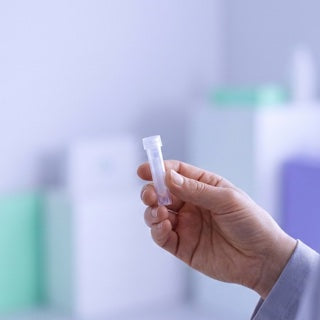
 Sample collection at home
First morning urine, without chelation provocation
 Results consultation included
Evaluation by the ORY expert team
Principle
Measure first, then decide
Without measured values, any treatment is guesswork. We turn the order around: the lab report first, then the decision.

-
01
Measure More than 30 heavy metals and trace elements from morning urine, analysed in the partner laboratory in Germany.Heavy metal exposure testing · morning urine · 7–21 days from sample arrival
-
02
See where you stand Every value is in the lab report with the lab's reference range. You can see which values sit inside it and which do not.Lab report including a consultation
-
03
Targeted, not generic Instead of a standard package you take what your values point to — agreed with the ORY expert team or with your doctor or naturopath.Initial consultation, 10 minutes, free
-
04
Measure again after a few months Running the same analysis a second time shows how the values have changed.Earliest sensible gap: 3 months


ORY experts stay with you
Doctors and Heilpraktiker from the ORY team are there for you the whole way — with your lab report and with whatever follows.
What a value means and whether a supplement might be an option for you is something to discuss with the ORY expert team or with your doctor or naturopath. This page makes no recommendation and is no substitute for medical assessment.
Details
What is in this analysis
What is measured
More than 30 metals and trace elements by ICP-MS from morning urine, each relative to creatinine.
The biomarker reference explains what lies behind the numbers: how values interact, which cofactors are involved and which biochemical processes take place in the body — for all values and areas, not only this analysis.
To the biomarker referenceThe values in detail
Elevated mercury in urine – does it come from amalgam?
Mercury in urine mainly reflects inorganic mercury. In people without occupational exposure, the urine value in one study was most closely related to the number of amalgam fillings, whereas the blood value was related to fish consumption, through which organic methylmercury is taken in (PubMed 1917065). An elevated urine value can therefore point to amalgam, occupational sources (for example a dental laboratory or chemical industry) or products containing mercury.
For context: no study so far has been able to show that amalgam fillings cause disease (PubMed 14757716); a recent review considers the evidence on the health effects of different filling materials uncertain overall (PubMed 41643924). The report states the laboratory's reference range; whether a value is significant for you belongs in the results consultation.
Elevated lead in urine – what does it mean?
Lead enters the body through food, drinking water from old lead pipes, dust from old paint, certain ceramic glazes, traditional remedies or work, and is largely stored in bone (PubMed 14757716, PubMed 34416225). An elevated urine value shows that more lead is being excreted at the time of the sample.
Important: the recognised measure of lead exposure is lead in whole blood; so far no other marker reliably replaces this measurement (PubMed 16330345). An abnormal urine value should therefore be checked by a doctor with a blood test, especially in children and during pregnancy.
Elevated cadmium in urine – what does it mean?
People take in cadmium mainly through cigarette smoke and, in non-smokers, through food (PubMed 14757716). It accumulates in the kidneys and is excreted slowly in urine, usually in proportion to the amount in the kidneys. Urinary cadmium is therefore regarded as a marker of longer-term exposure and is fairly stable even in spot and morning urine (PubMed 27696280).
Persistently increased exposure is associated mainly with kidney damage and possibly with bone loss and fractures (PubMed 14757716). Changes in smoking and kidney diseases can alter the value in the short term (PubMed 27696280).
Elevated arsenic in urine – was it the fish?
Often, yes: fish, seafood and seaweed contain organic arsenic compounds such as arsenobetaine, which are much less toxic than inorganic arsenic. After eating seafood, urinary arsenic rose markedly from the first day in one study and was back at baseline after about ten days (PubMed 19466477). A total arsenic value does not distinguish between these forms.
What matters for health is mainly long-term intake of inorganic arsenic, usually via contaminated drinking water; it is associated with skin changes, nerve damage and cardiovascular disease (PubMed 17018421). Mention fish, seafood and seaweed eaten in the past days in the results consultation.
Elevated aluminium, gadolinium, nickel and other metals – what is behind it?
The report lists more than 20 potentially toxic elements, including aluminium, antimony, barium, bismuth, gadolinium, nickel, platinum, silver, thallium, uranium and tin. Many come from everyday life, medicine or work. One example: gadolinium is a component of MRI contrast agents; after a scan it is excreted in urine over a longer period, for different lengths of time depending on the agent (PubMed 27175546). A previous MRI therefore belongs in the interpretation.
For many of these elements, little is known about what a slightly elevated urine value means in otherwise healthy people. The report compares with the laboratory's reference ranges; the interpretation belongs in the results consultation and, if abnormal, with a doctor.
Zinc, selenium, copper and other trace elements – what do the essential values show?
In the same run the laboratory measures essential trace elements: boron, chromium, iron, cobalt, copper, manganese, molybdenum, selenium, vanadium and zinc, plus germanium, lithium, strontium and tungsten. The values show how much is excreted at the time of the sample; they depend strongly on current intake, including supplements.
Urine values say only a limited amount about the body's supply. Blood values are usually used for that, for example in the whole blood mineral analysis.
Understanding heavy metal exposure
What are heavy metals, and how do they get into the body?
"Heavy metals" is a colloquial term for metals such as lead, mercury, cadmium and arsenic (strictly a metalloid) that can be harmful even in small amounts. These four are considered the most important exposures for health (PubMed 14757716). They enter the body through food, drinking water, air, cigarette smoke, workplace substances and certain products, and are partly excreted via the kidneys and partly stored in the kidneys, bones or other tissues.
In Europe, emissions of many metals have fallen over recent decades; for cadmium, however, some people are close to levels at which effects on the kidneys have been described (PubMed 14757716).
Heavy metals in urine, blood or hair – which sample shows what?
There is no single sample for all metals. Urine is well suited to inorganic mercury (PubMed 1917065) and to cadmium as a marker of longer-term exposure (PubMed 27696280). For lead, blood is the recognised measure (PubMed 16330345), as it is for methylmercury from fish (PubMed 1917065).
This test measures morning urine without prior administration of a chelating agent. It shows what is excreted at the time of the sample and is suited mainly to detecting current or ongoing exposure and comparing values over time. No sample can directly measure a "total body burden" stored in the body.
DMPS test or provocation test – why without chelating agents?
In the so-called provocation or mobilisation test, a chelating agent such as DMPS, DMSA or EDTA is given before the urine sample; it binds metals and pushes more of them into the urine. Values are then higher than in normal urine, without validated reference values for provoked urine. Several medical societies advise against it because it has not been validated. In a study of patients who came to toxicology clinics with such results, only 3 of 74 actually had metal poisoning; the authors conclude that provocation testing should not be performed (PubMed 34184587).
Chelating agents are medicines with side effects and belong only in a doctor's hands when poisoning has been confirmed. ORY assesses the values of this test exclusively as spot urine without provocation.
Are heavy metals measured in conventional medicine?
Yes, in a targeted way: when there is a well-founded suspicion, for example after occupational contact, a known source or typical complaints, doctors measure individual metals in blood or urine. In occupational medicine, this "biomonitoring" is part of health surveillance for certain jobs. A broad metal screening without a specific reason, by contrast, is not a routine examination.
Interpretation follows the laboratory's reference ranges. A value just outside the range is not proof of poisoning; it is considered together with possible sources, complaints and, if needed, a repeat measurement.
Complaints and medical assessment
Heavy metal poisoning symptoms – which complaints are described?
Depending on the metal, amount and duration, heavy metal exposure is associated with different complaints and conditions:
- Lead: most often disorders of the nervous system, gastrointestinal complaints such as abdominal cramps, and anaemia, well described in case reports (PubMed 34416225).
- Mercury: very varied complaints depending on the chemical form, including the nervous system and kidneys (PubMed 22235210).
- Cadmium: mainly kidney damage, possibly bone loss and fractures (PubMed 14757716).
- Arsenic: with long-term intake, skin changes, nerve damage and cardiovascular disease (PubMed 17018421).
- Heart and blood vessels: studies link exposure to lead, cadmium, mercury and arsenic with high blood pressure and atherosclerosis (PubMed 38662861).
- Tiredness, problems concentrating or headaches due to amalgam: a link has not been shown so far (PubMed 14757716).
These are associations from studies, not causes in an individual. A urine test cannot explain complaints and does not provide a diagnosis. Persistent complaints should first be checked by a doctor.
When should I see a doctor first – or call poison control?
If acute poisoning is suspected, for example after swallowing, inhaling fumes or skin contact with chemicals, with vomiting, abdominal cramps, diarrhoea, shortness of breath, confusion or seizures: call emergency number 112 immediately or contact a poison control centre (in Berlin 030 19240). A home test is unsuitable for this because the report is only available after days.
You should also have a doctor check anaemia, numbness or tingling in hands and feet, tremor, new abnormal kidney values and complaints after occupational contact with metals; for occupational exposure the company doctor is responsible. Pregnant women and children with possible lead exposure should go directly to a doctor's practice.
Can heavy metals be removed from the body, or amalgam be taken out?
This page does not give treatment recommendations. "Detoxification" with chelating agents is a medical treatment for confirmed poisoning, not a preventive measure. Removing amalgam fillings is also a procedure: when they were drilled out, blood mercury rose briefly in one study and then fell over months (PubMed 9539465). Whether and how this makes sense is something to decide with your dentist.
What makes sense for you belongs in a conversation with the ORY expert team or with your doctor or naturopath, for example from the ORY expert network. The results consultation is included in the price.
Who it is for, process and costs
For whom
The test is for anyone who wants metals and trace elements measured in urine, for example with occupational contact with metals or in connection with amalgam fillings. It is not suitable if acute poisoning is suspected. Whether the test suits you can be clarified in the free initial consultation with the ORY expert team or with your doctor or naturopath, for example from the ORY expert network.
What a single value means in your situation is something to discuss with the ORY expert team or with your doctor or naturopath, for example from the ORY expert network. It does not replace medical assessment.
What do I need to consider before the heavy metal urine test?
According to the instructions, drink noticeably less the evening and night before (no more than about one litre) and have your last meal eight hours before the sample. In the morning, collect the midstream of the first morning urine in the cup and fill the tube from it. Women should not send urine during their period. Do not freeze the sample and send it the same or next working day, only from Monday to Thursday.
High-dose zinc, selenium or other mineral supplements change the trace element values; whether and for how long to pause them is something to clarify with a doctor. Do not take chelating agents such as DMPS, DMSA or EDTA before this test unless prescribed by a doctor. Note medication, supplements, an MRI with contrast agent and fish or seafood eaten in the past days on the request form.
How it works
Four steps from order to lab report.
- 01 Kit arrives Ships the next working day, postage paid to your door.
- 02 Collect urine Morning urine at home.
- 03 Send it in Post it in the postage-paid envelope.
- 04 Get your lab report 7–21 days after the sample arrives, consultation included.
Instructions
The key points first:
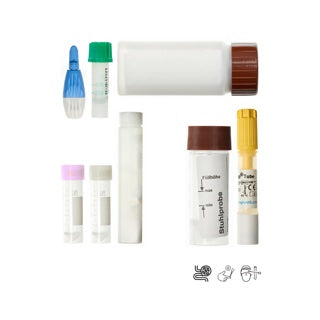
- Collect morning urine using the container provided.
- Close the sample tube firmly and label it.
- Send it in the postage-paid envelope, as soon as possible after collection.
Please read the instructions carefully. Correct preparation matters: it is what allows your sample — stool, urine, saliva or blood — to be evaluated cleanly and meaningfully.
View full illustrated instructions
How long until I get the result?
Analysis takes 7–21 days from the arrival of the sample at the laboratory, usually 14–21 days according to the instructions. As soon as your report is ready, we let you know. The report states each element with its unit and the laboratory's reference range. A results consultation with the ORY expert team is included in the price.
What does the heavy metal test cost, and does health insurance pay?
The heavy metal urine test costs €150 including VAT, shipping, return postage and results consultation.
Statutory health insurance in Germany generally does not cover tests you order yourself. If a doctor has a well-founded suspicion of poisoning, or in the case of occupational exposure, health insurance or the employer covers targeted diagnostics via the doctor's practice. With private insurance, reimbursement may be possible; how it works is described under "Reimbursement by private insurance".
Reimbursement by private health insurance
This is how it works with us if your private insurance may reimburse you:
Many private insurers cover the cost in full or in part – some not at all. That depends entirely on your policy. We support you through the process as best we can.
Sending your sample back
So your sample reaches the laboratory safely, please follow the rule for your country.
| Country | Postage | Shipping |
|---|---|---|
| Germany | Already paid | Return postage is prepared, you do not need to add a stamp. |
| Austria | Add your own postage | To our address in Vienna, not to Germany. |
| Switzerland | Add your own postage | Separate return bag for Switzerland, sent to Germany. |
| Rest of Europe | Add your own postage | Sent to Germany. |
In short: Germany is all set. Austria, add postage and send to Vienna. Switzerland, add postage, special bag, send to Germany. Rest of Europe, add postage and send to Germany.
Family and partner diagnostics
Testing together shows connections that a single analysis does not make visible. We need three things for that.
From three tests of the same analysis for the family you get 10 % off. Write to us and you will receive your own discount code.
Send an email
Which test suits me?
The heavy metal urine test (€150) measures more than 30 metals and trace elements in morning urine. For minerals and trace elements in blood there is the whole blood mineral analysis (€75). Markers of oxidative stress are covered by the cell stress profile (€165); metabolic intermediates by the organic acids test (€205).
Which scope makes sense for you can be clarified in the free initial consultation.
Also relevant
Similar analyses
More in-depth, or with a different focus.


Which analysis suits you is best discussed in the initial consultation. View all analyses
Supplements
Supplements for the areas this analysis covers
Which product suits you, and in what amount, is something to discuss with the ORY expert team or with your doctor or naturopath after the lab report. This page recommends nothing.


Food supplements are no substitute for a balanced diet. The full range: Supplements
Orientation
What happens next
Five routes, independent of this analysis. The same on every product page.
ORY Berlin sells analyses and products. What a lab report means for you comes from the ORY expert team or from your doctor or naturopath, not from this page.