



Neurotransmitter tryptophan metabolism
✓ For restlessness, stress and exhaustion.
✓ The following are examined: catecholamines, neurotransmitters, mitochondrial activity, active metabolites, enzyme activities and co-factors.
Test No.: F610 Set: OS & Fe
→ Wichtige Punkte für Familien- und Partnerdiagnostik
Mehrwert für die ganze Familie Gemeinsame Diagnostik zeigt wichtige Zusammenhänge, unterstützt echte Prävention und hilft allen, Ernährung, Stress und Gesundheit besser zu verstehen – und vor allem leichter in konkrete, hilfreiche Schritte zu kommen.
- Klare Daten pro Person: Für jede getestete Person brauchen wir Name und Geburtsdatum, damit das Labor alles eindeutig zuordnen kann.
- Eigene E-Mail-Adresse: Jede Person benötigt eine individuelle E-Mail für den sicheren digitalen Zugang. Wenn das nicht möglich ist, schicken wir die Ergebnisse als PDF an eine gemeinsame Adresse.
- Eindeutige Beschriftung: Proben und Formulare müssen jeweils genau der richtigen Person zugeordnet sein.
💚 Gemeinsam machen wir Menschen gesund.
→ Wichtig: Anleitung richtig befolgen
Bitte lies die Anleitung aufmerksam. Eine korrekte Vorbereitung ist entscheidend, damit deine Probe – Stuhl, Urin, Speichel oder Blut– sauber und aussagekräftig ausgewertet werden kann.
Diagnostikzeit: Bitte etwas Geduld
Unsere Laboranalysen sind präzise, tiefgehend und ganzheitlich. Deshalb dauert die Auswertung nach dem Probeneingang im Labor in der Regel 7–21 Tage.
Gute Diagnostik braucht Zeit – und genau diese Qualität bekommst du bei uns.
Schnelle Rückmeldung
Sobald deine Ergebnisse vorliegen, informieren wir dich sofort.
Wir begleiten dich
Wir freuen uns, dich auf deinem Weg zu mehr Gesundheit und Balance zu unterstützen. 🌿💛
→ For possible reimbursement by your private insurance
Für eine mögliche Erstattung durch Ihre private Versicherung läuft es bei uns so ab:
- Kurzes Online-Gespräch mit einem unserer Therapeut:innen Dabei klären wir Ihre Beschwerden und erstellen eine passende, kurze Anamnese.
- Überweisung für die passenden Labortests: Nach dem Gespräch erhalten Sie eine Überweisung, die Sie bei Ihrer privaten Versicherung einreichen können.
Viele private Versicherungen übernehmen die Kosten ganz oder teilweise– manche allerdings gar nicht. Das ist leider normal und hängt allein von Ihrem Vertrag ab. Wir begleiten Sie bestmöglich durch den Prozess.
Couldn't load pickup availability
Pickup available at ORY
Usually ready in 4 hoursPairs well with
What is being tested?
Advantages of the home test
What is being tested?
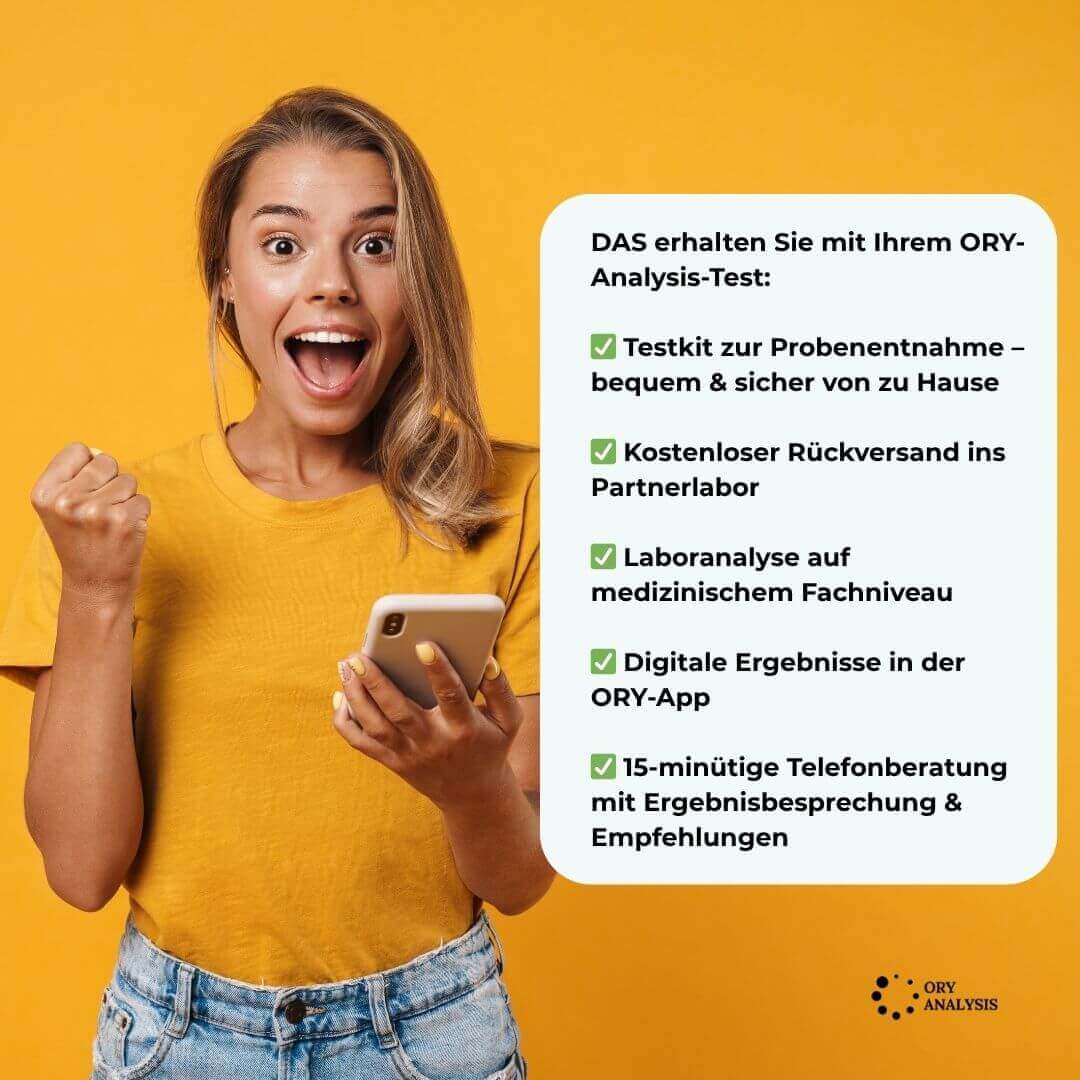
What you get - and when:
ORY Analysis: well-founded & trustworthy
Neurotransmitter tryptophan metabolism
Der ORY Unterschied - Medizinische Qualität steht bei uns an erster Stelle.
Zertifiziert in Laboren
Nutzen Sie die Zertifizierung in Laboren für überlegene Produktqualität.
Entwickelt von Experten
Professionell entwickelte Produkte basierend auf jahrelanger Praxiserfahrung.
Wissenschaftlich fundiert
Präzise und zuverlässige Diagnosetests bequem zu Hause durchführen
Individuelle Ganzheitliche Diagnostik
Ursachen erkennen, Potenzial entfalten, für deine innere Balance und Regeneration.
If you have any questions, you are always welcome to contact us. We'll get back to you as soon as possible, within 24 hours on weekdays.
-
Shipping Information
Use this text to answer questions in as much detail as possible for your customers.
-
Customer Support
Use this text to answer questions in as much detail as possible for your customers.
-
FAQs
Use this text to answer questions in as much detail as possible for your customers.
-
Contact Us
Use this text to answer questions in as much detail as possible for your customers.
Was ist der Unterschied zwischen einer Serum-Mineralstoffanalyse beim Hausarzt und einer Vollblut-Mineralstoffanalyse?
Der Unterschied liegt vor allem in der Aussageebene der Messung:
- Serum-Analyse (Hausarzt / Standard-Labor):
Hier werden Mineralstoffe im Serum, also im flüssigen Anteil des Blutes, bestimmt. Diese Werte zeigen die aktuelle Konzentration im Blutkreislauf, die vom Körper streng reguliert wird. Dadurch können funktionelle Defizite auf Zellebene trotz normaler Serumwerte unentdeckt bleiben. - Vollblut-Analyse:
Bei der Vollblutdiagnostik werden Mineralstoffe im gesamten Blut inklusive der Blutzellen (intrazellulär) gemessen. Dies gibt zusätzliche Hinweise darauf, wie gut Mineralstoffe tatsächlich in den Zellen verfügbar sind und für Stoffwechselprozesse genutzt werden. - Warum das relevant ist:
Viele zentrale Prozesse wie Energieproduktion, Enzymaktivität und Zellfunktion finden innerhalb der Zellen statt. Die Vollblutanalyse kann daher eine erweiterte Beurteilung der Mineralstoffversorgung auf zellulärer Ebene ermöglichen.
Kurz zusammengefasst:
- Serum: zeigt die aktuelle Konzentration im Blut
- Vollblut: zeigt zusätzlich die Versorgung auf Zellebene

Scientific findings about neurotransmitters

Development of tryptophan metabolism

Benefits for body and mind
FAQs
Please read our FAQs page to find out more.
ORX Experten. Zwischen Unsicherheit und Klarheit liegt nur ein Gespräch.
Bei ORY unterstützen wir dich, deine Fragen zu verstehen – und herauszufinden, welche Diagnostik oder Unterstützung wirklich zu dir passt.