


Hormone diagnostics
Women's hormone profile – saliva hormone test at home
Hormone test for women at home: oestradiol, progesterone, testosterone, DHEA and cortisol in saliva – plus the progesterone/oestradiol ratio. Two morning samples, with a regular cycle on cycle day 22 ±2.
No prescription needed. Ships the next working day.
| Sample type | Saliva, 2 samples |
|---|---|
| Method | ELISA |
| Turnaround | 7–21 days from sample arrival |
| Analysis | Partner laboratory in Germany |
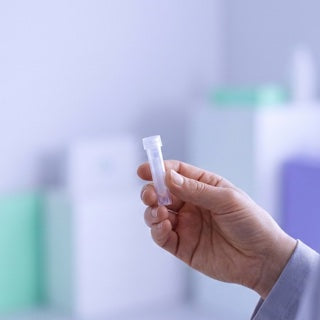 Five hormones plus ratio
Oestradiol, progesterone, testosterone, DHEA and cortisol, measured by ELISA
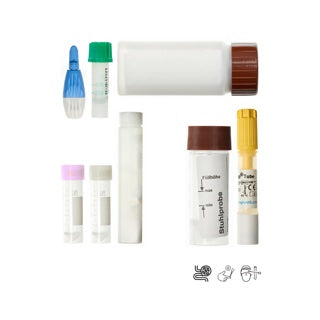 Free hormone fraction
Saliva contains the part of the hormones not bound to proteins
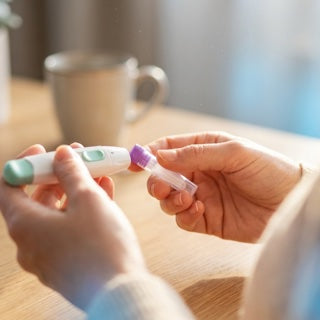 Sample collection at home
Two saliva samples in the morning, 30 minutes apart
 Results consultation included
Evaluation by the ORY expert team
The principle
Measure first, then decide
Without measured values, any treatment is guesswork. We turn that around: the lab report first, the decision after.

-
01
Measure Five hormone values plus a ratio from two saliva samples, analysed at our partner laboratory in Germany.Hormone Profile Women · saliva, 2 samples · 7–21 days from sample arrival
-
02
See where you stand Every value appears in the lab report alongside the laboratory's reference range. You can see which values fall inside it and which do not.Lab report including a consultation
-
03
Targeted, not generic Instead of a standard package, you take what your values point to — agreed with the ORY expert team or with your doctor or naturopath.Initial consultation, 10 minutes, free of charge
-
04
Measure again after a few months Running the same analysis a second time shows how the values have changed.Earliest sensible interval: 3 months


Ory experts are there for you
Doctors and non-medical practitioners (Heilpraktiker) from the Ory team are with you all the way — for the lab report and everything after.
What a value means and whether a supplement might be an option for you is something to discuss with the ORY expert team or with your doctor or naturopath. This page makes no recommendation and is no substitute for medical assessment.
Details
What this analysis covers
What is measured
Five steroid hormones from saliva, measured by ELISA, plus the calculated progesterone/oestradiol ratio.
The biomarker reference explains what lies behind the numbers: how values interact, which cofactors are involved and which biochemical processes take place in the body — for all values and areas, not only this analysis.
To the biomarker referenceThe values in detail
Progesterone too low – what does it mean?
Progesterone is produced mainly by the corpus luteum after ovulation. That is why, with a regular cycle, the sample is taken on cycle day 22 ±2, in the second half of the cycle, when progesterone is normally at its highest. In menstruating women, progesterone fluctuations across the cycle were reliably detected in saliva as well (PubMed 41570522).
A low value in the second half of the cycle can have many reasons: the sample was not taken in this phase, no ovulation took place in this cycle, or the cycle is changing, for example in the transition to menopause, when hormones fluctuate widely and cycles become irregular (PubMed 33095879). Whether a value matters for a wish to have children belongs in a gynaecology practice or fertility clinic; this test makes no statement about it and is not intended to accompany a pregnancy.
Oestradiol high or too low – what does it mean?
Oestradiol is the main oestrogen. It fluctuates widely across the cycle and falls with menopause; in the transition phase before it, large fluctuations are typical (PubMed 33095879). A single value therefore only shows the level on that morning.
On measurement accuracy: in comparative studies, ELISA methods gave less reliable values for oestradiol in saliva than mass spectrometry, especially at low concentrations (PubMed 39933211, PubMed 41570522). The report compares with the laboratory's reference range; there is no generally valid saliva threshold.
What does the progesterone/oestradiol ratio show – and what is "oestrogen dominance"?
The ratio is calculated from the two measured values and shown in the report with a laboratory reference range. It summarises the relationship between progesterone and oestradiol in one number but does not involve an additional measurement. Because the oestradiol value in saliva is less reliable by ELISA (PubMed 39933211), this uncertainty carries over to the ratio.
"Oestrogen dominance" is a term from self-help literature and naturopathy. There is no generally accepted definition or threshold for it in the medical literature, and the ratio in saliva has hardly been studied. An unusual ratio is therefore a reason for the results consultation, not a diagnosis.
Testosterone raised in women – what does it mean?
The female body also produces testosterone, in the ovaries and the adrenal gland, but in much smaller amounts than in men. Raised male hormones (hyperandrogenism) are a key feature of polycystic ovary syndrome (PCOS), together with cycle disorders and changed ovaries on ultrasound (PubMed 27510637).
According to the international guideline, PCOS is diagnosed by a doctor, with an examination, blood tests and, where appropriate, ultrasound (PubMed 37580861). A saliva value alone is not enough for this. Low testosterone is also possible in women, for example after menopause; what a value means is clarified in the results consultation.
DHEA too low – what does it mean?
DHEA (dehydroepiandrosterone) is produced mainly in the adrenal gland and is a precursor of sex hormones. In women and men, DHEA falls markedly with age, sometimes to 10–20% of the values of young people (PubMed 23647054). A lower value at an older age is therefore common.
According to this review, whether falling DHEA levels explain complaints of ageing and whether taking DHEA helps has not been sufficiently studied; data on the safety of long-term use are lacking. This page makes no recommendation on it.
Cortisol in saliva high or too low – what does it mean?
Cortisol is produced in the adrenal cortex and follows a daily rhythm: it rises markedly in the first 30–45 minutes after waking (PubMed 26563991). That is why timing is crucial, and why the two samples are taken right after waking and 30 minutes later. The report shows a snapshot of that morning, not a daily profile.
According to a systematic review, the often-cited "adrenal fatigue" is not an established medical condition (PubMed 27557747). Real adrenal diseases such as Cushing's syndrome are investigated by doctors with their own test procedures, for example late-night salivary cortisol (PubMed 35334030).
Understanding female hormones
Women's hormone test: when in the cycle is the test done?
With a regular cycle on cycle day 22 ±2, i.e. in the second half of the cycle. Day 1 is the first day of your period. In this phase progesterone is normally at its highest, so oestradiol and progesterone can best be put into relation with each other.
With an irregular cycle, without periods or during menopause, please agree on the timing with the ORY team beforehand. Both samples are taken on the same morning: right after waking and 30 minutes later.
Women's hormone test: saliva or blood?
Saliva contains the free fraction of steroid hormones, which is not bound to proteins. The sample can be collected at home without a blood draw. A review sees salivary measurement of oestradiol and progesterone as a useful way of tracking hormonal fluctuations across the cycle (PubMed 36426884).
There are limits, however: measurement methods differ considerably, and ELISA tests performed worse than mass spectrometry for oestradiol and progesterone in saliva (PubMed 39933211). Medical guidelines, for example for PCOS, measure hormones in blood (PubMed 37580861). Saliva and blood values are not directly comparable; each report has its own reference ranges.
Can menopause be detected with a hormone test?
Menopause begins with a transition phase, the perimenopause. It can last more than ten years and is marked by wide hormonal fluctuations and irregular cycles (PubMed 33095879). A single hormone value can therefore be low on one day and higher again a few weeks later.
The UK guideline (NICE) recommends diagnosing perimenopause and menopause in women over 45 generally on the basis of symptoms and the menstrual cycle, without a laboratory test (PubMed 26563259). A hormone profile can show the levels on one morning, but can neither confirm nor rule out menopause.
Can I do the hormone test while taking the pill or hormone therapy?
Yes, but the values will then not show your body's own hormone production, because the hormones you take overlay it. Please list all hormone-containing medication on the request form, for example the pill, hormone patches, a hormonal IUD, bioidentical hormones or cortisone, so the laboratory can classify the values correctly. Never stop prescribed medication on your own.
Complaints and medical assessment
Which complaints are hormonal fluctuations in women associated with?
Research describes associations between hormones and various complaints, with varying strength of evidence:
- Menopausal symptoms such as hot flushes, sleep problems, mood swings, temporary concentration problems and vaginal dryness: they occur in the majority of women during the menopause transition and are linked to the hormonal changes, well documented (PubMed 33095879).
- PMS with irritability, low mood, breast tenderness or bloating in the second half of the cycle that subside shortly after the period: hormonal fluctuations are involved, but the exact cause is not clear (PubMed 36317488, PubMed 27479626).
- Irregular cycles, acne and increased body hair: typical signs of raised male hormones, for example in PCOS, well documented (PubMed 27510637).
- Tiredness and exhaustion: often associated with cortisol; however, "adrenal fatigue" as a cause is not supported by evidence (PubMed 27557747).
These are associations from studies, not causes in an individual. A hormone test cannot explain complaints and does not provide a diagnosis. Persistent complaints should first be checked by a doctor.
PMS – what are the causes, and does a hormone test help?
In premenstrual syndrome (PMS), physical and emotional complaints occur in the second half of the cycle and subside shortly after the period starts (PubMed 27479626). Hormonal fluctuations during the cycle and the brain messengers serotonin and GABA are discussed as causes; the cause has not been clarified (PubMed 36317488).
In practice, PMS is identified with a symptom diary kept over at least two cycles, not with a laboratory value (PubMed 36317488). A hormone profile can provide additional values but cannot show whether someone has PMS.
When should I see a doctor first?
With bleeding after menopause, bleeding between periods or after sex, very heavy or very painful periods, if your period stops for more than three months, with milky discharge from the breast, a lump in the breast or rapidly increasing body hair, the first step is a gynaecology practice, not a self-test. The same applies if you might be pregnant or are trying to conceive without success.
If low mood, exhaustion or sleep problems persist or weigh heavily on you, talk to your GP. If you doubt yourself or are thinking about harming yourself, get help immediately. In Germany, the TelefonSeelsorge crisis line is free and available around the clock on 0800 111 0 111; in an emergency call 112.
Can hormones be balanced naturally or progesterone be raised?
This page does not give treatment recommendations. Whether a value means anything at all and which steps make sense depends on your overall situation: cycle, stage of life, complaints, previous findings and medication.
That belongs in a conversation with the ORY expert team or with your doctor or naturopath, for example from the ORY expert network. The results consultation is included in the price.
Who it is for, process and costs
Who it's for
The women's hormone profile is for anyone who wants oestradiol, progesterone, testosterone, DHEA and cortisol measured in saliva. Whether the measurement suits you can be clarified in the free initial consultation with the ORY expert team or with your doctor or naturopath, for example from the ORY expert network.
What a single value means in your situation is something to discuss with the ORY expert team or with your doctor or naturopath, for example from the ORY expert network. It does not replace medical assessment.
What do I need to consider before the hormone test?
On the day before, avoid hormone-containing foods: meat, pulses, dairy products, cucumbers and soy. No alcohol, nicotine, chocolate or sex for 24 hours beforehand. On the morning of collection, stay fasting, collect before brushing your teeth and rinse your mouth with clear water first; bleeding gums distort the result.
List hormone-containing medication on the request form and do not stop it on your own. Keep the filled tubes in the fridge until shipping, do not freeze them, send them on the same day if possible and not on a Friday or before a public holiday.
How it works
Four steps from order to lab report.
- 01 Kit arrives Sent the next working day, postage paid, to your door.
- 02 Collect saliva Two saliva samples in the morning, before eating, on cycle day 22 ±2.
- 03 Send it in Both tubes together in the postage-paid envelope.
- 04 Receive your lab report 7–21 days after the sample arrives, consultation included.
Instructions
The main points first:
- Choose cycle day 22 ±2 for the sample, in the morning before breakfast.
- Let the saliva run passively into both tubes, do not spit.
- Close both tubes tightly and send them together.
Please read the instructions carefully. Correct preparation matters: it is what allows your sample – stool, urine, saliva or blood – to be evaluated cleanly and meaningfully.
View full illustrated instructions
Sample report
This is what your result looks like: the full lab report with all five hormone values and the ratio — shown as an image, no download needed.
View sample report
How long until I get the result?
Analysis usually takes 7–21 days from the arrival of the samples at the laboratory. As soon as your report is ready, we let you know. A results consultation with the ORY expert team is included in the price.
What does the women's hormone test cost, and does health insurance pay?
The women's hormone profile costs €160.05 including VAT, shipping, return postage and results consultation.
Statutory health insurance in Germany generally does not cover hormone tests you order yourself. With private insurance, reimbursement may be possible; how it works is described under "Reimbursement by private insurance".
Reimbursement by private insurance
This is how a possible reimbursement by your private insurance works with us:
Many private insurers cover the cost in full or in part – some not at all. That depends entirely on your policy. We will support you through the process as best we can.
Sending your sample back
So that your sample reaches the laboratory safely, please follow the rule for your country.
| Country | Postage | Shipping |
|---|---|---|
| Germany | Already paid | Return postage is prepared, you do not need to add a stamp. |
| Austria | Pay postage yourself | To our address in Vienna, not to Germany. |
| Switzerland | Pay postage yourself | Separate return bag for Switzerland, sent to Germany. |
| Rest of Europe | Pay postage yourself | Sent to Germany. |
In short: Germany, nothing to do. Austria, add postage and send to Vienna. Switzerland, add postage, use the special bag, send to Germany. Rest of Europe, add postage and send to Germany.
Testing for families and couples
Testing together reveals connections that a single analysis cannot show. We need three things for it.
From three tests of the same analysis for one family you get 10 % off. Write to us and we will send you your own discount code.
Send an email
Which hormone test suits me?
The women's hormone profile (€160.05) measures five hormones on one morning in the second half of the cycle. The cortisol daily profile (€155) measures cortisol in saliva at three times of day and shows the course over the day. The melatonin test (€55) measures melatonin in night-time saliva. For men there is the men's hormone profile (€160.05) with the same five hormones.
Which scope makes sense for you can be clarified in the free initial consultation.
Also relevant
Similar analyses
More in depth, or a different focus.


Which analysis suits you is best discussed in the initial consultation. See all analyses
Supplements
Supplements for the areas in this analysis
Which product suits you, and in what amount, is something you discuss with the ORY expert team or with your doctor or naturopath after the lab report. This page recommends nothing.


Food supplements are not a substitute for a balanced diet. The full range: Supplements
Orientation
What happens next
Five routes, independent of this analysis. The same on every product page.
ORY Berlin sells analyses and products. What a lab report means for you is something a Heilpraktiker or a doctor tells you, not this page.