


Sleep hormone diagnostics
Melatonin test – measure melatonin in night-time saliva
Melatonin test at home: free melatonin in night-time saliva, collected at 2 a.m. in the dark – the amount of the night hormone at a fixed time point.
No prescription needed. Ships the next working day.
| Sample type | Nachtspeichel |
|---|---|
| Method | ELISA |
| Turnaround | 7–21 days from sample arrival |
| Analysis | Partner laboratory in Germany |
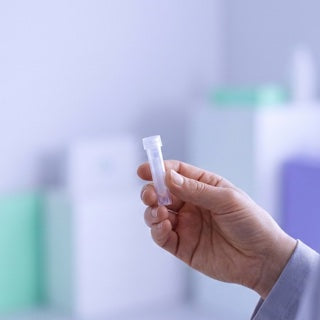 Measured at night
Melatonin in night-time saliva at 2:00 a.m., during the night-time phase
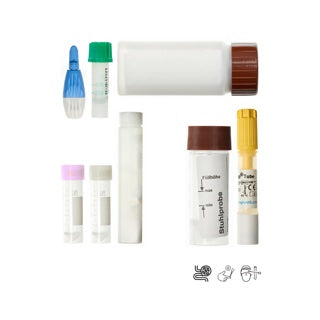 ELISA in the laboratory
Evaluation with the laboratory's reference ranges
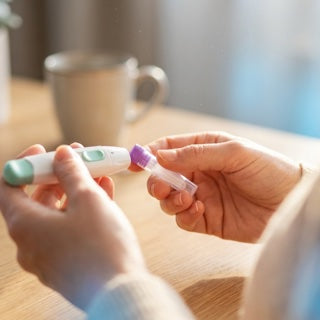 Sample collection at home
One saliva sample in the dark, shipped the next morning
 Results consultation included
Evaluation by the ORY expert team
The approach
Measure first, then decide
Without measured values, any treatment is guesswork. We turn that around: the lab report comes first, the decision second.

-
01
Measure Free melatonin from one night-time saliva sample, analysed at a partner laboratory in Germany.Melatonin · Night-time saliva · 7–21 days from sample arrival
-
02
See where you stand Every value appears in the lab report with the laboratory's reference range. You can see which values fall inside it and which do not.Lab report including a consultation
-
03
Targeted, not blanket Instead of a standard package you take what your values call for — agreed with the ORY expert team or with your doctor or naturopath.Initial consultation, 10 minutes, free
-
04
Measure again after a few months The same analysis a second time shows how the values have changed.Earliest sensible interval: 3 months


Ory experts are with you
Doctors and naturopaths from the ORY team are there for you throughout — for the lab report and everything after it.
What a value means and whether a supplement might be an option for you is something to discuss with the ORY expert team or with your doctor or naturopath. This page makes no recommendation and is no substitute for medical assessment.
Details
What this analysis covers
What is measured
Free melatonin in night-time saliva, collected at 2:00 a.m. in the dark.
The biomarker reference explains what lies behind the numbers: how values interact, which cofactors are involved and which biochemical processes take place in the body — for all values and areas, not only this analysis.
To the biomarker referenceThe values in detail
Low melatonin – melatonin deficiency?
Melatonin is released at night by the pineal gland and tells the body "it is night". How much melatonin a person produces varies greatly by nature: in a study of 170 healthy adults, peak values in saliva ranged from 2 to 84 pg/ml. Lifestyle explained only about 15% of this; genes probably play a large role (PubMed 18725972).
A low value can therefore simply be part of your own range. It can also result from light in the room before or during sampling, because light suppresses secretion (PubMed 25908646), or if the internal rhythm is shifted and the nightly peak falls at a different time. A single low value is not proof of a deficiency.
Elevated melatonin – what does it mean?
High values also occur in healthy people. In the study mentioned, hormonal contraceptives, among other things, were associated with higher melatonin secretion (PubMed 18725972); hormone-containing medication therefore belongs on the request form. Melatonin supplements raise the value in saliva directly. Whether and for how long you should pause a supplement before sampling is not stated in the instructions; clarify this with the ORY expert team or your doctor before sampling.
Why is melatonin measured at 2 a.m.?
Melatonin follows a daily rhythm: in darkness it rises in the evening and reaches its peak at night; light can suppress its production or shift the rhythm (PubMed 25908646). The laboratory therefore specifies 2:00 a.m., in the dark. A sample taken at another time cannot be compared with the reference ranges for this time point.
Important for interpretation: a single night-time value shows the amount at one point in time. To determine the timing of the internal clock, sleep medicine uses a series of saliva samples in the evening under dim light, the so-called dim light melatonin onset (DLMO) (PubMed 39158010). A single value does not reflect this curve.
Understanding melatonin and the internal clock
What is melatonin – simply explained?
Melatonin is a hormone produced mainly by the pineal gland in the brain at night. The pacemaker in the brain controls its release and aligns it with light and dark. Melatonin conveys information about day and night to the body and stabilises, among other things, the sleep-wake rhythm and the course of body temperature (PubMed 25908646). It is therefore more a signal for "night" than a sleeping pill.
Melatonin in saliva, blood or urine – what is the difference?
The melatonin rhythm can be captured through repeated measurements in blood or saliva or via the breakdown product 6-sulfatoxymelatonin in urine (PubMed 25908646). Saliva measurements are considered a usable marker of the rhythm and can be done at home (PubMed 9376644, PubMed 39158010). Urine collects the breakdown product over several hours and rather shows the total amount for one night.
This test measures free melatonin in night-time saliva at a fixed time point.
Does melatonin decline with age?
This is often claimed but is disputed. A study comparing healthy, drug-free older people with young adults under controlled conditions found no difference in the amount of melatonin at night. The authors conclude that a decline is not a general feature of healthy ageing (PubMed 10569297).
Older people nevertheless often sleep worse; this has many causes, such as illness, medication or less daylight.
Shift work, jet lag, screen light – what shifts the internal clock?
Light in the evening and at night suppresses melatonin and shifts the rhythm (PubMed 25908646). With night shifts, the internal clock adapts only very slowly: even after several nights, the rhythms of melatonin and cortisol remain largely aligned to the day (PubMed 34969316).
If you work shifts or change time zones, a sample at 2 a.m. may therefore not capture your own peak. This belongs in the discussion of the report.
Melatonin and cortisol – how are they related?
Both hormones are controlled by the same internal pacemaker but run in opposite directions: melatonin rises in the evening and is high at night, cortisol rises in the morning after waking and is lowest in the evening (PubMed 25908646, PubMed 26563991). With night work, both rhythms remain largely aligned to the day (PubMed 34969316).
If you want to see both sides of the daily rhythm, you can combine melatonin and a cortisol day profile. Even together, the values do not diagnose a sleep disorder.
Complaints and medical assessment
Melatonin deficiency symptoms – what are melatonin and the internal clock associated with?
In research, melatonin and the sleep-wake rhythm are associated with the following complaints, with varying strength of evidence:
- Difficulty falling asleep with a shifted rhythm: in delayed sleep phase, melatonin release starts later; sleep medicine determines this using evening saliva samples (PubMed 39158010). Well established for the rhythm disorder, not for a single value.
- Sleep problems with shift and night work: the internal clock comes into conflict with working hours (PubMed 34969316). Well established.
- Daytime tiredness and unrefreshing sleep: melatonin stabilises the sleep-wake rhythm (PubMed 25908646); that a low value explains these complaints is not established (PubMed 18725972).
- Stress and trouble staying asleep: stress and sleep influence each other via the stress axis (PubMed 35822937). Well described, not measurable via melatonin alone.
These are associations from studies, not causes in an individual person. A laboratory test cannot explain complaints and does not provide a diagnosis. Persistent complaints belong in a medical assessment first.
When should I see a doctor first?
If you have thoughts of harming yourself or feel you are in an acute crisis: in Germany, the TelefonSeelsorge can be reached free of charge around the clock on 0800 111 0 111. In acute danger, call the emergency number 112.
With loud snoring and pauses in breathing, marked daytime sleepiness or nodding off at the wheel, restless legs in the evening or sleep problems that persist for weeks, the first step is a doctor's practice. For sleep disorders, the European guideline provides for a medical interview with sleep history, questionnaires and a sleep diary, and an examination in a sleep laboratory if other sleep disorders are suspected (PubMed 38016484). A saliva test does not replace this assessment.
If sleep problems come with persistent low mood, anxiety or exhaustion, this belongs in a GP, psychotherapy or psychiatry practice first.
Fixing melatonin deficiency – should I take melatonin?
This page does not give treatment recommendations. For context: the European insomnia guideline names cognitive behavioural therapy for insomnia as the first-line treatment. It does not recommend fast-release melatonin for insomnia; prolonged-release melatonin can be used for up to three months in people aged 55 and over (PubMed 38016484).
What makes sense for you depends on your complaints, your rhythm and your medication and belongs in a conversation with the ORY expert team or with your doctor or naturopath, for example from the ORY expert network.
Who it is for, process and costs
For whom
The melatonin test is for anyone who wants melatonin measured in night-time saliva, for example with changing working hours or after changing time zones. Whether the measurement suits you can be clarified in the free initial consultation with the ORY expert team or with your doctor or naturopath, for example from the ORY expert network.
What a single value means in your situation is something to discuss with the ORY expert team or with your doctor or naturopath, for example from the ORY expert network. It does not replace medical assessment.
What do I need to consider before the melatonin test?
According to the instructions, the sample is taken at 2:00 a.m. in the dark, because light suppresses melatonin. From 2 hours before, no bright light and no screens without a blue-light filter. In the 30 minutes before sampling, do not eat, drink anything except water, have coffee or alcohol, or smoke. Take the sample before brushing your teeth or at least 30 minutes afterwards, and do not use mouthwash.
First rinse your mouth with plain water, then let saliva flow passively into the "Melatonin/Nacht" tube, without spitting or coughing, until it is half full without foam. Close tightly, label with initials, date and time and store in the fridge (2–8 °C) until shipping. State hormone-containing medication on the request form. Ship the next morning, only Monday to Thursday, not on Fridays or before public holidays: the laboratory must receive the sample within 24 hours.
How it works
Four steps from order to lab report.
- 01 Kit arrives Dispatched the next working day, postage-free to your home.
- 02 Collect night-time saliva Around 2:00 a.m., exactly as described in the enclosed instructions.
- 03 Send in Post it in the postage-free envelope.
- 04 Receive your report 7–21 days after the sample arrives.
Instructions
The essentials first:
- Collect the saliva sample around 2:00 a.m., in dim light.
- Let saliva flow passively into the tube, do not spit.
- Close the tube tightly and send it.
Please read the instructions carefully. Correct preparation matters: it is what allows your sample – stool, urine, saliva or blood – to be evaluated cleanly and meaningfully.
View full illustrated instructions
Sample report
This is what your result looks like: the full lab report with the melatonin value — shown as an image, no download needed.
View sample report
How long does it take to get the result?
The analysis usually takes 7–21 days from the time the sample arrives at the laboratory. As soon as the report is ready, you will be notified. The 10-minute results consultation with the ORY expert team is included in the price.
What does the melatonin test cost, and does health insurance pay?
The melatonin test costs €55 including VAT, shipping, return postage and results consultation.
Statutory health insurance in Germany generally does not cover saliva tests you order yourself. With private insurance, reimbursement may be possible; how it works is described under "Reimbursement by private insurance".
Reimbursement by private health insurance
If your private health insurance might reimburse you, this is how it works with us:
Many private insurers cover the cost in full or in part – some not at all. That depends entirely on your policy. We support you through the process as best we can.
Sending your sample back
To make sure your sample reaches the laboratory safely, follow the rule for your country.
| Country | Postage | Shipping |
|---|---|---|
| Germany | Already paid | Return postage is prepaid, you do not need to add a stamp. |
| Austria | Add your own stamp | To our address in Vienna, not to Germany. |
| Switzerland | Add your own stamp | Separate return bag for Switzerland, sent to Germany. |
| Rest of Europe | Add your own stamp | Sent to Germany. |
In short: Germany, nothing to do. Austria, add a stamp and send to Vienna. Switzerland, add a stamp, use the special bag, send to Germany. Rest of Europe, add a stamp and send to Germany.
Family and partner diagnostics
Testing together shows connections that a single analysis does not reveal. We need three things for it.
From three tests of the same analysis for the family you get 10 % off. Write to us and you will receive your own discount code.
Send an email
Which test suits me?
The melatonin test (€55) measures melatonin in night-time saliva. The cortisol day profile (€155) shows the stress hormone cortisol at three times of day; cortisol and melatonin run in opposite directions in the daily rhythm. Neurotransmitter Basic (€105) measures serotonin and catecholamines in urine. The stress axis & sleep-wake rhythm lab package (€762) combines melatonin, cortisol day profile, neurotransmitters, cell stress and epigenetics.
Which scope makes sense for you can be clarified in the free initial consultation.
Also relevant
Similar analyses
More in depth, or with a different focus.


Which analysis suits you is best discussed in the initial consultation. See all analyses
Supplements
Supplements for the areas in this analysis
Which product is right for you, and at what dose, is something you discuss with the ORY expert team or with your doctor or naturopath after your lab report. This page recommends nothing.


Food supplements are no substitute for a balanced diet. The full range: Supplements
Orientation
What happens next
Five routes, independent of this analysis. The same on every product page.
ORY Berlin sells analyses and products. What a lab report means for you comes from a Heilpraktiker or a doctor, not from this page.