

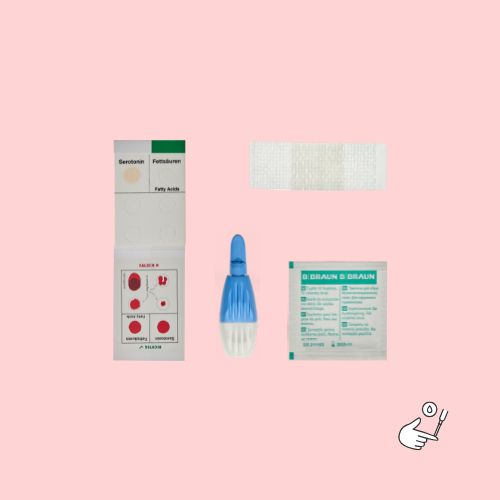


Food intolerances for children & teenagers
The ORY food intolerance test for children examines over 270 foods using a blood analysis (IgG test) – simple, safe and convenient from home.
This is how you can identify possible undiscovered intolerances that can cause digestive problems, skin conditions, fatigue or difficulty concentrating.
• No doctor's appointment necessary – discreet & convenient at home
• You retain control over your health
• Time saving: Removal in just a few minutes
• Analysis in certified partner laboratories
• Scientifically sound, understandable evaluation
• Optional: Support from ORY experts (medical & therapeutic)
→ Important points for family and partner diagnostics
Added value for the whole family: Joint diagnostics reveals important connections, supports genuine prevention and helps everyone to better understand nutrition, stress and health – and above all, to more easily take concrete, helpful steps.
- Clear data per person: For each person tested, we need their name and date of birth so that the laboratory can clearly identify them.
- Individual email address: Each person needs a unique email address for secure digital access. If this is not possible, we will send the results as a PDF to a shared address.
- Clear labeling: Samples and forms must each be assigned to the correct person.
💚 Together we make people healthy.
→ Important: Follow the instructions correctly
Please read the instructions carefully. Correct preparation is crucial so that your sample – stool, urine, saliva or blood – can be analyzed cleanly and meaningfully.
Diagnostic time: Please be patient.
Our laboratory analyses are precise, in-depth, and comprehensive. Therefore, the evaluation typically takes 7–21 days after the sample arrives at the laboratory.
Good diagnostics take time – and that's exactly the quality you get from us.
Quick response
We will inform you immediately as soon as your results are available.
We will accompany you
We're happy to support you on your journey to better health and balance. 🌿💛
→ For possible reimbursement by your private insurance
Here's how the process works for a possible reimbursement by your private insurance:
- A short online consultation with one of our therapists: During this consultation, we will clarify your symptoms and create a suitable, brief medical history.
- Referral for the appropriate laboratory tests: After the consultation, you will receive a referral which you can submit to your private insurance company.
Many private insurance companies cover the costs in full or in part – some, however, do not cover them at all. Unfortunately, this is normal and depends entirely on your policy. We will guide you through the process as best we can.
Couldn't load pickup availability
Pickup available at ORY
Usually ready in 4 hoursPairs well with
What is tested? – The content of the ORY Analysis: Food Intolerances for Children & Adolescents at a glance.
Test easily and safely at home – How the sample collection works
Your results – clear, understandable & individually evaluated
Why this analysis is important – The biological connection of your symptoms
Why this test?
Food intolerances for children & teenagers
The ORY difference - Medical quality is our top priority.
Certified in laboratories
Use laboratory certification for superior product quality.
Developed by experts
Professionally developed products based on years of practical experience.
Scientifically sound
Perform precise and reliable diagnostic tests comfortably at home
Individual holistic diagnostics
Identify the causes, unlock your potential, for your inner balance and regeneration.
If you have any questions, you are always welcome to contact us. We'll get back to you as soon as possible, within 24 hours on weekdays.
-
Shipping Information
Use this text to answer questions in as much detail as possible for your customers.
-
Customer Support
Use this text to answer questions in as much detail as possible for your customers.
-
FAQs
Use this text to answer questions in as much detail as possible for your customers.
-
Contact Us
Use this text to answer questions in as much detail as possible for your customers.

Why should I take the test at all?

What can I actually do with the results – what is the test good for?
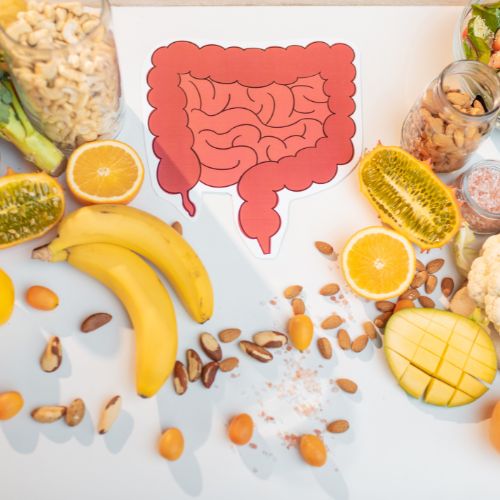
Physical benefits of individually tailored nutrition
Publications
(1) Wang L. et al. Diagnostic accuracy of DNA-based SDC2 methylation test in colorectal cancer screening: a meta-analysis. BMC gastroenterol. 2022.
(2) Yue C. et al. Meta-Analyses on SDC2 Gene Methylation. Front Med (Lausanne). 2022.
(3) Boyu Q. et al. Real-world retrospective study in China. 2024.
(4) Zhao S et al. Real-World SDC2 Methylation Screening Study. Gastroenterology. 2024.
FAQs
Please read our FAQs page to find out more.
ORX experts. Between uncertainty and clarity lies only a conversation.
At ORY, we help you understand your questions – and find out which diagnostics or support is right for you.