


Gut diagnostics
Metabolome – microbiome & neurotransmitters in stool (gut-brain axis)
Metabolome test from one stool sample: molecular-genetic microbiome, neurotransmitters such as serotonin and GABA, tryptophan metabolism, TMAO, bile acids, gut barrier markers, Candida and parasites.
No prescription needed. Ships next working day.
| Sample type | Stuhlprobe |
|---|---|
| Method | Metagenomics, LC-MS, ELISA, PCR |
| Turnaround | 7–21 days from sample arrival |
| Analysis | Partner laboratory in Germany |
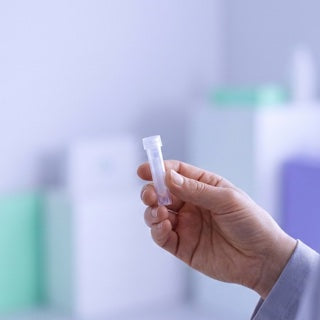 More than 100 individual values
Microbiome, metabolites and gut barrier from one sample
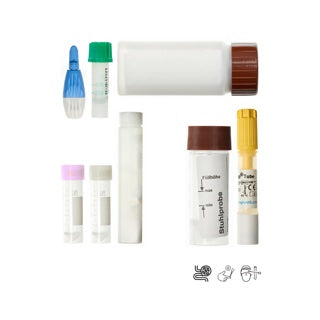 Gut-brain axis
Serotonin, GABA and tryptophan as present in stool
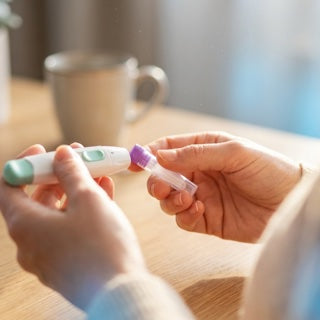 Sample collection at home
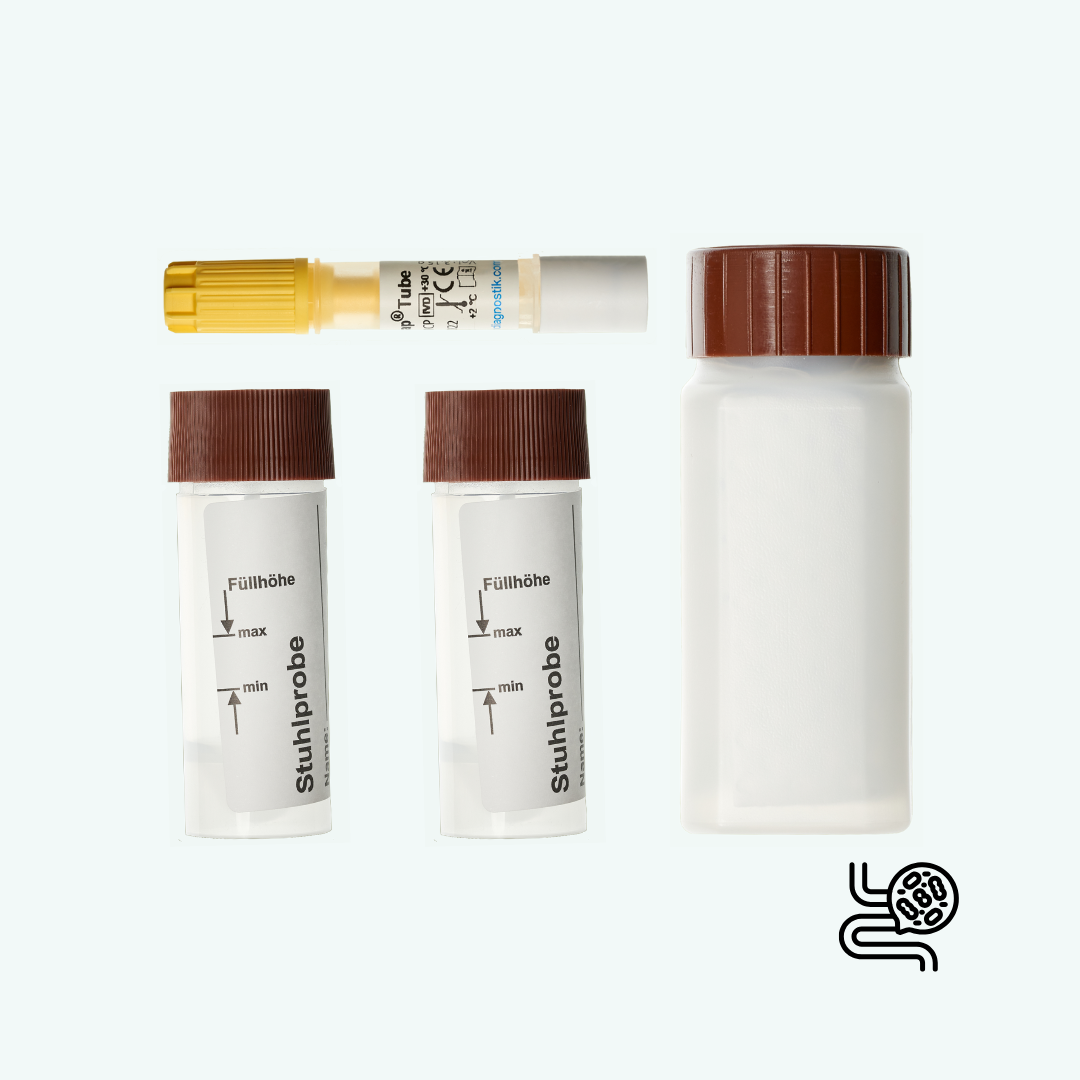
OmicSnap tube and two spoon tubes with collection aid
 Results consultation included
Evaluation by the ORY expert team
Principle
Measure first, then decide
Without measured values, any treatment is guesswork. We turn the order around: the lab report first, then the decision.

-
01
Measure Over 100 individual values from one stool sample, analysed at our partner laboratory in Germany.Mikrobolom — Microbiome, Neurotransmitters & Metabolome · Stool sample · 7–21 days from sample arrival
-
02
See where you stand Every value appears in the lab report with the laboratory's reference range. You can see which ones fall inside it and which do not.Lab report including consultation
-
03
Targeted, not generic Instead of a standard bundle you take what your values point to — agreed with the ORY expert team or with your doctor or naturopath.Initial consultation, 10 minutes, free
-
04
Measure again after a few months Running the same analysis a second time shows how the values have changed.Earliest sensible interval: 3 months


Ory experts support you
Doctors and Heilpraktiker from the Ory team are there for you the whole way — with the lab report and with everything that follows.
What a value means and whether a supplement might be an option for you is something to discuss with the ORY expert team or with your doctor or naturopath. This page makes no recommendation and is no substitute for medical assessment.
Details
What this analysis covers
What is measured
Microbiome, bacterial metabolites, neurotransmitters and gut barrier – more than 100 individual values from one stool sample.
The biomarker reference explains what lies behind the numbers: how values interact, which cofactors are involved and which biochemical processes take place in the body — for all values and areas, not only this analysis.
To the biomarker referenceThe values in detail
Low serotonin and GABA in stool – what does it mean?
Serotonin is an important messenger in the gut: special cells of the intestinal lining (enterochromaffin cells) produce it and use it to control gut movement, secretion and the transmission of signals to the nervous system (PubMed 17241888). GABA is an inhibitory messenger; gut bacteria can also produce and break down messengers (PubMed 36144440).
In irritable bowel syndrome, changes in the serotonin and GABA systems have been described, such as lower GABA levels; the role of these messengers, however, is still little researched (PubMed 34362210, PubMed 29852727). A value in stool describes the gut, not the messenger balance in the brain.
Tryptophan, kynurenic acid and indoles – what does tryptophan metabolism show?
Tryptophan is an amino acid from food and the only precursor of serotonin. In the gut it is also broken down into kynurenine products such as kynurenic acid, into tryptamine and into indoles; the gut flora influences which pathway predominates (PubMed 31825083).
Bacterial indoles such as indole-3-propionic acid (IPA) or indole-3-acetic acid (IAA) act on the defence of the intestinal lining via the aryl hydrocarbon receptor (AhR) (PubMed 29468141). The report shows these values and an AhR score calculated from them; there are no fixed cut-offs for their meaning.
Elevated TMAO – what does it mean?
Gut bacteria produce trimethylamine (TMA) from food components such as choline and carnitine, which the liver converts into TMAO. TMAO is being studied as a marker of cardiovascular risk; study results, however, are inconsistent, and diet and kidney function strongly influence the value (PubMed 39684223).
In practice, TMAO is therefore not yet an established value. It describes bacterial metabolism, not your personal risk.
Indoxyl sulfate, p-cresyl sulfate and ammonia – what are “toxins” from the gut?
When gut bacteria break down protein, substances such as ammonia, indole and p-cresol are formed. In the body, these become indoxyl sulfate and p-cresyl sulfate. In chronic kidney diseases they accumulate and are associated with disease progression (PubMed 39795549).
The report shows how much of these bacterial breakdown products is present in stool. The term "toxins" describes the group of substances, not poisoning; what the values mean is clarified in the results consultation.
Beta-glucuronidase and equol – what do they show?
Beta-glucuronidase is an enzyme of gut bacteria. It breaks the bond with which the liver marks substances such as oestrogens for excretion, and can thus make them available again (PubMed 28778332). Equol is a substance that certain gut bacteria produce from soy isoflavones; not everyone has such bacteria.
Both values describe what the gut flora does with substances from the body and food. For beta-glucuronidase alone there is the beta-glucuronidase test.
Bile acids, zonulin and sIgA – what do bile acid metabolism and the gut barrier show?
Gut bacteria transform bile acids from the liver, for example into deoxycholic acid. The report shows conjugated and free bile acids; too many bile acids in the large intestine are associated with chronic diarrhoea (PubMed 26913381).
Zonulin is measured as a gut barrier marker (PubMed 21248165) but is disputed because a widely used assay detects related proteins (PubMed 29459849). sIgA shows mucosal defence (PubMed 21975936), alpha-1 antitrypsin possible protein loss via the gut (PubMed 20571826).
Candida species and Blastocystis detected – what does it mean?
The test distinguishes seven Candida species. Yeasts are part of the gut flora in small amounts in many healthy people (PubMed 36135388). Blastocystis and Dientamoeba fragilis are often found in people without complaints; with an intact immune system, their detection does not indicate disease (PubMed 42838172).
If diarrhoeal pathogens such as Giardia lamblia, Cryptosporidium or Entamoeba histolytica are detected, the result belongs with a doctor.
Understanding the gut-brain axis and the metabolome
What is the metabolome – explained simply?
The metabolome is the totality of metabolites. In the gut, these include substances that bacteria produce from food and body substances: short-chain fatty acids, indoles, bile acids or messengers. While a microbiome analysis shows which bacteria are present, the metabolome shows what they do (PubMed 31825083).
This test measures both from one stool sample. Many of these values are used mainly in research; reference ranges come from the laboratory, and for most there are no generally valid cut-offs.
What is the gut-brain axis – explained simply?
Gut and brain are in constant exchange via nerves such as the vagus nerve, hormones, the immune system and metabolites of gut bacteria (PubMed 36144440). Stress can thus affect the gut, for example the gut barrier (PubMed 36806451), and signals from the gut in turn reach the brain.
Tryptophan metabolism is considered an important link (PubMed 31825083). Much of this comes from animal studies; how strongly these pathways act in humans is still open.
Can neurotransmitters be measured in stool – stool, urine or blood?
Stool can be used to measure how much serotonin, GABA, histamine and tryptophan is present in the gut. This says something about the gut and its bacteria, but not directly about the messengers in the brain: serotonin from the gut, for example, does not reach the brain.
Urine captures messengers and their breakdown products from the whole body; for this there is Neurotransmitter Plus (urine). None of these measurements can provide a diagnosis about mood or mental health.
Complaints and medical assessment
Which complaints are the gut flora and metabolites associated with?
Research associates the gut flora and its metabolites with the following complaints and conditions, with varying strength of evidence:
- Irritable bowel syndrome with abdominal pain, bloating, diarrhoea or constipation: altered gut flora and indications of altered messengers such as serotonin and GABA, observed in studies but little researched (PubMed 30940523, PubMed 34362210).
- Mood, sleep and perceived stress: links via the gut-brain axis and tryptophan metabolism are being researched, so far mainly in animal studies and reviews (PubMed 31825083, PubMed 36806451).
- Cardiovascular diseases: TMAO is discussed as a risk marker, but results are inconsistent (PubMed 39684223).
- Chronic kidney diseases: gut bacteria produce substances such as indoxyl sulfate and p-cresyl sulfate, which accumulate when kidney function is impaired (PubMed 39795549).
- Chronic inflammatory bowel diseases such as Crohn's disease: less Faecalibacterium prausnitzii, observed in studies (PubMed 18936492).
- Overweight and metabolic disorders: more often less Akkermansia muciniphila (PubMed 39940420).
- Skin problems such as acne or atopic dermatitis: discussed via the "gut-skin axis" (PubMed 40050613).
These are associations from studies, not causes in an individual. A stool test cannot explain complaints and does not provide a diagnosis. Persistent complaints should first be checked by a doctor.
When should I see a doctor first?
With blood in the stool or black stool, unintended weight loss, fever, diarrhoea at night, severe or new abdominal pain, persistent vomiting or difficulty swallowing, the first step is a doctor's practice, not a self-test. The same applies if your bowel habits change for the first time from around age 50 or if bowel cancer, coeliac disease or chronic inflammatory bowel disease runs in the family.
If mood, drive or sleep are clearly affected for weeks, talk to your GP. In an acute crisis, the German TelefonSeelsorge helpline is available free of charge around the clock on 0800 111 0 111; in an emergency, call 112.
If you suspect coeliac disease, do not stop eating gluten before the medical work-up, because the tests may otherwise come back falsely normal. A stool test does not replace bowel cancer screening.
Can gut metabolism or the gut-brain axis be influenced?
This page does not give treatment recommendations. Whether a result means anything at all and which steps make sense depends on your overall situation: complaints, previous findings, medication and diet.
What makes sense for you belongs in a conversation with the ORY expert team or with your doctor or naturopath, for example from the ORY expert network. The results consultation is included in the price.
Who it is for, process and costs
For whom
The metabolome test is for anyone who wants the microbiome, bacterial metabolites and neurotransmitter markers in stool measured in one analysis. Whether the measurement suits you can be clarified in the free initial consultation with the ORY expert team or with your doctor or naturopath, for example from the ORY expert network.
What a single value means in your situation is something to discuss with the ORY expert team or with your doctor or naturopath, for example from the ORY expert network. It does not replace medical assessment.
What do I need to consider before the metabolome test?
Antibiotics should have been stopped at least 4 weeks beforehand, laxatives and colon cleansing paused at least 3 days beforehand. According to the instructions, you continue probiotic supplements as usual and note them on the request form. Only pause prescribed medication after talking to your doctor.
Do not collect the sample during menstruation. The spoon of the tubes must not touch the toilet, because cleaning agents and disinfectants distort the result. Swirl the OmicSnap tube, do not shake it, and send the sample only from Monday to Thursday.
How it works
Four steps from order to lab report.
- 01 Kit arrives Ships the next working day, postage paid to your door.
- 02 Take the sample Stool sample with the enclosed OmicSnap set, a few minutes.
- 03 Send it back Postage paid to the laboratory in the enclosed transport container.
- 04 Get your report 7–21 days after the sample arrives, consultation included.
Instructions
The key points first:
- Take the stool sample with the enclosed OmicSnap set and avoid contact with toilet water.
- No antibiotics for 4 weeks beforehand, no probiotic products for 1–2 weeks beforehand.
- Send only Monday to Thursday, in the enclosed transport container.
Please read the instructions carefully. Correct preparation matters, so that your sample – stool, urine, saliva or blood – can be evaluated cleanly and meaningfully.
View full illustrated instructions
How long until I get the result?
Analysis usually takes 7–21 days from the arrival of the sample at the laboratory. Because this is an extensive multi-method analysis, it tends to be at the upper end of this range. As soon as your report is ready, we let you know. A results consultation with the ORY expert team is included in the price.
What does the metabolome test cost, and does health insurance pay?
The metabolome – microbiome & neurotransmitters costs €380 including VAT, shipping, return postage and results consultation.
Statutory health insurance in Germany generally does not cover stool analyses you order yourself. With private insurance, reimbursement may be possible; how it works is described under "Reimbursement by private insurance".
Reimbursement by private insurance
For possible reimbursement by your private insurer, this is how we do it:
Many private insurers cover the cost in full or in part – some not at all. That depends solely on your contract. We support you through the process as best we can.
Returning your sample
To make sure your sample arrives safely, please follow the rule for your country.
| Country | Postage | Shipping |
|---|---|---|
| Germany | Already paid | Return postage is prepaid, you do not need a stamp. |
| Austria | Stamp it yourself | To our address in Vienna, not to Germany. |
| Switzerland | Stamp it yourself | Separate return bag for Switzerland, sent to Germany. |
| Rest of Europe | Stamp it yourself | Sent to Germany. |
In short: for Germany everything is prepared. Austria: add a stamp, send to Vienna. Switzerland: add a stamp, special bag, send to Germany. Rest of Europe: add a stamp, send to Germany.
Family and partner testing
Testing together shows connections that a single analysis does not reveal. We need three things for it.
From three tests of the same analysis for the family you get 10 % off. Write to us and you will get your own discount code.
Send an email
Which test suits me?
The metabolome (€380) is the most extensive stool analysis with microbiome and metabolites. Gut-brain axis complete (€116) measures only histamine, tryptophan, serotonin and GABA in stool. Microbiome Maxi Plus + gut barrier + absorption (€465) focuses on gut flora, inflammation and digestion. For messengers in urine there is Neurotransmitter Plus (€185.90), for the stress hormone cortisol in saliva the cortisol daily profile (€155).
Which scope makes sense for you can be clarified in the free initial consultation.
Also suitable
Similar analyses
More in-depth, or with a different focus.


Which analysis suits you is best discussed in the initial consultation. View all analyses
Supplements
Supplements for the areas of this analysis
Which product suits you, and at what dose, is something you discuss with the ORY expert team or with your doctor or naturopath after the lab report. This page recommends nothing.


Food supplements are not a substitute for a balanced diet. The full range: Supplements
Orientation
What happens next
Five routes, independent of this analysis. The same on every product page.
ORY Berlin sells analyses and products. What a lab report means for you is something a Heilpraktiker or a doctor tells you, not this page.