


Gut diagnostics
Beta-glucuronidase test at home – gut enzyme in stool
Beta-glucuronidase test at home: activity of the bacterial gut enzyme involved in the excretion of oestrogens, bilirubin and medicines – from one stool sample, analysed by ELISA at the partner laboratory.
No prescription needed. Dispatched next working day.
| Sample type | Stuhlprobe |
|---|---|
| Method | ELISA |
| Turnaround | 7–21 days from lab receipt |
| Analysis | Partner laboratory in Germany |
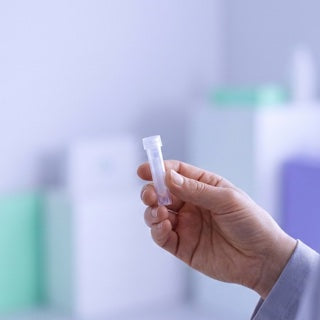 One enzyme of the gut flora
Beta-glucuronidase activity in stool, also as a follow-up measurement
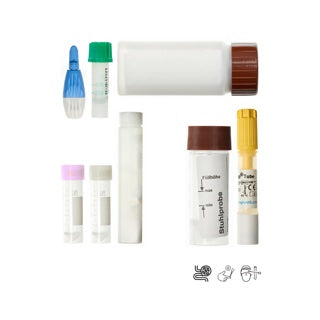 Analysis at the partner laboratory
ELISA with the laboratory's reference range
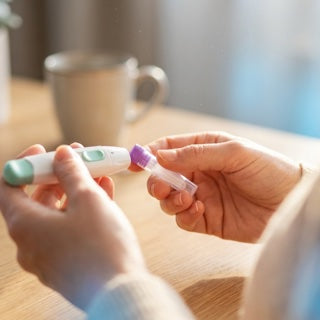 Sample collection at home
One spoon tube with stool collection aid
 Results consultation included
Evaluation by the ORY expert team
Principle
Measure first, then decide
Without measured values, any treatment is guesswork. We turn the order around: the lab report first, the decision after.

-
01
Measure One enzyme value from a stool sample, analysed in the partner laboratory in Germany.Beta-glucuronidase test · stool sample · 7–21 days from lab receipt
-
02
See where you stand Every value appears in the lab report next to the laboratory's reference range. You see which values sit inside it and which do not.Lab report including consultation
-
03
Targeted, not generic Instead of a standard package you take what your values point to — agreed with the ORY expert team or with your doctor or naturopath.Initial consultation, 10 minutes, free
-
04
Measure again after some months The same analysis a second time shows how the values have changed.Earliest sensible gap: 3 months


Ory experts stay with you
Doctors and naturopaths from the ORY team are there for you the whole way — with the lab report and with all that follows.
What a value means and whether a supplement might be an option for you is something to discuss with the ORY expert team or with your doctor or naturopath. This page makes no recommendation and is no substitute for medical assessment.
Details
What this analysis covers
What is measured
The activity of the enzyme beta-glucuronidase from one stool sample.
The biomarker reference explains what lies behind the numbers: how values interact, which cofactors are involved and which biochemical processes take place in the body — for all values and areas, not only this analysis.
To the biomarker referenceThe value in detail
Elevated beta-glucuronidase in stool – what does it mean?
High activity means that the gut bacteria produce a lot of beta-glucuronidase. The enzyme splits substances that the liver has bound to glucuronic acid for excretion, including oestrogens. These can then be absorbed again from the gut (PubMed 28778332). Laboratory studies showed that certain bacterial enzymes reactivate oestrogens in this way (PubMed 31636122).
A review describes bacterial beta-glucuronidase as an important regulator of oestrogen metabolism in women (PubMed 37559394). Whether an elevated stool value measurably changes the hormone balance in an individual, however, has not been shown.
Low beta-glucuronidase – what does it mean?
Because gut bacteria produce the enzyme, its activity depends on the amount and composition of the gut flora. A review describes that with a less diverse gut flora, fewer oestrogens are released again and oestrogen levels in the blood can fall (PubMed 28778332).
A low value is therefore not automatically "better". It describes the metabolism of the gut flora, not your hormone status; there are separate hormone measurements for that.
What does beta-glucuronidase activity depend on?
The activity depends on which bacteria live in the gut, because the enzymes of different bacteria differ, and only certain ones reactivate oestrogens, for example (PubMed 31636122). Anything that changes the gut flora can therefore also change the value, such as antibiotics. The gut flora also fluctuates from day to day (PubMed 40276224).
The report is therefore a snapshot. If you want to compare the value over time, it is best to measure under similar conditions at the same laboratory.
Understanding beta-glucuronidase
What is beta-glucuronidase – explained simply?
The liver makes many substances excretable by binding them to glucuronic acid (glucuronidation). In this way, oestrogens, bilirubin and some medicines reach the gut via the bile. beta-glucuronidase is an enzyme of gut bacteria that breaks this bond again (PubMed 35820618).
The released substance can then be absorbed again through the gut wall and return to the circulation. Experts call this the enterohepatic circulation.
What is the estrobolome – oestrogens and the gut flora?
The estrobolome refers to all gut bacteria and their genes that can process oestrogens. Beta-glucuronidase is the most important enzyme here (PubMed 28778332). Conversely, oestrogens also influence the composition and diversity of the gut flora (PubMed 37559394).
Much of this comes from laboratory and animal studies. How strongly the gut flora determines oestrogen levels in an individual has not yet been established.
Beta-glucuronidase and medicines – what is known?
Many medicines are also bound to glucuronic acid in the liver. Bacterial beta-glucuronidase can release them again in the gut; this affects how long and how strongly an active substance is present in the gut and can increase gut side effects of some medicines (PubMed 35820618).
This does not lead to any recommendation to change medication. Questions about this belong with your doctor.
How meaningful is the beta-glucuronidase test?
Beta-glucuronidase in stool is a research and function marker, not a standard value in medical diagnostics; no guideline provides for it in a specific disease. In a study on endometriosis, stool activity did not differ between women with and without the condition (PubMed 38003489).
The value describes the activity of the gut flora at the time of sampling. It does not provide a diagnosis and does not replace a hormone or gynaecological examination.
Complaints and medical assessment
Which complaints and conditions is beta-glucuronidase associated with?
Via oestrogen metabolism, research associates the gut flora with the following topics, with varying strength of evidence:
- Menopausal complaints and oestrogen-dependent conditions: discussed in reviews (PubMed 37559394).
- Endometriosis and polycystic ovary syndrome (PCOS): links with the gut flora are discussed (PubMed 28778332); in one study, beta-glucuronidase activity did not differ in endometriosis (PubMed 38003489).
- Overweight and metabolic syndrome: links between gut flora and oestrogens described (PubMed 28778332).
- Fertility: named as a research area in reviews (PubMed 28778332).
- Diarrhoea as a side effect of medicines: mediated by bacterial beta-glucuronidase for some active substances (PubMed 35820618).
These are associations from studies, not causes in an individual. A stool test cannot explain complaints and does not provide a diagnosis. Persistent complaints should first be checked by a doctor.
When should I see a doctor first?
With bleeding outside your period or after menopause, severe or increasing lower abdominal pain, missed periods without pregnancy or an unfulfilled wish to have children, the first step is a gynaecologist, not a stool test.
With blood in the stool or black stool, unintended weight loss, fever, diarrhoea at night, severe or new abdominal pain, persistent vomiting or difficulty swallowing, the first step is a doctor's practice, not a self-test. The same applies if your bowel habits change for the first time from around age 50 or if bowel cancer, coeliac disease or chronic inflammatory bowel disease runs in the family.
Can beta-glucuronidase be lowered or influenced?
This page does not give treatment recommendations. Whether a result means anything at all and which steps make sense depends on your overall situation: complaints, previous findings, medication and diet.
What makes sense for you belongs in a conversation with the ORY expert team or with your doctor or naturopath, for example from the ORY expert network. The results consultation is included in the price.
Who it is for, process and costs
Who for
The beta-glucuronidase test is for anyone who wants the activity of this gut enzyme measured in stool, also as a follow-up measurement. Whether the measurement suits you can be clarified in the free initial consultation with the ORY expert team or with your doctor or naturopath, for example from the ORY expert network.
What a single value means in your situation is something to discuss with the ORY expert team or with your doctor or naturopath, for example from the ORY expert network. It does not replace medical assessment.
What do I need to consider before the beta-glucuronidase test?
Antibiotics should have been stopped at least 4 weeks beforehand, because they strongly change the gut flora and thus the enzyme activity. You can usually continue other medicines; only pause prescribed medication after talking to your doctor.
Do not collect the sample during menstruation. Catch the stool with the collection aid and take material from several places with the spoon in the lid; the spoon must not touch the toilet. Fill the tube between the min and max marks and send it only from Monday to Thursday.
How it works
Four steps from order to lab report.
- 01 Kit arrives Dispatched the next working day, postage paid to your door.
- 02 Take the sample Stool sample with the enclosed set, a few minutes.
- 03 Send it in In the pre-paid postal box to the laboratory.
- 04 Get your lab report 7–21 days after the sample arrives, consultation included.
Instructions
The essentials first:
- Take the stool sample using the collection sheet and the enclosed tubes.
- Take material from several spots and close the tubes tightly.
- Send it in the pre-paid postal box.
Please read the instructions carefully. Correct preparation matters: it is what allows your sample – stool, urine, saliva or blood – to be evaluated cleanly and meaningfully.
View full illustrated instructions
How long until I get the result?
Analysis usually takes 7–21 days from the arrival of the sample at the laboratory. For this analysis, it tends to be at the upper end of this range. As soon as your report is ready, we let you know. A results consultation with the ORY expert team is included in the price.
What does the beta-glucuronidase test cost, and does health insurance pay?
The beta-glucuronidase test costs €45 including VAT, shipping, return postage and results consultation.
Statutory health insurance in Germany generally does not cover stool analyses you order yourself. With private insurance, reimbursement may be possible; how it works is described under "Reimbursement by private insurance".
Reimbursement by private insurance
For possible reimbursement by your private insurer, this is how it works with us:
Many private insurers cover the cost in full or in part – some not at all. That depends entirely on your policy. We support you through the process as best we can.
Sending your sample back
So that your sample reaches the laboratory safely, please follow the rule for your country.
| Country | Postage | Shipping |
|---|---|---|
| Germany | Already paid | Return postage is arranged, you do not need a stamp. |
| Austria | Pay postage yourself | To our address in Vienna, not to Germany. |
| Switzerland | Pay postage yourself | Separate return bag for Switzerland, sent to Germany. |
| Rest of Europe | Pay postage yourself | Sent to Germany. |
In short: Germany, everything is ready. Austria, add postage and send to Vienna. Switzerland, add postage, special bag, send to Germany. Rest of Europe, add postage and send to Germany.
Family and partner testing
Testing together shows connections a single analysis cannot make visible. We need three things for that.
From three tests of the same analysis for the family you get 10 % off. Write to us and you will receive your own discount code.
Send an email
Which test suits me?
The beta-glucuronidase test (€45) measures only this one enzyme. The metabolome (€380) includes beta-glucuronidase together with the microbiome and other bacterial metabolites. Microbiome Maxi Plus (€285) analyses the composition of the gut flora itself. Hormones such as oestradiol and progesterone are measured in saliva by the women's hormone profile (€160.05).
Which scope makes sense for you can be clarified in the free initial consultation.
Also relevant
Similar analyses
More in depth, or with a different focus.


Which analysis suits you is best discussed in the initial consultation. See all analyses
Supplements
Supplements for the areas this analysis covers
Which product suits you, and in what amount, is something you discuss with the ORY expert team or with your doctor or naturopath after your lab report. This page recommends nothing.


Food supplements are no substitute for a balanced diet. The full range: Supplements
Orientation
What happens next
Five routes, independent of this analysis. The same on every product page.
ORY Berlin sells analyses and products. What a lab report means for you is something a non-medical practitioner or a doctor tells you, not this page.