


Gut diagnostics
Gut barrier & absorption – leaky gut test with calprotectin (stool)
Leaky gut test at home: eleven values on gut barrier, inflammation and digestion – zonulin, histamine, calprotectin, sIgA, pancreatic elastase, bile acids and more from stool samples.
No prescription needed. Ships the next working day.
| Sample type | Stuhlprobe, 2 Arten |
|---|---|
| Method | ELISA, Photometrie |
| Turnaround | 7–21 days from sample arrival |
| Analysis | Partner laboratory in Germany |
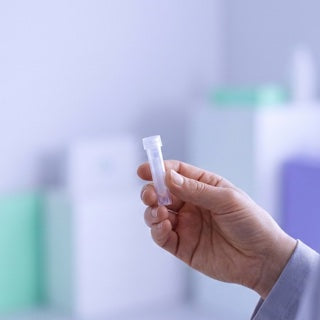 Three areas, eleven values
Gut barrier, inflammation and digestion (absorption)
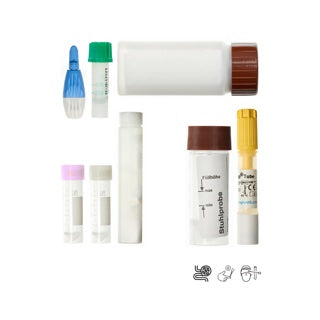 ELISA & photometry
Analysis at the partner laboratory with the laboratory's reference ranges
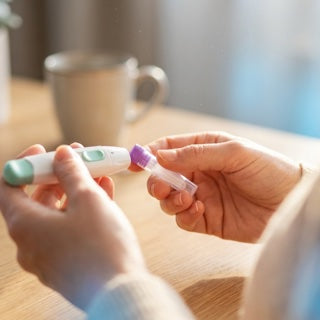 Sample collection at home
Two sample types with the enclosed kit, no cooling needed
 Results consultation included
Evaluation by the ORY expert team
The principle
Measure first, then decide
Without measured values, any treatment is guesswork. We turn that around: the lab report first, the decision after.

-
01
Measure 11 parameters from one stool sample, analysed at our partner laboratory in Germany.Gut Barrier & Absorption · stool sample, 2 types · 7–21 days from sample arrival
-
02
See where you stand Every value appears in the lab report alongside the laboratory's reference range. You can see which values fall inside it and which do not.Lab report including a consultation
-
03
Targeted, not generic Instead of a standard package, you take what your values point to — agreed with the ORY expert team or with your doctor or naturopath.Initial consultation, 10 minutes, free of charge
-
04
Measure again after a few months Running the same analysis a second time shows how the values have changed.Earliest sensible interval: 3 months


Ory experts are there for you
Doctors and non-medical practitioners (Heilpraktiker) from the Ory team are with you all the way — for the lab report and everything after.
What a value means and whether a supplement might be an option for you is something to discuss with the ORY expert team or with your doctor or naturopath. This page makes no recommendation and is no substitute for medical assessment.
Details
What this analysis covers
What is measured
Eleven values for gut barrier, inflammation and digestion from stool samples.
The biomarker reference explains what lies behind the numbers: how values interact, which cofactors are involved and which biochemical processes take place in the body — for all values and areas, not only this analysis.
To the biomarker referenceThe values in detail
Elevated zonulin in stool – what does it mean?
Zonulin is a protein that can loosen the connections between the cells of the intestinal lining (tight junctions). When more zonulin is present, the gut wall can become more permeable (PubMed 21248165). That is why zonulin in stool is measured as a marker of "leaky gut".
Important for interpretation: according to a 2018 study, a widely used commercial zonulin assay does not detect zonulin itself but related proteins such as properdin (PubMed 29459849). The value is therefore an indication, not proof of a permeable gut wall.
Elevated calprotectin in stool – what does it mean?
Calprotectin comes from white blood cells and rises in stool when the intestinal lining is inflamed (PubMed 31088326). A meta-analysis showed that calprotectin distinguishes chronic inflammatory bowel diseases well from irritable bowel syndrome: a normal value makes such a disease unlikely, but an elevated value does not prove it (PubMed 37823411).
An elevated value can have various causes and should be checked by a doctor.
Elevated alpha-1 antitrypsin and sIgA in stool – what does it mean?
Alpha-1 antitrypsin is a protein from the blood. If more of it is found in stool, this can indicate protein loss via the intestinal lining, for example with inflamed mucosa (PubMed 20571826).
Secretory IgA (sIgA) is the most important antibody of the mucous membranes; it binds pathogens and foreign substances in the gut (PubMed 21975936). An elevated value can indicate an activated mucosal defence, a low value a weaker one. Laboratories do not assess it uniformly.
Elevated histamine in stool – what does it mean?
In the gut, histamine comes from mast cells in the lining, from histamine-producing bacteria and from food. It is broken down mainly by the enzyme diamine oxidase (DAO) (PubMed 33921522). An elevated value shows that a lot of histamine is present in the gut.
In one study, the gut flora of some people with irritable bowel syndrome produced a lot of histamine, which increased gut pain sensitivity in mice (PubMed 35895832). For the question of histamine intolerance there is the histamine and DAO analysis.
Low pancreatic elastase – what does it mean?
Pancreatic elastase is a digestive enzyme of the pancreas that passes through the gut largely unchanged. A low value in stool can indicate that the pancreas produces too few digestive enzymes (exocrine pancreatic insufficiency). This can show up as fatty stools, bloating, abdominal pain, diarrhoea and unintended weight loss (PubMed 37737818).
The European guideline recommends basing the diagnosis on complaints, nutritional status and a pancreatic function test together (PubMed 39639485). A low value should therefore be checked by a doctor.
Elevated bile acids, fat, sugar and nitrogen in stool – what does that show?
The digestive residues show how much fat, nitrogen (from protein), sugar and water remain in the stool. A lot of fat in stool can indicate impaired fat digestion or absorption, for example due to the pancreas, bile acid metabolism or the intestinal lining (PubMed 38429963). A lot of sugar can indicate carbohydrates that were not fully absorbed in the small intestine.
Bile acids help digest fat and are normally recovered in the small intestine. If too many reach the large intestine, this can cause diarrhoea; this bile acid loss is considered common and under-diagnosed (PubMed 26913381).
Understanding leaky gut and absorption
What is leaky gut – explained simply?
The intestinal lining is a barrier: it lets nutrients through and holds back bacteria, toxins and undigested food components. "Leaky gut" describes a gut wall that is more permeable than usual. A review lists documented influences including endurance exercise, painkillers from the NSAID group and certain food additives (PubMed 31076401).
Psychological stress is also being studied as an influence (PubMed 36806451). A distinct "leaky gut syndrome" as a diagnosis is not established.
What does absorption mean – maldigestion and malabsorption explained simply?
Absorption means uptake: nutrients pass from the gut into the blood. For this to work, they must first be broken down. If breakdown is lacking, for example pancreatic enzymes or bile acids, this is called maldigestion; if uptake through the intestinal lining fails, malabsorption (PubMed 38429963).
The report is structured accordingly: digestive residues, evidence of maldigestion (pancreatic elastase, bile acids) and evidence of malabsorption (calprotectin, alpha-1 antitrypsin).
Can leaky gut be detected – stool, blood or urine?
In research, gut permeability is measured mainly with sugar tests: you drink certain sugars and measure how much of them arrives in the urine (PubMed 31076401). In practice, markers such as zonulin are measured in stool or blood.
This test measures zonulin together with inflammation, defence and digestion markers in stool. It therefore shows several indications of the state of the intestinal lining but cannot prove a permeable gut wall.
Is leaky gut a recognised diagnosis?
No. Increased permeability of the gut wall is well described in conditions such as coeliac disease or chronic inflammatory bowel diseases. A distinct "leaky gut syndrome", however, is not part of medical guidelines. Whether restoring the gut barrier improves complaints has not yet been shown (PubMed 31076401).
Complaints and medical assessment
Leaky gut symptoms – which complaints are the values associated with?
Research associates the eleven markers with the following complaints and conditions, with varying strength of evidence:
- Irritable bowel syndrome with abdominal pain, bloating, diarrhoea or constipation: a more permeable gut wall in some patients, observed in studies (PubMed 28404070).
- Chronic inflammatory bowel diseases such as Crohn's disease and ulcerative colitis: elevated calprotectin, well documented (PubMed 31088326, PubMed 37823411).
- Coeliac disease: increased permeability of the gut wall, well documented (PubMed 31076401, PubMed 21248165).
- Fatty stools, bloating, diarrhoea and unintended weight loss with reduced pancreatic function: well documented (PubMed 37737818).
- Chronic diarrhoea due to bile acid loss: found in up to 40% of people with diarrhoea-predominant irritable bowel syndrome (PubMed 26913381).
- Deficiency of fat-soluble vitamins and malnutrition with impaired fat absorption: described (PubMed 38429963).
- Histamine intolerance with bloating, headache, flushing or itching after histamine-rich meals: described (PubMed 17490952).
- Autoimmune diseases: a link with zonulin is being researched, for example in type 1 diabetes (PubMed 32162764).
These are associations from studies, not causes in an individual. A stool test cannot explain complaints and does not provide a diagnosis. Persistent complaints should first be checked by a doctor.
When should I see a doctor first?
With blood in the stool or black stool, unintended weight loss, fever, diarrhoea at night, severe or new abdominal pain, persistent vomiting or difficulty swallowing, the first step is a doctor's practice, not a self-test. The same applies if your bowel habits change for the first time from around age 50 or if bowel cancer, coeliac disease or chronic inflammatory bowel disease runs in the family.
If you suspect coeliac disease, do not stop eating gluten before the medical work-up, because the tests may otherwise come back falsely normal. A stool test does not replace bowel cancer screening.
Can leaky gut be treated or digestion improved?
This page does not give treatment recommendations. Whether a result means anything at all and which steps make sense depends on your overall situation: complaints, previous findings, medication and diet. That complaints improve by restoring the gut barrier has not yet been shown (PubMed 31076401).
What makes sense for you belongs in a conversation with the ORY expert team or with your doctor or naturopath, for example from the ORY expert network. The results consultation is included in the price.
Who it is for, process and costs
Who it's for
The test is for anyone who wants markers of the gut barrier, inflammation and digestion measured from stool samples, without a gut flora analysis. Whether the measurement suits you can be clarified in the free initial consultation with the ORY expert team or with your doctor or naturopath, for example from the ORY expert network.
What a single value means in your situation is something to discuss with the ORY expert team or with your doctor or naturopath, for example from the ORY expert network. It does not replace medical assessment.
What do I need to consider before the leaky gut test?
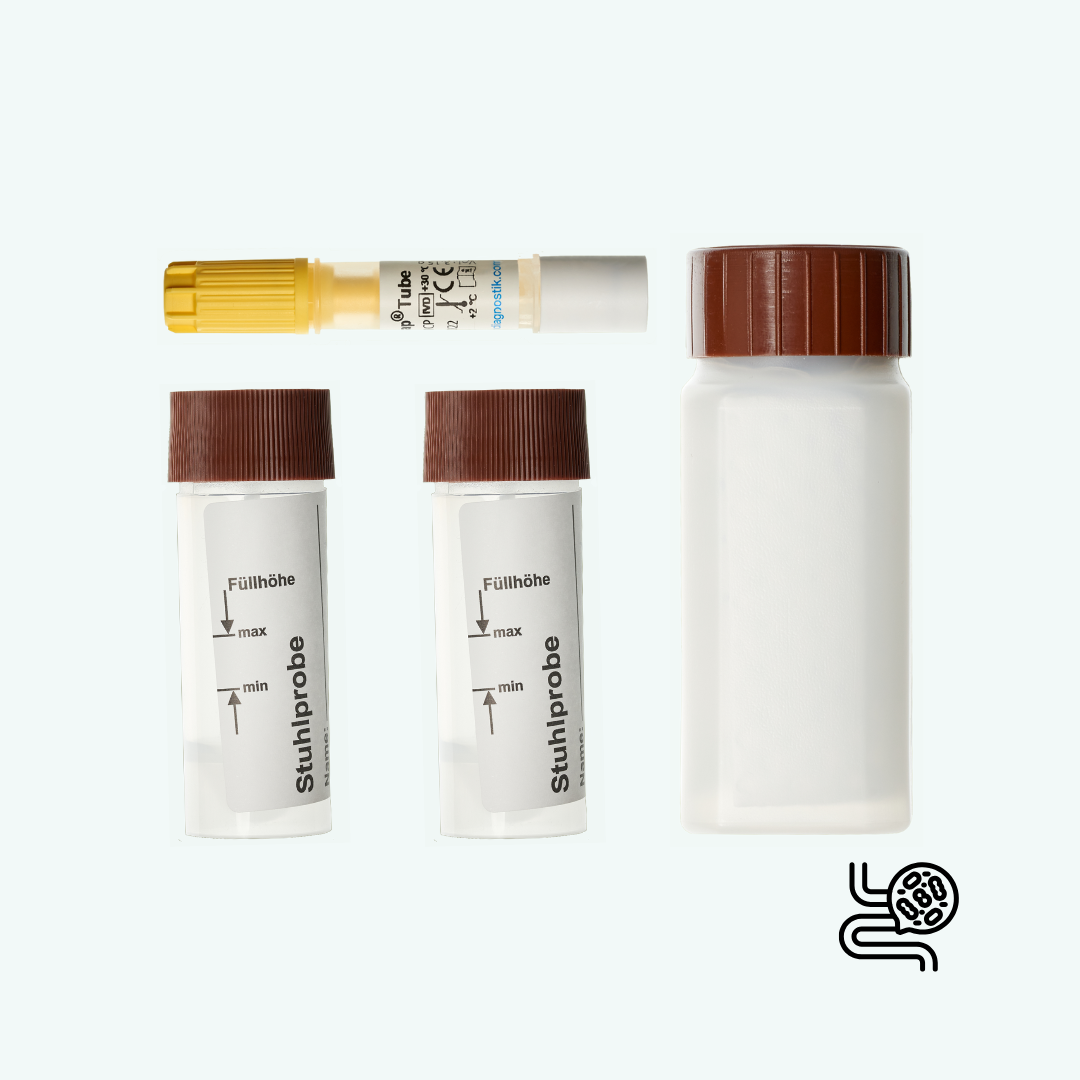
The kit contains two sample types: an OmicSnap tube for histamine and two spoon tubes for all other values. The stool must not come into contact with toilet water; a stool collection aid is included. Cooling is not necessary. Only pause prescribed medication after talking to your doctor; if you take painkillers, antibiotics or digestive enzymes, mention this in the results consultation.
Hand in the samples with the completed request form in the shipping box at a post office only from Monday to Thursday, not on Fridays and not in a letterbox.
How it works
Four steps from order to lab report.
- 01 Kit arrives Sent the next working day, postage paid, to your door.
- 02 Take the samples Two stool samples with the enclosed set.
- 03 Send it in To the laboratory in the enclosed transport container, postage paid, to the post office Monday to Thursday.
- 04 Receive your lab report 7–21 days after the sample arrives.
Instructions
The main points first:
- Take two stool samples with the enclosed OmicSnap Meta and spoon tube set.
- Avoid contact with toilet water and close the tubes tightly.
- Take them to the post office Monday to Thursday.
Please read the instructions carefully. Correct preparation matters: it is what allows your sample – stool, urine, saliva or blood – to be evaluated cleanly and meaningfully.
View full illustrated instructions
Sample report
This is what your result looks like: the full lab report with all 11 parameters — shown as an image, no download needed.
View sample report
How long until I get the result?
Analysis usually takes 7–21 days from the arrival of the sample at the laboratory. As soon as your report is ready, we let you know. A results consultation with the ORY expert team is included in the price.
What does the leaky gut test cost, and does health insurance pay?
The gut barrier & absorption test costs €179.90 including VAT, shipping, return postage and results consultation.
Statutory health insurance in Germany generally does not cover stool analyses you order yourself. With private insurance, reimbursement may be possible; how it works is described under "Reimbursement by private insurance".
Reimbursement by private insurance
This is how a possible reimbursement by your private insurance works with us:
Many private insurers cover the cost in full or in part – some not at all. That depends entirely on your policy. We support you through the process as best we can.
Sending your sample back
So that your sample reaches the laboratory safely, please follow the rule for your country.
| Country | Postage | Shipping |
|---|---|---|
| Germany | Already paid | Return postage is prepared, you do not need to add a stamp. |
| Austria | Pay postage yourself | To our address in Vienna, not to Germany. |
| Switzerland | Pay postage yourself | Separate return bag for Switzerland, sent to Germany. |
| Rest of Europe | Pay postage yourself | Sent to Germany. |
In short: Germany, nothing to do. Austria, add postage and send to Vienna. Switzerland, add postage, use the special bag, send to Germany. Rest of Europe, add postage and send to Germany.
Testing for families and couples
Testing together reveals connections that a single analysis cannot show. We need three things for it.
From three tests of the same analysis for one family you get 10 % off. Write to us and we will send you your own discount code.
Send an email
Which gut test suits me?
Gut barrier & absorption (€179.90) measures gut barrier, inflammation and digestion without the gut flora. With gut flora, Candida and pH there are the basic gut profile (€285) and the gut profile microbiome & gut barrier (€315). Microbiome Maxi Plus + gut barrier + absorption (€465) combines these values with a molecular-genetic gut flora analysis. For histamine alone there is the histamine stool test (€55).
Which scope makes sense for you can be clarified in the free initial consultation.
Also relevant
Similar analyses
More in depth, or with a different focus.


Which analysis suits you is best discussed in the initial consultation. See all analyses
Supplements
Supplements for the areas this analysis covers
Which product suits you, and in what amount, is something you discuss with the ORY expert team or with your doctor or naturopath once your lab report is in. This page recommends nothing.


Food supplements are not a substitute for a balanced diet. The full range: Supplements
Orientation
What happens next
Five routes, independent of this analysis. The same on every product page.
ORY Berlin sells analyses and products. What a lab report means for you comes from a practitioner or a doctor, not from this page.