


IgG diagnostics
IgG antibody test – 270 foods, at-home blood test
IgG antibodies against 270 foods from 18 categories – from one drop of blood at home. IgG shows contact with foods, not an allergy or an intolerance.
No prescription needed. Ships the next working day.
| Sample type | Capillary blood (bloodspot) |
|---|---|
| Method | IgG-ELISA |
| Turnaround | 7–21 days after arrival |
| Analysis | Partner laboratory in Germany |
 270 foods, 18 categories
Reaction level for each food, from grains to spices
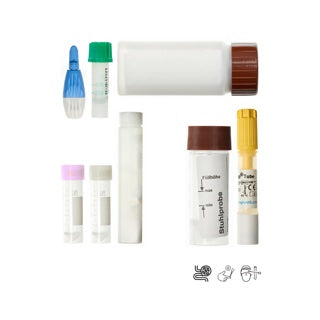 Honest context
IgG shows contact with foods, not an allergy
 One drop of blood
Blood spot from the fingertip, no cooling needed
 Results consultation included
Evaluation by the ORY expert team
The approach
Measure first, then decide
Without measured values, any treatment is guesswork. We turn the order around: first the lab report, then the decision.

-
01
Measure IgG antibodies against 270 foods from one drop of capillary blood, analysed at the partner laboratory in Germany.IgG-Antikörper-Test 270 Lebensmittel · capillary blood (bloodspot) · 7–21 days from sample arrival
-
02
See where you stand Every value appears in the lab report with the laboratory's reference range. You can see which values fall inside it and which do not.Lab report including a consultation
-
03
Targeted instead of general Instead of a standard package you take what your values point to — agreed with the ORY expert team or with your doctor or naturopath.Initial consultation 10 minutes, free
-
04
Measure again after a few months The same analysis a second time shows how the values have changed.Earliest sensible interval: 3 months


Ory experts are there for you
All along the way, doctors and Heilpraktiker from the Ory team are there for you — with your lab report and everything after it.
What a value means and whether a supplement might be an option for you is something to discuss with the ORY expert team or with your doctor or naturopath. This page makes no recommendation and is no substitute for medical assessment.
Details
What this analysis includes
What is measured
IgG antibodies against 270 foods from 18 categories, each with a reaction level.
The biomarker reference explains what lies behind the numbers: how values interact, which cofactors are involved and which biochemical processes take place in the body — for all values and areas, not only this analysis.
To the biomarker referenceThe values in detail
IgG against a food raised – what does it mean?
IgG is the most common antibody class in the blood. People who eat a food regularly often form IgG antibodies against its proteins. The EAACI task force describes these antibodies as a normal immune response to repeated contact with foods, and rather as a sign of tolerance than of hypersensitivity (PubMed 18489614).
A raised IgG value against a food therefore mainly means: this food has been eaten and recognised by the immune system. According to current knowledge it does not show that the food causes complaints. The German guideline states that IgG measurements cannot distinguish healthy from ill people (PubMed 34263109).
High values for milk, egg or wheat – does that mean intolerance?
No. Foods that are eaten often – cow's milk, hen's egg, wheat and other gluten-containing grains – frequently show high values in IgG tests, including in people without complaints. A large study of over 21,000 adults found that IgG levels against foods vary widely in both healthy and symptomatic people and depend, among other things, on sex and region (PubMed 23301096). A German review names the many positive results in healthy people as the main problem of these tests (PubMed 20963379).
"Gluten IgG raised" is not a sign of coeliac disease either. Coeliac disease has its own medical blood tests (antibodies against tissue transglutaminase, IgA), which are only meaningful while gluten is being eaten (PubMed 31210940).
What do reaction level and "additional exclusions" in the report mean?
For each of the 270 foods the report shows a bar with the reaction level – none, weak, moderate or strong. The levels are based on the laboratory's cut-offs. There are no generally accepted cut-offs above which an IgG value is linked to complaints (PubMed 34263109).
The column "additional exclusions" groups related foods, for example different gluten-containing grains. The laboratory report speaks of "permitted" and "excluded" foods. This is the laboratory's way of presenting results, not a recommendation from ORY: professional societies advise against cutting out foods on the basis of IgG values (PubMed 20963379).
IgG or IgG4 – what is the difference?
IgG4 is one of the four subclasses of IgG. Many food tests measure IgG4; according to its laboratory method, this test measures IgG (IgG ELISA). The same assessment applies to both: the German guideline recommends neither IgG nor IgG4 measurement against foods for diagnosing allergy or intolerance (PubMed 34263109).
According to the EAACI task force, IgG4 against foods rises mainly with repeated contact and is linked to tolerance (PubMed 18489614). The American Academy of Allergy, Asthma & Immunology (AAAAI) has endorsed this assessment (PubMed 20451986).
Understanding food intolerance
Allergy, intolerance or IgG – what is the difference, simply explained?
Food allergy: the immune system reacts to a food protein via IgE antibodies. Symptoms usually appear quickly, from itching in the mouth and rash to abdominal pain and severe reactions (anaphylaxis). In young children, milk and egg are the most common triggers (PubMed 34875122).
Intolerance: here the immune system is usually not involved. Often it concerns carbohydrates that are not fully absorbed in the small intestine, such as milk sugar (lactose) or fruit sugar (PubMed 27215624). Coeliac disease is a separate autoimmune disease triggered by gluten.
IgG against foods belongs to none of these groups. It shows contact, not disease (PubMed 18489614).
What do professional societies say about IgG food tests?
The assessment is clear:
- EAACI (European Academy of Allergy and Clinical Immunology): IgG4 food tests are not suitable for investigating allergy or intolerance and should not be performed for food-related complaints (PubMed 18489614).
- AAAAI (USA) supports this position paper (PubMed 20451986).
- German S2k guideline on IgE-mediated food allergy, led by the DGAKI together with other societies: IgG and IgG4 measurements against foods should not be performed to diagnose food allergy or intolerance – with strong consensus (PubMed 34263109).
The main reasons given are the many abnormal results in healthy people and the risk of unnecessary diets, which can reduce quality of life and lead to malnutrition (PubMed 20963379). We share this assessment and therefore offer the test only as information about antibodies, not as a diagnosis.
Are there studies in favour of IgG tests?
There are individual studies, mainly in irritable bowel syndrome in adults. In two randomised trials, participants cut out either foods with raised IgG or, for comparison, other foods; in the IgG group symptoms decreased somewhat more on average (PubMed 15361495, PubMed 39894284). The authors of the more recent trial consider larger studies necessary for confirmation.
These studies test a diet in a specific group, not whether IgG demonstrates an intolerance. So far they have not changed the assessment of the professional societies.
How is a food allergy or intolerance diagnosed – and can you test it at home?
It starts with a medical history: what was eaten, and which complaints appeared when? If an allergy is suspected, IgE antibodies in the blood or skin tests follow, often a supervised challenge with the food (PubMed 34263109). Lactose intolerance can be checked with a breath test (PubMed 31427404), coeliac disease with blood antibody tests while gluten is being eaten (PubMed 31210940). For histamine intolerance and non-coeliac gluten sensitivity there are no established tests yet (PubMed 38068827).
Some of these examinations are also available with sample collection at home, such as the lactose breath test. An allergy, however, belongs in an allergy practice, especially if reactions occur soon after eating.
What can an IgG test be useful for – and what not?
The test shows against which of the 270 foods you have IgG antibodies and how strongly. This can be information about previous eating habits and the immune system and a starting point for a conversation with the ORY expert team or with your doctor or naturopath, for example from the ORY expert network.
The test is not suitable for establishing an allergy, an intolerance, coeliac disease or the cause of complaints, and not as the sole basis for a change in diet (PubMed 34263109, PubMed 18489614).
Complaints and medical assessment
Food intolerance symptoms – which complaints are described?
Complaints after eating are often attributed to a "food intolerance". Research shows the following, with varying strength of evidence:
- Itching in the mouth, hives, swelling, vomiting or breathing difficulty soon after eating: typical of an IgE-mediated allergy – well established (PubMed 34875122).
- Abdominal pain, bloating and diarrhoea after dairy: in lactose intolerance; well established, but self-assessment often does not match test results (PubMed 31427404).
- Bloated belly, abdominal pain, changing bowel habits: typical of irritable bowel syndrome; foods can trigger symptoms, the causes are varied (PubMed 28404070).
- Flushing, headache, itching, palpitations after histamine-rich meals: described in histamine intolerance; the condition is disputed (PubMed 17490952, PubMed 27215624).
- Diarrhoea, weight loss and other signs of impaired nutrient absorption: can occur in coeliac disease – well established, but the picture ranges from no symptoms to severe (PubMed 19394538).
- Tiredness, headache, skin problems or joint complaints 4–72 hours after eating are often attributed to IgG antibodies. There is no evidence for this (PubMed 18489614).
These are associations from studies, not causes in an individual. An IgG test cannot explain complaints and does not provide a diagnosis. Persistent complaints belong in a medical assessment first.
When should I seek medical assessment first?
In case of breathing difficulty, swelling of the tongue or throat, circulatory problems or impaired consciousness after eating, call the emergency number 112 immediately – these can be signs of a severe allergic reaction (PubMed 34343358).
The first step is the doctor's practice, not a self-test, in case of blood in the stool or black stool, unintended weight loss, fever, nocturnal diarrhoea, difficulty swallowing, persistent vomiting, anaemia, or new digestive complaints from around age 50. Medical support is also advisable if the range of foods you eat keeps shrinking or eating causes anxiety. If you suspect coeliac disease, do not cut out gluten before assessment, as the tests may otherwise be falsely normal (PubMed 31210940).
Should I cut out foods with a high IgG value?
This page does not give dietary advice. Professional societies advise against cutting out foods solely because of raised IgG values: unnecessary diets can reduce quality of life and lead to a one-sided diet or even malnutrition (PubMed 20963379, PubMed 34263109). The studies on IgG-guided diets in irritable bowel syndrome are an open research question, not an established basis (PubMed 39894284).
Whether and which steps make sense for you depends on complaints, previous findings and diet. That belongs in a conversation with the ORY expert team or with your doctor or naturopath, for example from the ORY expert network. The results consultation is included in the price.
Who it is for, process and costs
Who for
The test is for adults who want IgG antibodies against 270 foods measured and who understand that IgG does not demonstrate an allergy or an intolerance. If there are complaints, medical assessment comes first. Whether the test suits you can be clarified in the free initial consultation with the ORY expert team or with your doctor or naturopath, for example from the ORY expert network.
What a single value means in your situation is something to discuss with the ORY expert team or with your doctor or naturopath, for example from the ORY expert network. It does not replace medical assessment.
What do I need to consider before the IgG test?
According to the instructions, fasting is not required. Warm your hand well beforehand, clean the finger with the alcohol swab and let it dry completely. Place a drop of blood on the pre-punched field of the card and let it air-dry, then put it with the desiccant into the foil pouch and, together with the request form, into the postage-paid envelope. No cooling is needed.
IgG can only form against foods you eat or have eaten. Please do not change your diet specially before the test, and do not stop prescribed medicines on your own.
How it works
Four steps from order to lab report.
- 01 Kit arrives Shipped the next working day, postage paid to your home.
- 02 Take the bloodspot One drop of blood from the fingertip, a few minutes.
- 03 Send it in Labelled, with the request form, in the postage-paid envelope.
- 04 Get the lab report 7–21 days after arrival.
Instructions
First, the essentials:
- Warm your hand well first, clean the finger with an alcohol swab and let it dry.
- Put a small drop of blood on the pre-punched field and let it air-dry.
- Send it labelled, in the foil packaging, together with the request form.
Please read the instructions carefully. Correct preparation matters, so that your sample – stool, urine, saliva or blood – can be evaluated cleanly and meaningfully.
View full illustrated instructions
Sample report
This is what your result looks like: the full lab report with the reaction strength for all 270 foods — shown as an image, no download needed.
View sample report
How long does it take to get the result?
The analysis usually takes 7–21 days from the sample's arrival at the laboratory. As soon as the report is ready, you will be notified. The results consultation with the ORY expert team is included in the price.
How much does the IgG test cost, and does health insurance pay?
The IgG antibody test costs €385 including VAT, shipping, return shipping and results consultation.
Statutory health insurance in Germany usually does not cover IgG food tests that you order yourself. With private insurance, reimbursement is possible but depends on your contract; how this works is described under "Reimbursement by private insurance".
Reimbursement by private health insurance
If your private health insurance might reimburse you, this is how it works with us:
Many private insurers cover the cost in full or in part – some not at all. That depends entirely on your policy. We support you through the process as best we can.
Sending your sample back
So that your sample reaches the laboratory safely, please follow this rule for your country.
| Country | Postage | Shipping |
|---|---|---|
| Germany | Already paid | Return postage is prepared, you do not need a stamp. |
| Austria | Add your own postage | To our address in Vienna, not to Germany. |
| Switzerland | Add your own postage | Separate return bag for Switzerland, sent to Germany. |
| Rest of Europe | Add your own postage | Sent to Germany. |
In short: Germany, everything is ready. Austria, add postage and send to Vienna. Switzerland, add postage, special bag, send to Germany. Rest of Europe, add postage and send to Germany.
Family and partner diagnostics
Testing together shows connections that a single analysis does not reveal. We need three things for that.
From three tests of the same analysis for the family you get 10 % off. Write to us and you will get your individual discount code.
Send an email
Which test suits me?
If you are asking about a specific intolerance, a targeted examination is often more useful: the lactose breath test (€65) checks the absorption of milk sugar, the histamine and DAO analysis (€93) measures histamine and the degrading enzyme DAO, and the gliadin and transglutaminase antibody test in stool (€95) measures antibodies in the gut; coeliac disease is assessed medically with blood tests. For an allergy, an allergy practice is the right place.
The IgG antibody test for children and adolescents costs €423.50. Which scope makes sense for you can be clarified in the free initial consultation.
Also relevant
Similar analyses
More in-depth, or with a different focus.

Which analysis suits you is best discussed in the initial consultation. View all analyses
Supplements
Supplements for the areas this analysis covers
Which product suits you, and in what amount, is something to discuss with the ORY expert team or with your doctor or naturopath after the lab report. This page recommends nothing.


Food supplements are no substitute for a balanced diet. The full range: Supplements
Orientation
What happens next
Five routes, independent of this analysis. The same on every product page.
ORY Berlin sells analyses and products. What a lab report means for you comes from the ORY expert team or from your doctor or naturopath, not from this page.