


Neurotransmitter diagnostics
Neurotransmitter Basic – serotonin & dopamine test (urine)
Neurotransmitter urine test: serotonin, dopamine, adrenaline and noradrenaline from the second morning urine – a snapshot of excretion, with its limits honestly explained.
No prescription needed. Ships the next working day.
| Sample type | 2. Morgenurin |
|---|---|
| Method | ELISA |
| Turnaround | 7–21 days from sample arrival |
| Analysis | Partner laboratory in Germany |
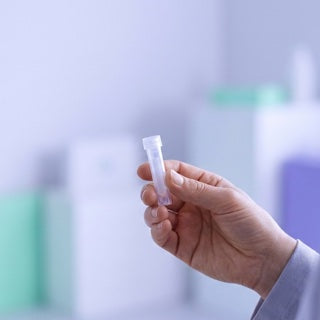 Four messengers
Serotonin, dopamine, adrenaline and noradrenaline from one urine sample
Four messengers
Serotonin, dopamine, adrenaline and noradrenaline from one urine sample
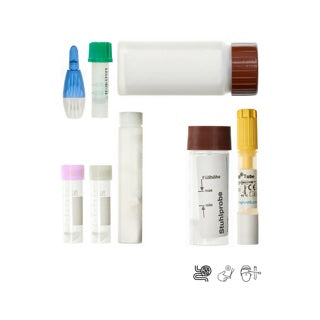 ELISA in the laboratory
Values relative to creatinine, with noradrenaline/adrenaline ratio
ELISA in the laboratory
Values relative to creatinine, with noradrenaline/adrenaline ratio
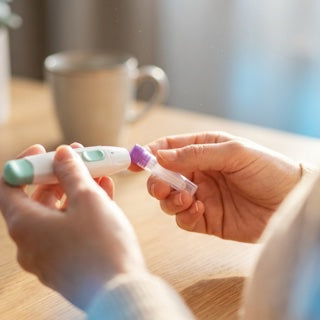 Sample collection at home
Second morning urine with pipette and tube
Sample collection at home
Second morning urine with pipette and tube
 Results consultation included
Evaluation by the ORY expert team
Results consultation included
Evaluation by the ORY expert team
Principle
Measure first, then decide
Without measured values, any treatment is guesswork. We turn the order around: the lab report first, then the decision.

-
01
Measure Four neurotransmitters from the second morning urine, analysed in the partner laboratory in Germany.Neurotransmitter Basis · 2nd morning urine · 7–21 days from sample arrival
-
02
See where you stand Every value is in the lab report with the laboratory's reference range. You can see which values sit inside it and which do not.Lab report including a discussion
-
03
Targeted, not generic Instead of a standard package you take what your values point to — agreed with the ORY expert team or with your doctor or naturopath.Initial consultation, 10 minutes, free
-
04
Measure again after a few months The same analysis a second time shows how the values have changed.Earliest sensible gap: 3 months


Ory experts support you
Doctors and Heilpraktiker from the Ory team are there for you the whole way — with your lab report and with whatever follows.
What a value means and whether a supplement might be an option for you is something to discuss with the ORY expert team or with your doctor or naturopath. This page makes no recommendation and is no substitute for medical assessment.
Details
What is in this analysis
What is measured
Serotonin and the three catecholamines in the second morning urine, relative to creatinine.
The biomarker reference explains what lies behind the numbers: how values interact, which cofactors are involved and which biochemical processes take place in the body — for all values and areas, not only this analysis.
To the biomarker referenceThe values in detail
Low or high serotonin in urine – what does it mean?
Serotonin is a messenger that contributes to mood, sleep and appetite in the brain. However, around 95% of the body's serotonin is produced in cells of the gut lining, where it controls gut movement among other things (PubMed 34360695). The urine value therefore mainly reflects this serotonin pool outside the brain.
A low value shows low excretion, a high value high excretion at the time of sampling. Diet, especially serotonin-rich foods such as bananas and nuts, can change the value; that is why there is a list of foods to avoid before sampling. A low value is not proof of a "serotonin deficiency" in the brain (PubMed 35854107).
Low dopamine in urine – dopamine deficiency?
Dopamine is formed from the amino acid tyrosine. In the brain it is involved in drive, motivation and movement (PubMed 23141060). In urine, however, dopamine comes to a large extent from the kidney, which forms it from the precursor L-DOPA; there it contributes to salt excretion (PubMed 8504632). In that study, a salt-rich diet also increased urinary dopamine.
A low or high urine value therefore says little about dopamine in the brain. A "dopamine deficiency" in the sense of a disease such as Parkinson's is investigated differently by doctors, not via urine.
Elevated adrenaline and noradrenaline in urine – what does it mean?
Adrenaline and noradrenaline are catecholamines. Adrenaline comes mainly from the adrenal medulla, noradrenaline mainly from the nerve endings of the sympathetic nervous system (PubMed 12649306). Both rise with physical exertion and stress (PubMed 8597393). Elevated urine values can therefore result from exercise, coffee, nicotine, stress or medication, among other things; that is the reason for the preparation rules.
The noradrenaline/adrenaline ratio shows the relationship between the two values. There is no generally accepted meaning for it; it is looked at together with the individual values. Clearly elevated catecholamines together with complaints such as sudden bouts of high blood pressure need medical assessment; other tests are intended for this (PubMed 24893135).
Why are the values expressed relative to creatinine?
How concentrated urine is depends on how much you have drunk. Creatinine is excreted in urine fairly evenly. When the laboratory divides the measured messengers by the creatinine value (unit µg/g creatinine), this compensates for part of these dilution differences. The creatinine value itself is also shown in the report; a very low value suggests highly diluted urine.
Understanding neurotransmitters
What are neurotransmitters – simply explained?
Neurotransmitters are messengers that nerve cells use to pass on signals. Serotonin and dopamine belong to the monoamines; adrenaline, noradrenaline and dopamine are grouped together as catecholamines. Many of these substances act not only in the brain but also in the rest of the body: serotonin, for example, in the gut and blood, adrenaline as a hormone of the adrenal gland (PubMed 19630576, PubMed 12649306).
This dual role is the reason why values from urine or blood cannot simply be transferred to the brain.
Does a urinary neurotransmitter test show what is happening in the brain?
No, and this is the most important limitation of this test. Serotonin hardly crosses the blood-brain barrier; the serotonin pools in the brain and in the rest of the body are separate, and almost all serotonin outside the brain comes from cells of the gut lining (PubMed 32479926, PubMed 34360695). Dopamine in urine is formed to a large extent in the kidney itself from its precursor L-DOPA (PubMed 8504632). Adrenaline and noradrenaline in urine come mainly from the adrenal glands and the sympathetic nervous system, i.e. from the body rather than the brain (PubMed 12649306). Whether GABA from the blood reaches the brain is still unclear (PubMed 26500584).
A review by authors from a test provider sees urinary neurotransmitters as a possible marker of nervous system activity (PubMed 20696183). There is so far no independent evidence that a single urine value reflects the messengers in the brain or a person's mood. The report therefore shows what your body excretes at the time of sampling, not the "serotonin level in your head".
Serotonin deficiency – can it be detected in urine?
The term "serotonin deficiency" is often used for low mood. A large umbrella review of measurements of serotonin and its breakdown products in body fluids, receptor studies and genetic studies found no convincing evidence for the simple idea that low mood is caused by too little serotonin (PubMed 35854107). The review is debated among experts, but its core point about values in body fluids is not disputed: a low value in blood or urine is not proof of a deficiency in the brain.
A low urinary serotonin therefore describes excretion at the time of sampling. What it means in your situation is something to discuss with the ORY expert team or with your doctor or naturopath, for example from the ORY expert network.
Neurotransmitter test at the doctor's, in blood or in urine – what is the difference?
In routine medical practice, catecholamines and their breakdown products are mainly measured to investigate rare hormone-producing disorders of the adrenal gland; the guideline recommends metanephrines in blood or urine for this (PubMed 24893135). Measuring messengers to assess mood or stress is not part of standard medical diagnostics.
This test measures serotonin, dopamine, adrenaline and noradrenaline in the second morning urine as a snapshot. It is suitable for getting to know the excretion of these substances, not for detecting or ruling out a disease.
Complaints and medical assessment
Symptoms and complaints – what are neurotransmitters and stress hormones associated with?
In research, the measured messengers are associated with the following areas, with varying strength of evidence:
- Stress load and inner tension: under stress, the adrenal medulla and the sympathetic nervous system are activated and release adrenaline and noradrenaline (PubMed 8597393). In one study, workers with high job demands had more catecholamines in 24-hour urine (PubMed 23892640). Observed in studies, not meaningful for the individual case.
- Drive and motivation: dopamine in the brain is involved in activation, willingness to exert effort and persistence with tasks (PubMed 23141060). Well established for the brain; the urine value does not reflect this.
- Mood and sleep: in the brain, serotonin is involved in mood, sleep and anxiety (PubMed 32479926). That a deficiency in the body explains low mood is not supported (PubMed 35854107).
- Trouble falling or staying asleep: stress and sleep influence each other, among other things via the stress axis (PubMed 35822937). Well described, but not measurable via urine values.
These are associations from studies, not causes in an individual person. A laboratory test cannot explain complaints and does not provide a diagnosis. Persistent complaints belong in a medical assessment first.
When should I see a doctor first?
If you have thoughts of harming yourself or feel you are in an acute crisis: in Germany, the TelefonSeelsorge can be reached free of charge around the clock on 0800 111 0 111. In acute danger, call the emergency number 112.
With sudden bouts of a racing heart with sweating, severe headaches and high blood pressure, the first step is a doctor's practice. To investigate a hormone-producing disorder of the adrenal gland, the guideline recommends measuring metanephrines, not a neurotransmitter test (PubMed 24893135). Chest pain, shortness of breath or paralysis are an emergency: call 112.
If low mood, lack of drive, anxiety or severe sleep problems persist for weeks, this belongs in a GP, psychotherapy or psychiatry practice first. A urine test does not replace this assessment. Never stop prescribed medication on your own because of a laboratory value.
Can serotonin or dopamine be increased?
This page does not give treatment recommendations. Whether a result means anything at all and which steps make sense depends on your overall situation: complaints, previous findings, medication, sleep and stress. That mood or drive can be steered via a urine value is not supported by evidence (PubMed 35854107).
What makes sense for you belongs in a conversation with the ORY expert team or with your doctor or naturopath, for example from the ORY expert network. Do not take preparations that influence messengers or hormones on your own because of a laboratory value, especially not alongside prescribed medication.
Who it is for, process and costs
For whom
Neurotransmitter Basic is for anyone who wants serotonin, dopamine, adrenaline and noradrenaline measured in the second morning urine and knows that urine does not show the messengers in the brain. Whether the measurement suits you can be clarified in the free initial consultation with the ORY expert team or with your doctor or naturopath, for example from the ORY expert network.
What a single value means in your situation is something to discuss with the ORY expert team or with your doctor or naturopath, for example from the ORY expert network. It does not replace medical assessment.
What do I need to consider before the neurotransmitter test?
Certain foods and stimulants change the excretion of serotonin and catecholamines in urine. According to the instructions: 2 days before no fish and no seafood. On the evening before no bananas, cheese, almonds or nuts, green or black tea, vanilla (including products containing vanilla), cocoa, alcohol, coffee or other caffeinated drinks, energy drinks or nicotine. In the morning no early exercise and stay fasting until the sample; water and fruit tea are allowed.
The second morning urine is used as a midstream sample, at least 2–4 hours after the first urine. Use the pipette to fill the tube up to the mark; the small filter with the stabiliser stays in the tube, swirl rather than shake. Cooling is not necessary. Ship only from Monday to Thursday, not before public holidays. Only pause prescribed medication after talking to your doctor.
How it works
Four steps from order to lab report.
- 01 Kit arrives Ships the next working day, postage paid to your door.
- 02 Collect urine Catch the second morning urine, at least 2–4 hrs after the first.
- 03 Send it in Send it in the postage-paid envelope.
- 04 Get your lab report 7–21 days after the sample arrives.
Instructions
The key points first:
- Use the second morning urine, at least 2–4 hours after the first.
- Close the sample tube tightly and label it.
- Send it in the postage-paid envelope, as soon as possible after collection.
Please read the instructions carefully. Correct preparation matters: it is what allows your sample — stool, urine, saliva or blood — to be evaluated cleanly and meaningfully.
View full illustrated instructions
Sample report
This is what your result looks like: the full lab report with every neurotransmitter value — viewable as an image, no download needed.
View sample report
How long does it take to get the result?
The analysis usually takes 7–21 days from the time the sample arrives at the laboratory. As soon as the report is ready, you will be notified. The results consultation with the ORY expert team is included in the price.
What does the neurotransmitter test cost, and does health insurance pay?
Neurotransmitter Basic costs €105 including VAT, shipping, return postage and results consultation.
Statutory health insurance in Germany generally does not cover urine analyses you order yourself. With private insurance, reimbursement may be possible; how it works is described under "Reimbursement by private insurance".
Reimbursement by private insurance
This is how it works with us if your private insurance may reimburse you:
Many private insurers cover the cost in full or in part – some not at all. That depends entirely on your policy. We support you through the process as best we can.
Sending your sample back
So your sample reaches the laboratory safely, please follow the rule for your country.
| Country | Postage | Shipping |
|---|---|---|
| Germany | Already paid | Return postage is prepared, you do not need to add a stamp. |
| Austria | Add your own postage | To our address in Vienna, not to Germany. |
| Switzerland | Add your own postage | Separate return bag for Switzerland, sent to Germany. |
| Rest of Europe | Add your own postage | Sent to Germany. |
In short: Germany is all set. Austria, add postage and send to Vienna. Switzerland, add postage, special bag, send to Germany. Rest of Europe, add postage and send to Germany.
Family and partner diagnostics
Testing together shows connections that a single analysis does not make visible. We need three things for that.
From three tests of the same analysis for the family you get 10 % off. Write to us and you will receive your own discount code.
Send an email
Which neurotransmitter test suits me?
Neurotransmitter Basic (€105) measures serotonin, dopamine, adrenaline and noradrenaline with ratio. Neurotransmitter Plus (€185.90) adds GABA and glutamate. Neurotransmitter tryptophan metabolism (€305) combines serotonin and catecholamines with the kynurenine pathway of tryptophan; Neurotransmitter tryptophan metabolism plus (€375) is the most extensive profile with additional metabolic markers. For the course of stress hormones over the day there is the cortisol day profile (€155), for the sleep hormone the melatonin test (€55).
Which scope makes sense for you can be clarified in the free initial consultation.
Also relevant
Similar analyses
More in depth, or with a different focus.


Which analysis suits you is best discussed in the initial consultation. See all analyses
Supplements
Supplements for the areas this analysis covers
Which product suits you, and in what amount, is something you discuss with the ORY expert team or with your doctor or naturopath after your lab report. This page recommends nothing.


Food supplements are no substitute for a balanced diet. The full range: Supplements
Orientation
What happens next
Five routes, independent of this analysis. The same on every product page.
ORY Berlin sells analyses and products. What a lab report means for you comes from a practitioner or a doctor, not from this page.