


Gut diagnostics for children
Gut check-up for children & teenagers – stool test for children
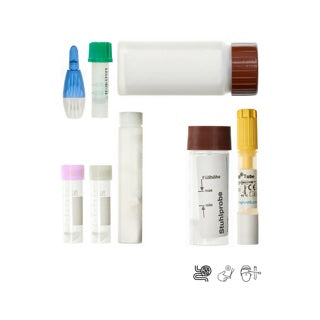
Stool test for children and teenagers: gut flora, Candida, pH, inflammation and gut barrier markers, histamine and digestion – six areas from one stool sample, collected together with a parent.
No prescription needed. Ships the next working day.
| Sample type | Stuhlprobe |
|---|---|
| Method | Partner laboratory analysis |
| Turnaround | 7–21 days from sample arrival |
| Analysis | Partner laboratory in Germany |
 Six areas, one sample
Gut flora, Candida, pH, leaky gut, histamine and digestion
Six areas, one sample
Gut flora, Candida, pH, leaky gut, histamine and digestion
 Explained for parents
Report with the laboratory's reference ranges, consultation with the parents
Explained for parents
Report with the laboratory's reference ranges, consultation with the parents
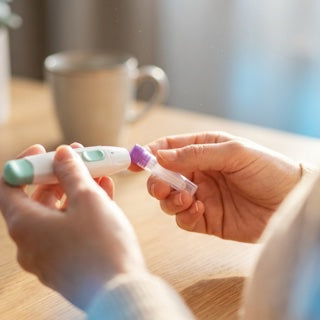 Sample collection at home
Together with a parent, no blood draw
Sample collection at home
Together with a parent, no blood draw
 Results consultation included
Evaluation by the ORY expert team
Results consultation included
Evaluation by the ORY expert team
Principle
Measure first, then decide
Without measured values, any treatment is guesswork. We turn the order around: first the lab report, then the decision.

-
01
Measure 6 categories from one stool sample, analysed at the partner laboratory in Germany.Gut check-up for children & young people · Stool sample · 7–21 days from sample arrival
-
02
See where you stand Every value appears in the lab report with the laboratory's reference range. You can see which values fall inside it and which do not.Lab report including a consultation
-
03
Targeted, not generic Instead of a standard package you take what your values point to — agreed with the ORY expert team or with your doctor or naturopath.Initial consultation, 10 minutes, free
-
04
Measure again after a few months The same analysis a second time shows how the values have changed.Earliest sensible interval: 3 months


Ory experts are there for you
All along the way, doctors and Heilpraktiker from the Ory team are there for you — with your lab report and everything after it.
What a value means and whether a supplement might be an option for you is something to discuss with the ORY expert team or with your doctor or naturopath. This page makes no recommendation and is no substitute for medical assessment.
Details
What this analysis covers
What is measured
Six areas of your child's gut health from one stool sample.
The biomarker reference explains what lies behind the numbers: how values interact, which cofactors are involved and which biochemical processes take place in the body — for all values and areas, not only this analysis.
To the biomarker referenceThe values in detail
Elevated calprotectin in a child – what does it mean?
Calprotectin is a protein from white blood cells. If it rises in stool, this can indicate inflammation in the gut; the value is used to distinguish inflammatory from non-inflammatory gut complaints (PubMed 31088326).
In children, one feature is important: healthy babies and toddlers have much higher values than older children. A meta-analysis found mean values of around 240–260 µg/g in the first six months of life and around 34 µg/g at three to four years (PubMed 40525108). A value above the adult reference range is therefore not automatically abnormal in a young child; interpretation belongs with a paediatrician.
Zonulin and sIgA in a child's stool – what do they mean?
Zonulin is a protein that can loosen the connections between the cells of the intestinal lining; it is measured as a marker of the gut barrier ("leaky gut") (PubMed 21248165). The value is disputed because a widely used assay detects related proteins rather than zonulin itself (PubMed 29459849).
Secretory IgA (sIgA) is the most important antibody of the mucous membranes and binds pathogens in the gut (PubMed 21975936). A high value can indicate an activated mucosal defence, a low value a weaker one. Both values are indications, not a diagnosis. In addition there is alpha-1 antitrypsin, which rises with protein loss via the gut (PubMed 20571826).
Elevated histamine in a child's stool – what does it mean?
Histamine is formed in the gut, among other things by bacteria, and occurs in foods such as aged cheese, sausage or sauerkraut. It is broken down mainly by the enzyme diamine oxidase (DAO) in the intestinal lining (PubMed 33921522).
An elevated value in stool shows that there is a lot of histamine in the gut. Whether this contributes to your child's complaints cannot be read from the stool value alone.
Candida detected in a child's stool – is that a concern?
Yeasts such as Candida albicans are part of the normal gut flora in small amounts in many healthy people (PubMed 36135388). The report shows whether Candida species, Geotrichum and moulds are detectable and in what amount.
More yeasts can occur, for example, after antibiotic treatment. Detection alone is not a disease; a distinct "Candida syndrome" is not scientifically established.
Gut flora in children – what do Bifidobacterium, Lactobacillus and others show?
The laboratory determines the gut flora by culture and states the bacterial count per gram of stool: aerobic bacteria such as E. coli and enterococci and anaerobic ones such as Bifidobacterium, Bacteroides, Lactobacillus and clostridia. Faecalibacterium prausnitzii and Akkermansia muciniphila are measured by molecular methods.
Bifidobacteria are especially characteristic of the gut flora of infants; with complementary food and increasing age, the gut flora becomes more diverse and more similar to that of adults (PubMed 29118049). The laboratory's reference ranges do not fit every age equally well; the results consultation puts the values into context.
Digestion and stool pH in children – what do they show?
The digestion values show how much fat, nitrogen, sugar and water remain in the stool, plus pancreatic elastase as a pancreatic enzyme and bile acids. If a lot of fat remains in the stool, this can indicate impaired fat digestion (PubMed 38429963); reduced enzyme production by the pancreas can show up as fatty stools, bloating and weight loss (PubMed 37737818).
pH reflects the environment in the large intestine: when bacteria ferment fibre, it falls (PubMed 11427691). A very acidic value can indicate a lot of undigested carbohydrate. If a child is not thriving or has fatty stools, that is a matter for a paediatrician.
Understanding gut health in children
How does the gut flora develop in children?
A newborn's gut is colonised in the first days of life. Mode of birth, breast or bottle feeding, complementary food and antibiotics shape which bacteria settle. In infants, bifidobacteria usually dominate; in the first years of life the gut flora becomes more diverse (PubMed 29118049).
In studies, features of the early gut flora have been associated with later conditions such as asthma or allergies (PubMed 29118049, PubMed 37138015). These are observations in groups; nothing can be predicted from them for an individual child.
Abdominal pain in children – how often is there an organic cause?
Recurrent abdominal pain is common in children. Often no other disease is found after a medical examination; this is then called functional abdominal pain. According to the Rome IV criteria, the diagnosis can be made based on the complaints without every test being necessary (PubMed 27144632).
Experts emphasise avoiding unnecessary burdensome tests in children (PubMed 33154368). A stool test therefore cannot replace a paediatric examination and is not a way to investigate abdominal pain.
From what age is a stool test possible in children?
The gut check-up is intended for children and teenagers. For younger children, the parents collect the sample; older children and teenagers can do it themselves. For children under 3, please check with the ORY team beforehand, because the gut flora and some values such as calprotectin change considerably in the first years of life (PubMed 40525108).
Complaints and medical assessment
Gut problems in children – which complaints are the values associated with?
In children, research associates the gut flora and gut markers with the following complaints and conditions, with varying strength of evidence:
- Recurrent abdominal pain without an apparent cause (functional abdominal pain, including irritable bowel syndrome in children): common, affecting 3–16% of children depending on country and age; factors discussed include gut flora, gut sensitivity and infections (PubMed 33154368).
- Chronic inflammatory bowel diseases such as Crohn's disease: elevated calprotectin in stool, well documented; in young children, however, values are naturally higher (PubMed 31088326, PubMed 40525108).
- Coeliac disease: associated with a more permeable gut wall, well documented (PubMed 31076401). The diagnosis is made by blood tests and, if necessary, a tissue sample, not from stool.
- Protein loss via the gut with fluid retention: rare; in stool it shows up as elevated alpha-1 antitrypsin (PubMed 20571826).
- Atopic dermatitis and allergies: links between early gut flora and the development of the immune system are being researched (PubMed 37138015).
- Histamine intolerance with abdominal pain, diarrhoea, headache or flushing after histamine-rich meals: described, mainly in adults (PubMed 17490952).
These are associations from studies, not causes in an individual child. A stool test cannot explain complaints and does not provide a diagnosis. Your child's persistent complaints should first be seen by a paediatrician.
When should my child see a doctor first?
Take your child to a paediatrician first if warning signs occur. According to the Rome IV criteria for children, these include (PubMed 27144632): unintended weight loss or a drop in the growth curve, blood in the stool, diarrhoea or pain that wakes the child at night, persistent vomiting, difficulty swallowing, unexplained fever, joint complaints, pain clearly away from the navel, delayed puberty, and chronic inflammatory bowel disease or coeliac disease in the family.
In babies and toddlers with diarrhoea or vomiting, signs of dehydration are an emergency: hardly any wet nappies, a dry mouth, unusual drowsiness. If you suspect coeliac disease, let your child keep eating gluten until the work-up, otherwise the tests may come back falsely normal.
Can a child's gut flora be built up?
This page does not give treatment recommendations, including on diet or supplements. Whether a result means anything for your child and which steps make sense depends on age, complaints, growth and previous findings.
That belongs in a conversation with your paediatrician or with the ORY expert team or with your doctor or naturopath, for example from the ORY expert network. The results consultation with you as a parent is included in the price.
Who it is for, process and costs
For whom
The gut check-up is for parents who want their child's gut flora, inflammation and gut barrier markers, histamine and digestion examined from one stool sample. For children under 3, please get in touch beforehand. Whether the test suits your child can be clarified in the free initial consultation with the ORY expert team or with your doctor or naturopath, for example from the ORY expert network.
What a single value means for your child is something to discuss with the ORY expert team or with your doctor or naturopath, for example from the ORY expert network. It does not replace a paediatric assessment.
What do parents need to consider before the stool test?
No antibiotics for 4 weeks beforehand and no probiotic supplements for 1 week beforehand (yoghurt and kefir are allowed), no major change in diet for 3 days beforehand. Never stop your child's prescribed medication without talking to the paediatrician. Postpone sampling if your child has an acute stomach bug or fever.
Ideally collect the sample in the morning, using the collection aid or, for young children, directly from a clean potty. It must not come into contact with urine or water. Keep it cool until shipping (do not freeze) and send it from Monday to Thursday.
How it works
Four steps from order to lab report.
- 01 Kit arrives Ships the next working day, postage paid to your door.
- 02 Take the sample At home, with a parent helping younger children.
- 03 Send it in To the laboratory in the transport container and the postage-paid bag.
- 04 Get your lab report 7–21 days after the sample arrives, with a consultation if you want one.
Instructions
The essentials first:
- The sample is taken together with a parent — quick and easy on the child.
- Take the stool sample with the set provided, avoiding contact with toilet water.
- Send it in the enclosed transport container and the postage-paid bag, Monday to Thursday.
Please read the instructions carefully. Correct preparation matters: it is what allows your sample – stool, urine, saliva or blood – to be evaluated cleanly and meaningfully.
View full illustrated instructions
Sample report
This is what the lab report looks like: the full report with every measured value, clearly presented — shown as an image, no download needed.
View sample report
How long until I get the result?
Analysis usually takes 7–21 days from the arrival of the sample at the laboratory. Afterwards we offer you a free 10-minute discussion of the results. As soon as your report is ready, we let you know. A results consultation with the ORY expert team is included in the price.
What does the stool test for children cost, and does health insurance pay?
The gut check-up for children and teenagers costs €315 including VAT, shipping, return postage and results consultation.
Statutory health insurance in Germany generally does not cover stool analyses you order yourself. With private insurance, reimbursement may be possible; how it works is described under "Reimbursement by private insurance".
Reimbursement by private insurance
This is how a possible reimbursement by your private insurer works with us:
Many private insurers cover the cost in full or in part – some not at all. That depends entirely on your policy. We support you through the process as best we can.
Sending your sample back
So that your sample reaches the laboratory safely, please follow the rule for your country.
| Country | Postage | Shipping |
|---|---|---|
| Germany | Already paid | Return postage is prepared, you do not need a stamp. |
| Austria | Add your own postage | To our address in Vienna, not to Germany. |
| Switzerland | Add your own postage | Separate return bag for Switzerland, sent to Germany. |
| Rest of Europe | Add your own postage | Sent to Germany. |
In short: Germany, everything is ready. Austria, add postage and send to Vienna. Switzerland, add postage, special bag, send to Germany. Rest of Europe, add postage and send to Germany.
Family and partner diagnostics
Testing together shows connections that a single analysis does not reveal. We need three things for that.
From three tests of the same analysis for the family you get 10 % off. Write to us and you will receive your own discount code.
Send an email
Which gut test suits my child or me?
The gut check-up for children and teenagers (€315) is designed for sample collection with a parent. For adults, similar areas are covered by the basic gut profile (€285) and the gut profile microbiome & gut barrier (€315). For histamine alone there is the histamine stool test (€55).
Whether a test makes sense for your child at all can be clarified in the free initial consultation and with your paediatrician.
Also relevant
Similar analyses
More in depth, or with a different focus.


Which analysis suits you is best discussed in the initial consultation. See all analyses
Supplements
Supplements for the areas this analysis covers
Which product suits you, and in what amount, is something you discuss with the ORY expert team or with your doctor or naturopath once your lab report is in. This page recommends nothing.


Food supplements are not a substitute for a balanced diet. The full range: Supplements
Orientation
What happens next
Five routes, independent of this analysis. The same on every product page.
ORY Berlin sells analyses and products. What a lab report means for you comes from a practitioner or a doctor, not from this page.