


Mineral diagnostics
Whole Blood Mineral Analysis
Our whole blood analysis measures the concentration of 8 minerals directly in whole blood — inside the cells, not in serum. Done from home, with a detailed lab report.
No prescription needed. Ships the next working day.
| Sample type | Capillary blood, 400 µl |
|---|---|
| Method | Partner laboratory analysis |
| Turnaround | 7–21 days from sample arrival |
| Analysis | Partner laboratory in Germany |
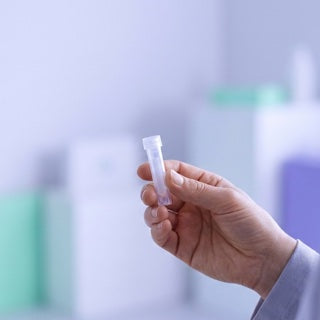 Intracellular measurement
Measured inside the body cell, not in blood serum
Intracellular measurement
Measured inside the body cell, not in blood serum
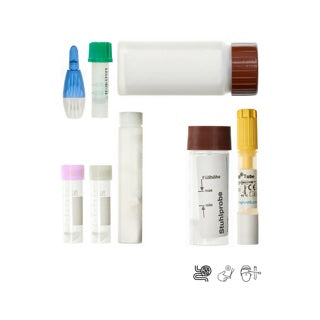 Eight minerals
Sodium, potassium, calcium, magnesium, iron, copper, zinc, selenium
Eight minerals
Sodium, potassium, calcium, magnesium, iron, copper, zinc, selenium
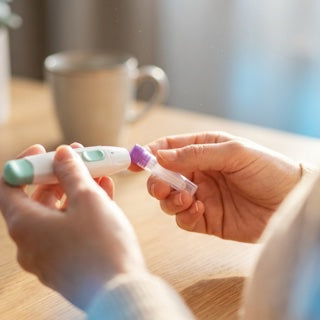 Sample taken at home
A few drops from the fingertip
Sample taken at home
A few drops from the fingertip
 Results consultation included
10 minutes of free discussion
Results consultation included
10 minutes of free discussion
The approach
Measure first, then decide
Without measured values, any treatment is guesswork. We turn the order around: first the lab report, then the decision.

-
01
Measure Eight minerals from whole blood, analysed at the partner laboratory in Germany.Vollblutmineralanalyse · capillary blood, 400 µl · 7–21 days from sample arrival
-
02
See where you stand Every value appears in the lab report alongside the laboratory reference range. You can see which values fall inside it and which do not.Lab report including consultation
-
03
Targeted rather than blanket Instead of a standard package, you take what your values point to — agreed with a practitioner.Initial consultation, 10 minutes, free
-
04
Measure again after a few months The same analysis a second time shows how the values have changed.Earliest sensible interval: 3 months


Ory experts support you
Doctors and non-medical practitioners from the Ory team are there for you throughout — with the lab report and with everything that follows.
What a value means, and whether a supplement is right for you, is something to discuss with a practitioner. This page makes no recommendation and is no substitute for medical assessment.
Details
What this analysis includes
What is measured
Eight minerals measured directly in whole blood — inside the cells, not in serum.
The biomarker reference explains what lies behind the numbers: how values interact, which cofactors are involved and which biochemical processes take place in the body — for all values and areas, not only this analysis.
To the biomarker reference
For whom
The Vollblutmineralanalyse suits anyone who wants an objective picture of their actual mineral supply inside the cells — standard serum tests often show only what circulates outside the cells, not what arrives inside them.
What a single value means in your situation is something to discuss with a practitioner. It does not replace medical assessment.
How it works
Four steps from order to lab report.
- 01 Kit arrives Ships the next working day, postage paid to your door.
- 02 Take the blood A finger prick, fill the heparin tube with 400 µl.
- 03 Send it in Post it in the postage-paid envelope.
- 04 Lab report arrives 7–21 days after the sample reaches the laboratory, consultation included.
Instructions
The essentials first:
- Warm the hand up well first, clean the finger with an alcohol swab and let it dry.
- Prick the side of the fingertip and fill the heparin tube with 400 µl.
- Close the tube tightly and post it in the postage-paid envelope.
Please read the instructions carefully. Correct preparation matters: only then can your sample – stool, urine, saliva or blood – be evaluated cleanly and meaningfully.
View full illustrated instructions
Sample report
This is what your result looks like: the full lab report with all eight minerals — viewable as an image, no download needed.
View sample report
Sending your sample back
So that your sample reaches the laboratory safely, please follow the rule for your country.
| Country | Postage | Shipping |
|---|---|---|
| Germany | Already paid | Return postage is arranged, you do not need to add a stamp. |
| Austria | Add your own postage | To our address in Vienna, not to Germany. |
| Switzerland | Add your own postage | Separate return bag for Switzerland, sent to Germany. |
| Rest of Europe | Add your own postage | Sent to Germany. |
In short: Germany, nothing to do. Austria, add postage and send to Vienna. Switzerland, add postage, special bag, send to Germany. Rest of Europe, add postage and send to Germany.
Testing for families and partners
Testing together shows connections a single analysis cannot make visible. We need three things for it.
From three tests of the same analysis for the family, you get 10 % off. Write to us and we will send your personal discount code.
Send an email
Reimbursement by private insurance
This is how a possible reimbursement by your private insurer works with us:
Many private insurers cover the cost in full or in part – some not at all. That depends entirely on your policy. We support you through the process as best we can.
Also relevant
Similar analyses
More in depth, or with a different focus.


Which analysis suits you is best discussed in the initial consultation. See all analyses
Supplements
Supplements for the areas this analysis covers
Which product suits you, and in what amount, is something you discuss with a practitioner once your lab report is in. This page recommends nothing.


Food supplements are not a substitute for a balanced diet. The full range: Supplements
Orientation
What happens next
Five routes, independent of this analysis. The same on every product page.
ORY Berlin sells analyses and products. What a lab report means for you comes from a practitioner or a doctor, not from this page.