


Stool test · blood and DNA markers
ColoAlert – stool test for hidden blood and DNA markers
Stool test for home use for hidden blood (haemoglobin, haemoglobin-haptoglobin) and DNA markers (human DNA, KRAS, BRAF). An abnormal result is an indication that must be assessed by a doctor.
Dispatched the next working day.
| Sample type | Stool sample, 3 tubes |
|---|---|
| Method | PCR, ELISA |
| Turnaround | 7–21 days from sample arrival |
| Analysis | Partner laboratory in Germany |
 Five values from one sample
Haemoglobin, haemoglobin-haptoglobin, human DNA, KRAS and BRAF mutation
Five values from one sample
Haemoglobin, haemoglobin-haptoglobin, human DNA, KRAS and BRAF mutation
 Two laboratory methods
Immunochemical blood test (ELISA) and DNA analysis (PCR) in the partner laboratory
Two laboratory methods
Immunochemical blood test (ELISA) and DNA analysis (PCR) in the partner laboratory
 Sample collection at home
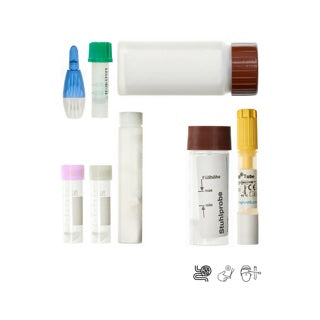
Stool sample with stool catcher, three tubes, about five minutes
Sample collection at home
Stool sample with stool catcher, three tubes, about five minutes
 Results consultation included
Evaluation by the ORY expert team
Results consultation included
Evaluation by the ORY expert team
Principle
Measure, interpret, assess
A stool test provides indications, not a diagnosis. What matters is what happens after the report: abnormal values are assessed by a doctor.

-
01
Measure 5 values from one stool sample, analysed in a partner laboratory in Germany.ColoAlert · stool sample · 7–21 days from sample arrival
-
02
See what stands out Every value appears in the report with the laboratory's reference range. You see which ones fall inside it and which do not.Report including consultation
-
03
Get it assessed An abnormal result is an indication that is assessed by a doctor, usually by colonoscopy.Consultation with the ORY expert team or your doctor
-
04
Use statutory screening The test does not replace the statutory bowel cancer screening programme. A normal result rules nothing out.From 50: colonoscopy or stool test via health insurance


ORY experts stay with you
Doctors and Heilpraktiker from the ORY team are there for you the whole way — with your lab report and with whatever follows.
What a value means and whether a supplement might be an option for you is something to discuss with the ORY expert team or with your doctor or naturopath. This page makes no recommendation and is no substitute for medical assessment.
Details
What is in this analysis
What is measured
Five values from one stool sample: two blood markers and three DNA markers. Each value appears in the report with the laboratory's reference range.
The biomarker reference explains what lies behind the numbers: how values interact, which cofactors are involved and which biochemical processes take place in the body — for all values and areas, not only this analysis.
To the biomarker referenceThe values in detail
Haemoglobin in stool raised – what does hidden blood in stool mean?
The immunochemical test for haemoglobin (iFOBT, also called FIT) detects human blood pigment in stool that cannot be seen with the naked eye – so-called occult blood. A value above the laboratory's reference range shows that, at the time of sampling, blood entered the gut somewhere in the lower digestive tract. More on the page Occult blood in stool.
The value does not say where the blood comes from. Common sources are haemorrhoids and small tears at the anus; in a study of almost 4,000 people, those with haemorrhoids more often had a positive stool test without an advanced finding at colonoscopy (PubMed 27873508). Inflammatory bowel disease, polyps or tumours can also bleed. A raised value is therefore assessed by a doctor, usually by colonoscopy – not by a second stool test.
Haemoglobin-haptoglobin complex raised – what does that mean?
In the blood, the transport protein haptoglobin binds free haemoglobin. This complex is considered more stable on its way through the gut than free haemoglobin, which can be broken down along the way. It is therefore measured as a second blood marker, especially with regard to bleeding from higher sections of the bowel.
In a study of 621 people before colonoscopy, the complex was more often abnormal in polyps than haemoglobin alone, but also more often in people without findings – it is more sensitive and at the same time less specific (PubMed 10663892; similar: PubMed 27413251). Like a raised haemoglobin value, a raised value indicates blood in the stool and is assessed by a doctor.
Human DNA in stool raised – what does that mean?
The lining of the gut renews itself constantly, and shed cells end up in the stool. The laboratory uses PCR to measure how much human DNA (hDNA) the sample contains. A larger amount may point to increased cell turnover or cell shedding.
In a small study, the amount of human DNA in stool was higher in people with colorectal cancer than in controls; there was no difference between people with polyps and controls (PubMed 26840470). Inflammation or blood in the stool can also increase the amount of DNA. The value is therefore a non-specific indication, not a statement about a particular disease, and is interpreted by a doctor only together with the other values.
KRAS or BRAF mutation in stool positive – what does that mean?
KRAS and BRAF are genes that help control cell growth. Certain changes (mutations) in these genes are not inherited but arise during life in individual cells. KRAS mutations are among the most common genetic changes in tumours of the large bowel, pancreas and lung (PubMed 32725342). The BRAF mutation V600E is found in about 15 out of 100 non-hereditary bowel tumours and occurs early in a development pathway that runs via so-called serrated (saw-tooth) polyps (PubMed 30598662).
The laboratory looks for these changes in cell DNA from the stool. A positive result means: DNA with such a change was found in the sample. It does not say where it comes from, whether a precursor, a polyp or something else lies behind it, and it is not a diagnosis. A positive mutation result is an indication that must be assessed by a doctor, usually by colonoscopy. A case report describes how a positive KRAS result led to a second colonoscopy in which a previously missed polyp was removed (PubMed 38213210) – a single case, not evidence of the test's performance.
How are the five values read together in the report?
The report lists each value with the laboratory's reference range: the three quantitative values (haemoglobin, haemoglobin-haptoglobin complex, human DNA) as numbers, the two mutations as "positive" or "negative". So you can see which values are within the reference range and which are not.
If one of the values lies outside, the result counts as abnormal and is an indication that should be assessed by a doctor. How much weight a single value carries in your situation is something to discuss with the ORY expert team or with your doctor or naturopath, for example from the ORY expert network. ORY does not provide its own rating or risk calculation beyond the laboratory's information.
Understanding the stool test for blood and DNA
What is ColoAlert – simply explained?
ColoAlert is a laboratory test from a stool sample that you collect at home. It combines two approaches: an immunochemical test looks for hidden blood (haemoglobin and haemoglobin-haptoglobin complex), and a DNA analysis measures the amount of human DNA and looks for mutations in the KRAS and BRAF genes. The test comes from the manufacturer Mainz Biomed and is analysed in a partner laboratory in Germany.
The result is an indication of possible changes in the gut that need to be assessed – not a diagnosis. Whether a change is present and what it is can only be shown by a medical examination, usually a colonoscopy with tissue sample.
How meaningful is the test – what do studies show about sensitivity and specificity?
The main study on ColoAlert is a multicentre study of 734 people who were about to have a colonoscopy or surgery (Dollinger 2018, PubMed 30336540). Compared with colonoscopy, the combined test was abnormal in 85 out of 100 people with colorectal cancer; in 92 out of 100 people without findings at colonoscopy it was normal. Put the other way round: some tumours were missed (false negative), and about 8 out of 100 people without findings still had an abnormal result (false positive).
These figures should be read with caution. A European assessment (EUnetHTA) rated the certainty of the data as low to very low: an earlier version of the test was studied, reliable data on precursors (advanced adenomas) are lacking, there are no studies on the effect on disease or death rates, and stool DNA tests failed more often because of the sample than simple faecal blood tests (PubMed 37426885). The assessment recommends a screening study with the current product version.
What is the difference from the immunochemical stool test (iFOBT) of statutory health insurance?
The immunochemical stool test (iFOBT) of the statutory bowel cancer screening programme in Germany only measures haemoglobin, i.e. hidden blood. ColoAlert additionally measures the haemoglobin-haptoglobin complex, the amount of human DNA and KRAS and BRAF mutations. Polyps and precursors often do not bleed, or only intermittently; in a review of 46 studies, the sensitivity of iFOBT for advanced precursors was only about 21 to 31 out of 100, depending on the threshold (PubMed 31472152). The DNA markers are meant to complement this.
Important for context: the iFOBT is part of an evaluated programme with fixed intervals and an entitlement to colonoscopy after an abnormal result, and it is free of charge for people with statutory health insurance in Germany from the age of 50. There are no comparable programme data for ColoAlert (see the question on test performance). The additional markers also mean more opportunities for a false positive result.
ColoAlert or colonoscopy – does the stool test replace a colonoscopy?
No. Colonoscopy is the examination in which doctors look directly at the lining of the bowel, take tissue samples and can remove polyps in the same session. A stool test cannot do this. It can only give an indication that a colonoscopy is needed.
The test also does not replace the statutory bowel cancer screening programme in Germany. According to the Federal Joint Committee (G-BA), people with statutory health insurance aged 50 and over are entitled to two colonoscopies at least ten years apart or, alternatively, an immunochemical stool test every two years; since April 2025 this applies equally to women and men. With a family history, an earlier start may make sense – discuss this with a doctor.
ColoAlert normal – does that mean everything is fine in the gut?
No. A normal result does not rule out changes in the gut. In the main study, some tumours were missed (PubMed 30336540), and there are no reliable data for precursors (PubMed 37426885). Polyps often do not bleed and do not always shed DNA with the mutations looked for.
A normal result is therefore no reason to skip the colonoscopy or the stool test of the statutory bowel cancer screening programme, or to leave complaints unassessed.
Complaints and medical assessment
Blood in stool, iron deficiency, changed bowel habits – which complaints and causes are known?
The following complaints and causes are linked in research with blood in stool or with changes in the large bowel:
- Visible blood in stool or on toilet paper: in a systematic review of primary care, rectal bleeding in people aged 50 and over was the symptom with the highest predictive value for colorectal cancer; the authors recommend that it should always be investigated (PubMed 21619747). Well established.
- Anaemia, especially iron deficiency anaemia: in about a third of men and postmenopausal women with iron deficiency anaemia, a cause is found in the digestive tract; the British guideline provides for examination of the stomach and bowel (PubMed 34497146). Well established.
- Changed bowel habits and unintended weight loss: together with bleeding they increase the likelihood of a finding; abdominal pain, diarrhoea or constipation alone are of little value (PubMed 21619747). Observed in studies.
- Haemorrhoids and anal fissures: common, mostly harmless sources of blood in stool and a known cause of false positive stool tests (PubMed 27873508). Well established.
- Inflammatory bowel disease such as Crohn's disease or ulcerative colitis: found in a small proportion of people with a positive stool test in a screening programme (PubMed 39362990). As a marker of inflammation in stool, calprotectin is more commonly measured. Observed in studies.
- Diverticula and diseases of the rectum and anus: the most common causes of bleeding from the lower digestive tract (PubMed 38670052). Well established.
Associations from studies describe groups, not the cause in an individual. The test does not explain complaints and does not make a diagnosis; persistent complaints should be assessed by a doctor first.
When should I see a doctor first – instead of testing?
With the following warning signs, the first step is a doctor's practice, not a stool test. Testing and waiting for the result loses valuable time here:
- visible blood in stool, black stool or bleeding from the anus
- changed bowel habits over several weeks, such as a new alternation of diarrhoea and constipation or pencil-thin stool
- unintended weight loss, night sweats or persistent exhaustion
- anaemia or iron deficiency without an explaining cause
- persistent abdominal pain or a palpable lump in the abdomen
- colorectal cancer or bowel polyps in parents, siblings or children – then clarify with a doctor from what age a colonoscopy makes sense
In case of heavy bleeding, circulatory problems or severe abdominal pain, call the emergency number 112.
ColoAlert abnormal – what happens next?
An abnormal result is an indication, not a diagnosis. The next step is a medical consultation and usually a colonoscopy. Many abnormal stool tests have harmless causes; whether that is the case, however, only the examination can show.
Do not wait long with the assessment: a systematic review found consistently worse outcomes with longer waiting times to colonoscopy after a positive stool test (PubMed 33010414). Discuss the report with the ORY expert team or with your doctor or naturopath, for example from the ORY expert network; for the colonoscopy you need a medical referral. Whether health insurance covers the colonoscopy is something to clarify at the practice.
Can the values be influenced or lowered?
The measured values are not targets to be lowered. They are indications of whether something in the gut needs to be assessed. An abnormal value is not clarified by diet, supplements or a repeat test, but by a doctor.
ORY does not give dietary, supplement or therapy recommendations for this test. What a result means for you and which examination makes sense next is something to discuss with the ORY expert team or with your doctor or naturopath, for example from the ORY expert network.
Who it is for, process and costs
For whom
ColoAlert is intended for adults without complaints who want their stool examined for hidden blood and DNA markers in addition to the statutory bowel cancer screening programme. It is not intended for people with warning signs such as blood in stool, changed bowel habits, weight loss or anaemia – here a medical examination is the first step. Whether the test suits you can be clarified in the free initial consultation with the ORY expert team or with your doctor or naturopath, for example from the ORY expert network.
What a single value means in your situation is something to discuss with the ORY expert team or with your doctor or naturopath, for example from the ORY expert network. It does not replace medical assessment.
What do I need to consider before the stool test?
According to the laboratory's instructions:
- Collect the stool with the enclosed stool catcher; it must not come into contact with toilet water.
- Do not collect during menstruation.
- Postpone collection in case of acute gastrointestinal complaints or open haemorrhoidal bleeding – both can distort the blood test.
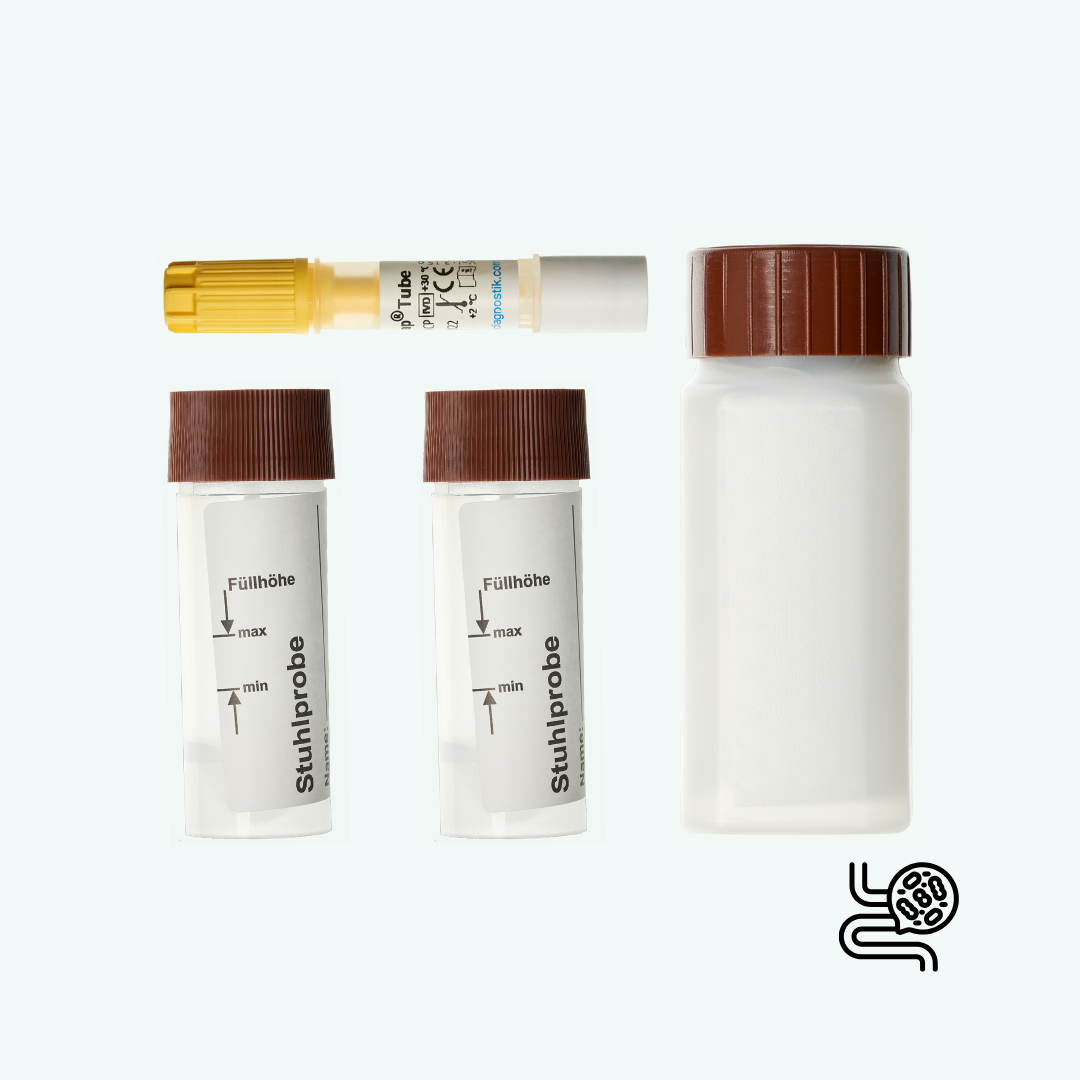
- Fill the tube for the DNA analysis (brown cap) with a pea-sized amount only; overfilled tubes are rejected. Do not pour out the liquid in the tube.
- Insert the sampling stick of the two tubes for the blood test only once; inserting it several times can lead to a false positive result.
- Collect in the morning if possible and send Monday to Thursday, not before weekends or public holidays.
How it works
Four steps from order to lab report.
- 01 Kit arrives Dispatched the next working day, postage-free to your home.
- 02 Collect the sample Stool sample with stool catcher into three tubes, about five minutes.
- 03 Send in In the transport container and the postage-free envelope to the laboratory, Monday to Thursday.
- 04 Receive your report 7–21 days after the sample arrives, with consultation. Abnormal values are assessed by a doctor.
Instructions
Collecting the sample takes about five minutes. The key points first:
- Collect the stool with the stool catcher, without contact with toilet water; not during menstruation, not with acute gastrointestinal complaints or open haemorrhoidal bleeding.
- Fill the DNA tube (brown cap) with a pea-sized amount only, insert the sampling stick of the blood tubes only once, do not pour out the liquid.
- Collect in the morning if possible and send Monday to Thursday, not before weekends or public holidays.
Please read the instructions in full before you start. Mistakes during sample collection can distort the result or mean that the laboratory cannot analyse the sample.
View full illustrated instructions
Sample report
This is what the report looks like: all five values with unit and the laboratory's reference range, the mutations as "positive" or "negative". The sample report shows example values, not a statement about your result.
View sample report
How long does it take to get the result?
The report is usually available 7–21 days after the sample arrives at the laboratory, not from the date of order. You will be notified as soon as it is ready. A consultation on the report with the ORY expert team is included.
How much does ColoAlert cost, and does health insurance pay?
ColoAlert costs €250 at ORY, including test kit, return shipping, laboratory analysis and results consultation. Statutory health insurance in Germany usually does not cover the test.
Free of charge for people with statutory health insurance, on the other hand, is the statutory bowel cancer screening programme: from the age of 50, two colonoscopies at least ten years apart or, alternatively, an immunochemical stool test every two years (Federal Joint Committee (G-BA)). Private health insurers reimburse laboratory tests fully, partly or not at all depending on the contract; how this works at ORY is described in the section on reimbursement.
Reimbursement by private health insurance
This is how it works with us if your private insurance may reimburse you:
Many private insurers cover the cost in full or in part – some not at all. That depends entirely on your policy. We support you through the process as best we can.
Sending your sample back
So your sample reaches the laboratory safely, please follow the rule for your country.
| Country | Postage | Shipping |
|---|---|---|
| Germany | Already paid | Return postage is prepared, you do not need to add a stamp. |
| Austria | Add your own postage | To our address in Vienna, not to Germany. |
| Switzerland | Add your own postage | Separate return bag for Switzerland, sent to Germany. |
| Rest of Europe | Add your own postage | Sent to Germany. |
In short: Germany is all set. Austria, add postage and send to Vienna. Switzerland, add postage, special bag, send to Germany. Rest of Europe, add postage and send to Germany.
Which test is right for me?
For people with statutory health insurance aged 50 and over, the insurance programme is the first route: colonoscopy or immunochemical stool test, free of charge and with regulated follow-up. With warning signs, the first step is a doctor's practice, not a test. ColoAlert is a self-paid additional test for blood and DNA markers in stool.
If your question is not about blood and DNA markers but about gut flora, gut barrier or digestion, these are different questions with different tests:
- Gut profile microbiome & gut barrier (€315): gut flora, zonulin, sIgA, digestion markers
- Basic gut profile (€285): microbiome, leaky gut and histamine
- Helicobacter pylori stool test (€65): antigen of the stomach bacterium
Which test suits your question can be clarified in the free initial consultation with the ORY expert team or with your doctor or naturopath, for example from the ORY expert network.
Also relevant
Similar analyses
More in depth, or with a different focus.


Which analysis suits you is best discussed in the initial consultation. See all analyses
Orientation
What happens next
Five routes, independent of this analysis. The same on every product page.
ORY Berlin sells analyses and products. What a lab report means for you comes from a practitioner or a doctor, not from this page.