
Vitamin D3 Vitamin B3 Vitamin B6 Vitamin B12 Magnesium Zinc Selenium

Keywords:

selenium deficiency Germany, selenium thyroid, selenium Hashimoto, selenoprotein P test, selenium immune system, trace element deficiency diagnostics, ORY Analysis micronutrients, longevity diagnostics laboratory

Kurz:

Selenium is involved in thyroid function, the immune system and cellular protection. 70 % of people in Germany fall short of the recommended intake. Read about symptoms, consequences and which test helps.

70 per cent of people in Germany fall short on selenium — a trace element involved in thyroid function, the immune system and cellular protection.

Micronutrient expert Uwe Gröber, preventive physician Prof. Jörg Spitz and selenium researcher Prof. Dr Lutz Schomburg of the Charité Berlin explain why this deficiency so often goes unrecognised and what serious consequences it has — from a raised risk of illness seen in observational studies through to effects on the heart and circulation. In this article you will learn which symptoms point to selenium deficiency, what happens when there is too much selenium, and which laboratory value really counts.

Wie Selen im Stoffwechsel wirkt

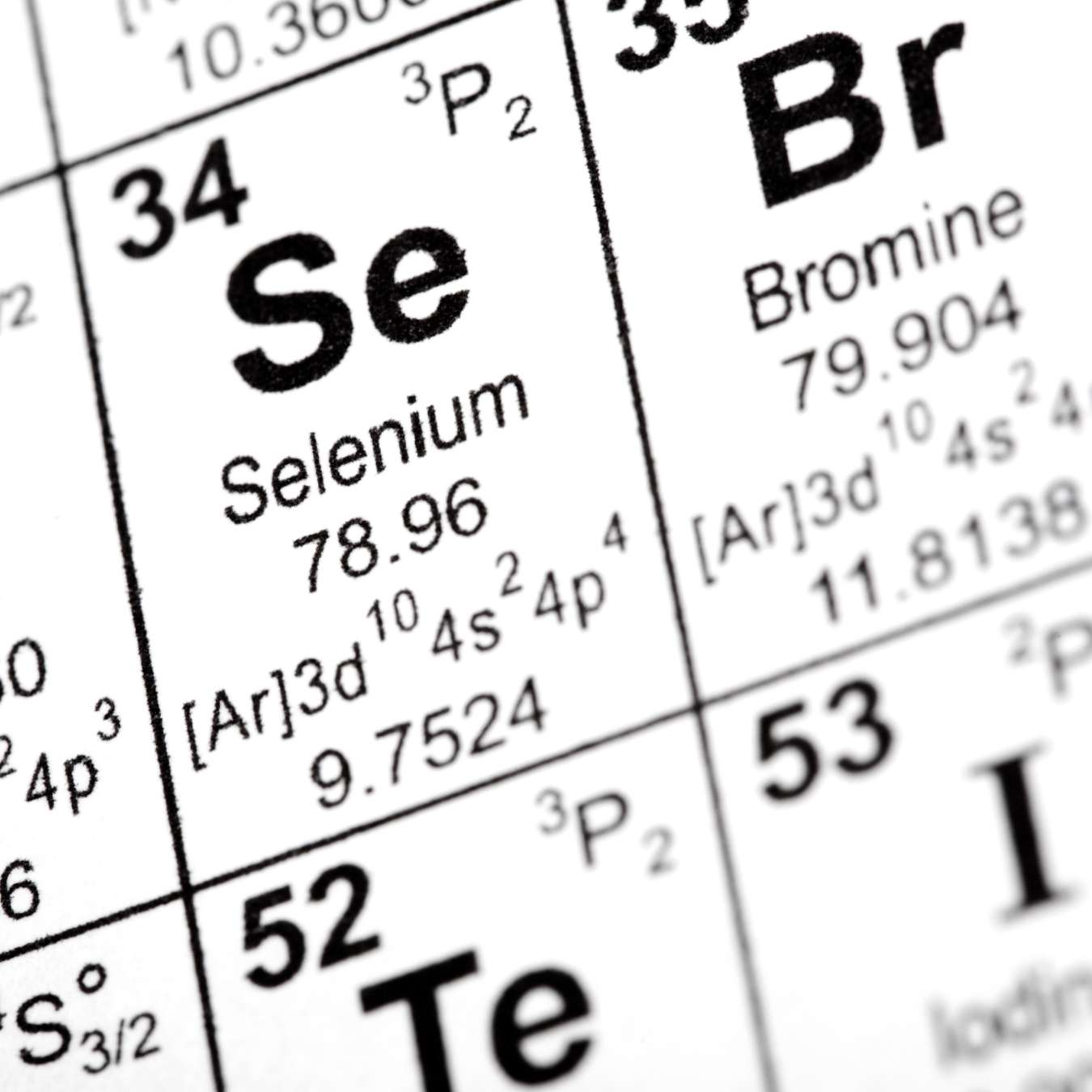
Selenium is neither a vitamin nor a mineral — it is a trace element that the body uses in the smallest amounts, but with the greatest precision.

It is a component of more than 25 vital selenoproteins, among them glutathione peroxidase, which neutralises free radicals, and iodothyronine deiodinase, which converts the inactive thyroid hormone T4 into active T3.

Without enough selenium, T4 stays in the blood — and T3, the hormone that regulates energy, mood and metabolism, is missing in the cells.

Selenium also acts directly on the immune system: it controls the activity of T cells and natural killer cells and dampens excessive inflammatory reactions.

The thyroid itself is the most selenium-rich organ in the human body — that is no coincidence.

What happens when selenium is too low

Selenium deficiency creeps up. The first signs are whitish spots on the nails, diffuse hair loss and increased susceptibility to infection. As it continues, muscle weakness, persistent exhaustion and depressive moods follow.

The immune system loses its ability to regulate — autoimmune conditions such as Hashimoto’s thyroiditis arise particularly often on the ground of a selenium deficiency.

The thyroid can no longer process iodine safely, since selenium normally neutralises the hydrogen peroxide produced in the process. Without this protection, the gland damages itself.

Uwe Gröber describes the mechanism precisely: “Selenium is the antioxidant guardian of the thyroid. Without it the gland burns from within.”

The consequences reach far beyond the thyroid, however. In a Charité study, Prof. Dr Lutz Schomburg was able to show that the third of the population with the lowest selenium supply has a five- to tenfold increased risk of hepatocellular carcinoma — liver cancer.

His group was also the first in the world to use selenoprotein P systematically as a diagnostic marker and to show that low selenoprotein P levels are directly associated with increased cardiovascular mortality and all-cause mortality.

Schomburg puts it clearly: “A low selenoprotein P value is not an academic detail — it is a risk marker for life.”

What happens when selenium is too high

Selenium is one of the few trace elements where the line between deficiency and overdose is narrow.

Chronic overdosing — usually through uncontrolled supplementation — leads to selenosis: a garlic smell on the breath, brittle nails, hair loss, nausea and, in extreme cases, neurological damage.

Prof. Jörg Spitz therefore states explicitly: “Supplementing selenium without testing is a mistake. Individual requirements vary considerably.” A safe intake lies between 60 and 300 micrograms a day — depending on the starting value and state of health. Without laboratory testing, it is guesswork.

Did you know…

…the Charité research group of Prof. Dr Lutz Schomburg was the first in the world to develop a specific ELISA test for selenoprotein P — setting the standard for all serious selenium diagnostics?

A large cohort of older Germans published in a specialist journal in 2024 (PubMed ID: 38198038) shows: a low selenoprotein P level is strongly associated with increased all-cause mortality as well as mortality from cancer, cardiovascular and respiratory disease.

A further meta-analysis of randomised studies (PubMed ID: 38243784) showed that selenium supplementation in patients with Hashimoto’s significantly lowers the thyroid autoantibody TPOAb and measurably reduces oxidative stress — regardless of whether those affected were already taking hormones.

Prof. Dr Jörg Spitz sums up the significance: “Selenium is one of the most underestimated micronutrients in the German population — with direct effects on immune function, the thyroid and cancer prevention.” And Prof. Dr Lutz Schomburg adds in the deep-dive podcast: “Most people in Germany do not even reach the level at which selenoprotein P is fully saturated — that is the real supply gap.”

Which values really matter

A simple selenium serum value is a first indication, but not a complete picture. Selenoprotein P in the blood is the preferred long-term marker, showing how well the body actually stores and uses selenium. It is worth also determining the thyroid values TSH, fT3 and fT4 as well as the autoantibody TPOAb — because only the interplay of selenium supply and thyroid function gives a complete picture.

Where autoimmune processes are suspected, the anti-thyroglobulin antibody is also relevant. Anyone wishing to supplement selenium should check the starting value and its course regularly — because too much is just as problematic as too little.

Selenium is involved in thyroid function, the immune system and cellular protection. 70 % of people in Germany fall short of the recommended intake. Read about symptoms, consequences and which test helps.

Why ORY Analysis makes the difference here

Most standard blood counts do not measure selenium. Thyroid and immune system are looked at separately — although they are biochemically inseparable. ORY Analysis records selenoprotein P, thyroid markers and inflammation parameters in one structured profile and shows how these systems work together in your case. Anyone who really wants to understand their body does not need guesses about symptoms — but measured values.

Prevent 360 - ORY Analysis Test
Prevention & longevity

Prevent 360 - ORY Analysis Test

The test covers a broad diagnostic spectrum, including an amino acid profile, fatty acid profile, vitamin D, minerals (selenium, zinc, magnesium, iron) as well as markers for stress, arteriosclerosis and metabolism.

Prevent 360 Test

Faktencheck & Quellen

Sources

  1. PubMed (2024): „Selenium Supplementation in Patients with Hashimoto Thyroiditis: A Systematic Review and Meta-Analysis of Randomized Clinical Trials." Thyroid. PubMed ID: 38243784. https://pubmed.ncbi.nlm.nih.gov/38243784/
  2. PMC (2025): „A Comprehensive Review of Selenium as a Key Regulator in Thyroid Health." PMC ID: PMC12672807. https://pmc.ncbi.nlm.nih.gov/articles/PMC12672807/
  3. PubMed (2021): „Selenium Deficiency Due to Diet, Pregnancy, Severe Illness, or COVID-19 – A Preventable Trigger for Autoimmune Disease." PubMed ID: 34445238. https://pubmed.ncbi.nlm.nih.gov/34445238/
  4. PubMed (2024): „Strong associations of serum selenoprotein P with all-cause mortality and mortality due to cancer, cardiovascular, respiratory and gastrointestinal diseases in older German adults." PubMed ID: 38198038. https://pubmed.ncbi.nlm.nih.gov/38198038/
  5. Uwe Gröber & Prof. Jörg Spitz (2022): „Weltweiter Selen-Mangel: 70 % der Deutschen unterversorgt." YouTube. https://www.youtube.com/watch?v=j4HgRxl9HPI
  6. Prof. Dr. Lutz Schomburg (2026): „Deep Dive: Selen – Das unterschätzte Spurenelement." YouTube / Podcast. https://www.youtube.com/watch?v=sSQdv8W68dE
  7. Charité – Universitätsmedizin Berlin: „Selenversorgung beeinflusst Risiko für Krebsentwicklung." Press release. https://www.charite.de/service/pressemitteilung/artikel/detail/selenversorgung_beeinflusst_risiko_fuer_krebsentwicklung
  8. Gröber, Uwe (2018): Mikronährstoffe – Metabolic Tuning, Prävention, Therapie. 4th edition. Stuttgart: Wissenschaftliche Verlagsgesellschaft.
  9. Spitz, Jörg (2020): Superpower Immunsystem. Bielefeld: Kamphausen Media.

 Integration funktioneller Medizin

Preventive laboratory diagnostics for the whole family — ORY experts.

From the microbiome and neurotransmitters to vital nutrient status. Functional medicine for more energy, resilience and long-term health — conveniently from home.

70 per cent of people in Germany fall short on selenium — a trace element that directly controls the thyroid, the immune system and cellular protection. Micronutrient expert Uwe Gröber, preventive physician Prof. Jörg Spitz and selenium researcher Prof. Dr Lutz Schomburg of the Charité Berlin explain why this deficiency so often goes unrecognised and what serious consequences it has — from a raised risk of illness seen in observational studies through to effects on the heart and circulation. In this article you will learn which symptoms point to selenium deficiency, what happens when there is too much selenium, and which laboratory value really counts.