


Trace element diagnostics
Iodine test at home – iodine in morning urine (urine test)
Iodine test at home: iodine excretion in the first morning urine, given in µg/g creatinine and µg/l, analysed by a partner laboratory.
No prescription needed. Ships next working day.
| Sample type | Morgenurin |
|---|---|
| Method | Photometrie |
| Turnaround | 7–21 days from sample arrival |
| Analysis | Partner laboratory in Germany |
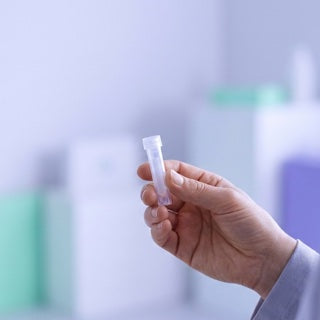 Iodine in morning urine
Shows iodine intake over the last few days
Iodine in morning urine
Shows iodine intake over the last few days
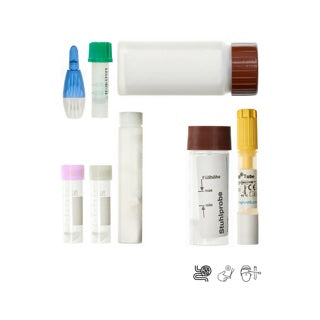 Two values
Iodine per gram of creatinine and as a concentration in µg/l
Two values
Iodine per gram of creatinine and as a concentration in µg/l
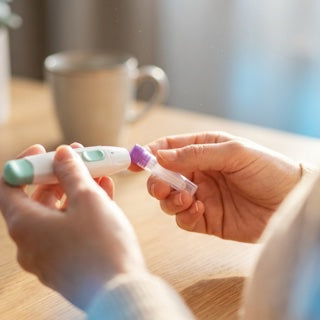 Sample collection at home
Midstream urine, no cooling needed
Sample collection at home
Midstream urine, no cooling needed
 Results consultation included
Evaluation by the ORY expert team
Results consultation included
Evaluation by the ORY expert team
Principle
Measure first, then decide
Without measured values, any treatment is guesswork. We turn the order around: the lab report first, then the decision.

-
01
Measure Iodine status from morning urine, analysed at our partner laboratory in Germany.Iodine test · Morning urine · 7–21 days from sample arrival
-
02
See where you stand Every value appears in the lab report with the laboratory's reference range. You can see which ones fall inside it and which do not.Lab report including consultation
-
03
Targeted, not generic Instead of a standard bundle you take what your values point to — agreed with the ORY expert team or with your doctor or naturopath.Initial consultation, 10 minutes, free
-
04
Measure again after a few months Running the same analysis a second time shows how the values have changed.Earliest sensible interval: 3 months


Ory experts support you
Doctors and Heilpraktiker from the Ory team are there for you the whole way — with the lab report and with everything that follows.
What a value means and whether a supplement might be an option for you is something to discuss with the ORY expert team or with your doctor or naturopath. This page makes no recommendation and is no substitute for medical assessment.
Details
What this analysis covers
What is measured
Iodine excretion in the first morning urine – iodine is the building block of thyroid hormones.
The biomarker reference explains what lies behind the numbers: how values interact, which cofactors are involved and which biochemical processes take place in the body — for all values and areas, not only this analysis.
To the biomarker referenceThe values in detail
Iodine in urine too low – what does it mean?
The body excretes most of the iodine it takes in via the kidneys. The iodine concentration in urine therefore shows how much iodine was taken in over the last few days. A low value indicates low iodine intake during that period.
Important for interpretation: iodine excretion varies greatly from day to day. In a study of healthy women, about ten urine samples were needed to estimate an individual's iodine status with 20% precision (PubMed 21918061). A single value is therefore a snapshot of recent intake, not a reliable statement about iodine deficiency.
Iodine in urine too high – what does a high value mean?
A high value results from high iodine intake in the days before the sample, for example from iodine supplements, seaweed, iodine-containing medication or iodine-containing contrast agents used in X-ray and CT scans. Most people tolerate higher intake well. In certain groups – people with thyroid disease, older people, unborn and newborn babies – too much iodine can, however, trigger an under- or overactive thyroid (PubMed 24342882).
Iodine in µg/g creatinine and µg/l – why two values?
The report gives two values. The main value states iodine relative to creatinine (µg/g creatinine). Creatinine is excreted fairly evenly; the ratio therefore compensates for whether urine is diluted or concentrated by drinking a lot or a little. The second value is the absolute iodine concentration in µg/l.
For the main value, the sample report shows the laboratory's classification from "optimal supply" to "severe deficiency". This classification comes from the laboratory; because of day-to-day variation, it is only of limited significance for an individual.
Understanding iodine and the thyroid
What is iodine – and why does the thyroid need it?
Iodine is a trace element that the body cannot make itself. The thyroid needs it to produce its hormones thyroxine (T4) and triiodothyronine (T3). Important sources are iodised table salt, dairy products, bread made with iodised salt and sea fish (PubMed 24342882).
Iodine deficiency early in life impairs growth and cognitive development; in adults, iodine status is an important determinant of thyroid disorders (PubMed 25591468).
Is Germany an iodine-deficient area?
Until the early 1990s, there was mild to moderate iodine deficiency in large parts of Germany; iodised table salt improved supply. More recent data from studies of children suggest that iodine supply has worsened again (PubMed 35043251).
How well a population is supplied is determined from the median of many urine samples – urinary iodine is well suited for this. For an individual, by contrast, there is no established single marker (PubMed 21918061).
Iodine test: urine or blood?
Since the body excretes iodine mainly in urine, urinary iodine measurement is the usual method for assessing iodine intake (PubMed 21918061). Measuring iodine in blood is not common for this purpose.
The urine test does not show how the thyroid is working. For that, TSH and, if necessary, thyroid hormones are measured in blood (PubMed 28336049).
How meaningful is a urinary iodine test?
The test shows iodine excretion at the time of sampling and thus intake over the past few days. Because this varies greatly, a single value says little about an individual's long-term supply (PubMed 21918061). Meals, supplements and iodine-containing contrast agents before the sample influence the result.
The test can be a basis for a conversation about iodine intake; it can neither detect nor rule out thyroid disease.
Complaints and medical assessment
Iodine deficiency symptoms – which complaints are described?
Research associates iodine deficiency with the following consequences, with varying strength of evidence:
- Enlarged thyroid (goitre), which can be noticed as a swelling in the neck: well documented in severe iodine deficiency (PubMed 25591468).
- Underactive thyroid with fatigue, lethargy, cold intolerance, weight gain, constipation, dry skin and a changed voice: well documented in severe deficiency (PubMed 25591468, PubMed 28336049).
- Thyroid nodules and overactivity: with mild to moderate deficiency, the thyroid works harder over the long term; nodular changes and overactivity then occur more often in the population – well documented (PubMed 25591468).
- Growth and cognitive development in children: iodine deficiency early in life impairs both – well documented (PubMed 25591468).
Mild iodine deficiency often causes no noticeable complaints.
These are associations from studies and textbook knowledge, not causes in an individual person. A urine test cannot explain complaints and does not provide a diagnosis. Persistent complaints should first be assessed by a doctor.
When should I see a doctor first?
With a swelling or lump in the neck, difficulty swallowing or breathing, persistent hoarseness, a racing heart, tremor, unintended weight loss or clear signs of an underactive thyroid, the first step is a doctor's practice, not a self-test. There, TSH and, if needed, further values and an ultrasound are arranged.
With known thyroid disease, during pregnancy and breastfeeding and before taking iodine supplements, the question of iodine belongs in medical care, because too much iodine can be harmful in these situations.
Can iodine deficiency be corrected?
This page does not recommend supplements, diets or therapies. Whether a value means anything at all and which steps make sense depends on your overall situation: complaints, previous illnesses, medication and diet. Too much iodine can trigger thyroid dysfunction in susceptible people (PubMed 24342882).
What makes sense for you belongs in a conversation with the ORY expert team or with your doctor or naturopath, for example from the ORY expert network. The results consultation is included in the price.
Who it is for, process and costs
For whom
The iodine test is for anyone who wants their iodine excretion in morning urine determined. Whether the measurement suits you can be clarified in the free initial consultation with the ORY expert team or with your doctor or naturopath, for example from the ORY expert network.
What a single value means in your situation is something to discuss with the ORY expert team or with your doctor or naturopath, for example from the ORY expert network. It does not replace medical assessment.
What do I need to consider before the iodine test?
Use the first morning urine directly after getting up. Collect the midstream urine – not the first and last part – and fill it into the urine monovette with the collection tip attached. Put the monovette into the transport tube, fill in the request form completely, sign it and note the date of collection.
No cooling is needed. Send the sample from Monday to Thursday, not on Fridays or before public holidays. Iodine supplements, seaweed or an iodine-containing contrast agent in the days before the sample influence the value; mention them in the results consultation.
How it works
Four steps from order to lab report.
- 01 Kit arrives Ships the next working day, postage paid to your door.
- 02 Collect morning urine Midstream urine, straight after getting up.
- 03 Send it back Post Monday to Thursday.
- 04 Get your report 7–21 days after the sample arrives.
Instructions
The key points first:
- Use the first morning urine, catching the midstream.
- Close the sample tube firmly and label it.
- Post only Monday to Thursday in the prepaid envelope.
Please read the instructions carefully. Correct preparation matters, so that your sample – stool, urine, saliva or blood – can be evaluated cleanly and meaningfully.
View full illustrated instructions
Sample report
This is what your result looks like: the full lab report with colour bars and reference values — shown as an image, no download needed.
View sample report
How long until I get the result?
Analysis usually takes 7–21 days from the arrival of the sample at the laboratory. As soon as your report is ready, we let you know. A results consultation with the ORY expert team is included in the price.
What does the iodine test cost, and does health insurance pay?
The iodine test costs €78 including VAT, shipping, return postage and results consultation.
Statutory health insurance in Germany generally does not cover urinary iodine tests you order yourself. With private insurance, reimbursement may be possible; how it works is described under "Reimbursement by private insurance".
Reimbursement by private insurance
For possible reimbursement by your private insurer, this is how we do it:
Many private insurers cover the cost in full or in part – some not at all. That depends entirely on your policy. We support you through the process as best we can.
Returning your sample
To make sure your sample arrives safely, please follow the rule for your country.
| Country | Postage | Shipping |
|---|---|---|
| Germany | Already paid | Return postage is prepaid, you do not need a stamp. |
| Austria | Stamp it yourself | To our address in Vienna, not to Germany. |
| Switzerland | Stamp it yourself | Separate return bag for Switzerland, sent to Germany. |
| Rest of Europe | Stamp it yourself | Sent to Germany. |
In short: for Germany everything is prepared. Austria: add a stamp, send to Vienna. Switzerland: add a stamp, special bag, send to Germany. Rest of Europe: add a stamp, send to Germany.
Family and partner testing
Testing together shows connections that a single analysis does not reveal. We need three things for it.
From three tests of the same analysis for the family you get 10 % off. Write to us and you will get your own discount code.
Send an email
Which test suits me?
The iodine test (€78) measures iodine excretion in morning urine. The thyroid value TSH is included in the OM Vital blood test (€205) together with blood lipids, liver and kidney values and vitamins. Selenium, which the thyroid also needs, is measured by the whole blood mineral analysis (€75).
Which scope makes sense for you can be clarified in the free initial consultation.
Also relevant
Similar analyses
More in-depth, or with a different focus.


Which analysis suits you is best discussed in the initial consultation. View all analyses
Supplements
Supplements for the areas this analysis covers
Which product suits you, and in what amount, is something to discuss with the ORY expert team or with your doctor or naturopath after the lab report. This page recommends nothing.


Food supplements are no substitute for a balanced diet. The full range: Supplements
Orientation
What happens next
Five routes, independent of this analysis. The same on every product page.
ORY Berlin sells analyses and products. What a lab report means for you comes from the ORY expert team or from your doctor or naturopath, not from this page.