

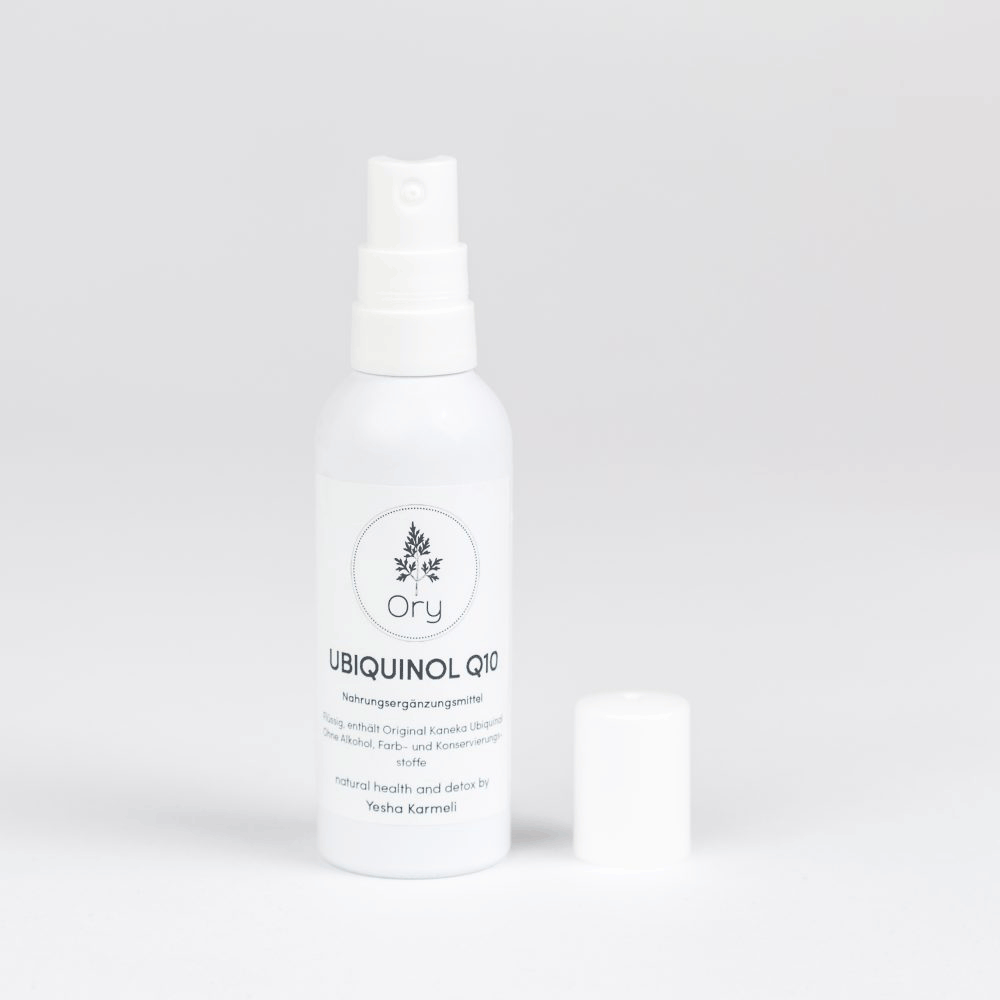
Q10 / Ubiquinol
Increase physical performance with Q10 / Ubiquinol
Over the course of life, the body's own resources diminish—be it in the form of cellular energy or natural antioxidant protection. A particularly important component in this complex process is coenzyme Q10, which exists in its active, reduced form as ubiquinol. As endogenous Q10 production declines with age, ubiquinol supplementation is increasingly becoming a focus to support health, particularly heart function and general well-being.
1. What is Q10 Ubiquinol?
Coenzyme Q10 is a fat-soluble molecule found in every cell of our body and plays a central role in energy production. It exists in two forms:
-
Ubiquinone (oxidized form): Mainly found in dietary supplements.
-
Ubiquinol (reduced form): The active and direct-acting form, which acts as a powerful antioxidant and is essential for energy production in the mitochondria.
Ubiquinol is characterized by its high bioavailability, which makes it particularly interesting for older people and people with chronic diseases.
2. The role in mitochondrial function and energy production

Mitochondria, the “power plants” of the cell, are responsible for the production of adenosine triphosphate (ATP) – the universal energy source for cellular processes.
Mitochondria, the "powerhouses" of the cell, are responsible for the production of adenosine triphosphate (ATP) – the universal energy source for cellular processes. Q10 ubiquinol plays a central role in the electron transport chain by transferring electrons and thus supporting ATP production. With increasing age and under stress conditions, not only the number of mitochondria decreases, but also the Q10 level. This can lead to an energy deficit in the cells, which manifests itself in, among other things, reduced performance and increased susceptibility to disease. The targeted intake of ubiquinol can help counteract these age-related changes.
3. Antioxidant properties – protection against oxidative stress
Free radicals are produced during normal metabolic processes, but in excessive amounts they can lead to oxidative stress—a key factor in cell damage and the aging process. Ubiquinol acts as a powerful antioxidant that neutralizes these free radicals, thus protecting cells and tissues from oxidative damage. This not only slows the natural aging process but also reduces the risk of chronic diseases, especially cardiovascular diseases.
4. Positive effects on heart health
The heart is an energy-intensive organ that relies on a continuous and efficient energy supply. Several clinical studies, including the internationally renowned Q‑SYMBIO study, have shown that supplementation with coenzyme Q10—particularly in the form of ubiquinol—offers significant benefits in patients with heart failure:
-
Improves heart function: Ubiquinol supports mitochondrial energy production in the heart muscle, leading to better contractility.
-
Reduction of cardiovascular events: Regular intake can reduce the number of hospitalizations and contribute to lower mortality in the long term.
-
Improved quality of life: Patients report less fatigue and increased physical resilience, which has a positive effect on everyday life.
These effects are particularly visible in older people, in whom the endogenous production of Q10 has already declined.
5. Other health benefits of Q10 Ubiquinol
In addition to its central role for the heart, ubiquinol offers numerous additional benefits:
-
Increased physical performance: Improved cellular energy supply can reduce fatigue and exhaustion.
-
Support of the immune system: Antioxidant protection helps the immune system work more efficiently.
-
Promotes skin health and anti-aging effects: Protection against free radicals can also slow down skin aging and reduce the appearance of wrinkles.
-
Mitochondrial optimization: Healthy mitochondrial function is crucial for the prevention of many age-related diseases and thus contributes to overall vitality.
6. Study situation and scientific findings
The positive effects of Q10 ubiquinol have been proven by numerous studies. In addition to the findings from the Q‑SYMBIO study, other randomized, placebo-controlled studies demonstrate that regular ubiquinol supplementation:
-
Supports mitochondrial function and improves cellular energy metabolism,
-
Reduces oxidative stress and thereby minimizes age-related cell damage,
-
Improves heart function and thus counteracts cardiovascular diseases.
These results support the use of ubiquinol as a useful supplement – especially in the age group in which natural Q10 levels decrease.
7. Dosage and instructions for use
The optimal dosage of Q10 Ubiquinol varies depending on individual needs and health status. Many clinical studies have described dosages between 100 mg and 300 mg per day as effective and safe. To improve absorption, it is recommended to take it with a high-fat meal, as Q10 is fat-soluble. Before starting supplementation, especially if you have existing medical conditions, you should consult a physician to determine the appropriate dosage.
8. Q10 Ubiquinol in the context of a healthy lifestyle
Although ubiquinol offers numerous beneficial effects, it should not be viewed as a miracle cure on its own. Rather, a combination of a balanced diet, regular exercise, and a healthy lifestyle is the foundation for sustainable health. Ubiquinol can serve as a supporting building block to optimize cellular energy production and reduce oxidative stress.
Q10 Ubiquinol is far more than just a dietary supplement—it is an essential component of cellular health and plays a crucial role in energy production and antioxidant protection. Especially in old age, when the body's own Q10 levels decline, supplementing with ubiquinol can help improve heart function, increase physical performance, and promote general well-being. Numerous scientific studies support these positive effects, making Q10 Ubiquinol a valuable addition to a holistic health concept.
For all those who want to maintain their vitality even in old age, ubiquinol offers a useful supplement – always in consultation with a medical or nutritional expert in order to optimally consider individual needs.
Below you will find a clear summary of the most important studies that have examined the influence of selenium and Q10 (especially in combination) on cardiovascular health, life expectancy and other parameters in older people.
1. Epidemiological study on selenium levels and mortality
-
Study:
Alehagen U, Johansson P, Björnstedt M et al. -
Publication:
Eur J Clin Nutr 2016; 70(1): 91–96 -
Population & Design:
688 elderly Swedes were observed for approximately 6.8 years. -
Results:
-
The average selenium level was 67.1 μg/l – a comparatively low value.
-
After adjusting for relevant risk factors, the quartile with the lowest selenium levels was found to have a 43% increased risk of all-cause mortality and a 56% increased risk of cardiovascular mortality.
-
-
Meaning:
These results provide important evidence that low selenium levels are associated with increased cardiovascular risk and mortality.
2. Q10 supplementation in heart failure – The Q‑SYMBIO study
-
Study:
Mortensen SA, Rosenfeldt F, Kumar A et al. (Q‑SYMBIO Study Investigators) -
Publication:
JACC Heart Fail 2014; 2(6): 641–649 -
Population & Design:
420 patients with moderate to severe heart failure; randomized, double-blind, multicenter, over 2 years. -
Intervention:
300 mg Q10 daily vs. placebo, in addition to standard therapy. -
Results:
-
Cardiovascular events: 15% in the Q10 group versus 26% in the placebo group.
-
Cardiac mortality: 9% vs. 16%.
-
Overall mortality: 10% vs. 18%.
-
Reduced hospitalizations for heart failure.
-
-
Meaning:
Supplementation with Q10 led to significant improvements in the clinical course and prognosis of patients with heart failure.
3. Interventional study with combined supplementation of selenium and Q10 (4- to 5-year study)
-
Study:
Alehagen U, Johansson P, Björnstedt M et al. -
Publication:
Int J Cardiol 2013; 167(5): 1860–1866 -
Population & Design:
443 elderly Swedes (70–88 years) in a double-blind, placebo-controlled study. -
Intervention:
Daily supplementation with 200 μg selenium and 200 mg Q10 for 4 years. -
Results:
-
Cardiovascular mortality: 5.9% in the intervention group versus 12.6% in the placebo group (p = 0.015).
-
Significant improvement in the cardiac biomarker NT-proBNP (214 ng/ml vs. 302 ng/ml, p = 0.014).
-
Echocardiography revealed improved cardiac function.
-
-
Meaning:
The combination of selenium and Q10 led to a significant reduction in cardiovascular mortality and improved cardiac function.
4. Long-term follow-ups of the selenium/Q10 intervention
a) 10-year follow-up
-
Study:
Alehagen U, Aaseth J, Johansson P et al. -
Publication:
PLoS One 2015; 10(12): e0141641 -
Results:
-
Persistent reduction in cardiovascular mortality with a hazard ratio of 0.51 (p = 0.0003) for the intervention group.
-
Similar risk reductions were also observed for coronary heart disease (CHD) (HR 0.51, p = 0.04).
-
b) 12-year follow-up
-
Study:
Alehagen U, Aaseth J, Alexander J et al. -
Publication:
PLoS One 2018; 13(4): e0193120 -
Results:
-
Cardiovascular mortality: 28.1% in the intervention group vs. 45% in the placebo group.
-
Hazard ratio: 0.59 (p = 0.001).
-
-
Importance of both follow-ups:
The positive effects of supplementation with selenium and Q10 persist for many years after the end of active therapy.
5. Influence on quality of life
-
Study:
Johansson P, Dahlström Ö, Dahlström U et al. -
Publication:
J Nutr Health Aging 2015; 19(9): 870–877 -
Results:
-
After 4 years of supplementation, the decline in quality of life in the SF-36 test was significantly lower in the intervention group (e.g., physical health problems: decrease of 7.4 points compared to 31.9 points under placebo, p = 0.008).
-
-
Meaning:
In addition to reducing mortality, the combination of selenium and Q10 also improved subjectively perceived quality of life and physical performance.
6. Subanalyses on biomarkers and molecular mechanisms
a) Fibrosis biomarkers
-
Study:
Alehagen U, Aaseth J, Alexander J et al. -
Publication:
Biofactors 2018; 44(2): 137–147 -
Results:
After 42 months, various biomarkers associated with fibrosis (e.g., cathepsin S, endostatin, galectin 3, GDF-15, MMP-1 and -9, TIMP-1) were significantly lower in the intervention group. -
Meaning:
Reduced fibrosis in the heart muscle could be a key mechanism for the observed improvement in cardiac function and reduced mortality.
b) Changes in microRNA
-
Study:
Alehagen U, Johansson P, Aaseth J et al. -
Publication:
PLoS One 2017; 12(4): e0174880 -
Results:
-
In a subgroup (25 participants per group), 145 microRNAs were measured.
-
70 microRNAs showed significant differences; the 20 with the largest differences varied by up to 400%.
-
-
Meaning:
These changes in microRNA expression could provide important clues to the regulation of proteins involved in healing processes and the production of selenoproteins.
c) Biomarkers Copeptin and MR-proADM
-
Study:
Alehagen U, Johansson P, Björnstedt M et al. -
Publication:
Biofactors 2015; 41(6): 443–452 -
Results:
-
In the placebo group, copeptin and MR-proADM increased significantly, while in the intervention group the increases were significantly smaller (p = 0.031 and p = 0.024, respectively).
-
-
Meaning:
These biomarkers are elevated in heart failure; their lower increase with supplementation suggests a protective effect.
d) Secondary analysis of cardiovascular mortality depending on baseline selenium status
-
Study:
Alehagen U, Alexander J, Aaseth J. -
Publication:
PLoS One 2016; 11(7): e0157541 -
Results:
-
Participants with low baseline selenium particularly benefited from supplementation: In this group, cardiovascular mortality was halved from 24.1% (placebo) to 12.1% (intervention), which corresponds to an absolute risk reduction of approximately 12% and a number needed to treat (NNT) of approximately 8.
-
-
Meaning:
This underlines how important the initial selenium status can be for the success of therapy.
e) Influence on the cardiac biomarker NT-proBNP
-
Study:
Johansson P, Dahlström Ö, Dahlström U et al. -
Publication:
Scand Cardiovasc J 2013; 47(5): 281–288 -
Results:
Supplementation led to significant improvements in NT-proBNP levels, an important marker for heart failure and prognostically relevant for cardiac function. -
Meaning:
These results confirm the positive influence of combined supplementation on cardiac function.
Summary
-
Cardiovascular mortality:
Supplementation with selenium and Q10 leads to a significant reduction in cardiovascular mortality in several studies – both in the primary intervention phase and in long-term follow-ups (up to 12 years). -
Cardiac function & biomarkers:
Improvements in cardiac function were demonstrated by significant reductions in NT-proBNP, copeptin, MR-proADM, and fibrosis biomarkers. Furthermore, molecular analyses (e.g., microRNA alterations) reveal interesting mechanisms of cellular adaptation. -
Quality of life:
In addition to the objective cardiovascular parameters, a significantly better maintenance of quality of life was also documented with the combined supplementation. -
Particularly affected:
The positive effects are particularly pronounced in older people and in those with low initial selenium levels or already impaired heart function.
This extensive body of research provides compelling scientific evidence for the protective effects of selenium and Q10. Particularly in an aging population, these substances can make an important contribution to improving heart health, reducing mortality, and improving quality of life.
Note: The study results presented here are intended for informational purposes only. Individual consultation with a medical professional is always recommended before supplementing.
Share:
Chronic diseases and healthier living – opportunities for a longer, more worthwhile life
Chromium – friend or foe?